Study in Russia: dobropozhalovat!

Flag of Russia

Russia is not only the largest country in the world, but also one of the coldest places in the world. But, do not fear! You'll find little time to complain about the weather when learning about the nation's rocky relationship with the rest of Europe and its communist past. The country offers a captivating story that plays perfectly into a student's hungry mind. There are still vodka bottles full of information just waiting to be discovered and a future that is sure to take unexpected twists and turns. Thankfully, the subway system is well run and just stunning--moving from relic to relic is as attractive as eating a warm heaping of Beef Stroganov.

Siberia
Russia is cold, so be prepared!

It's easy to get lost in Russia's cities, not to mention Russian universities, so it's best if you can arm yourself with as much knowledge as possible about life there. Below is some basic, but fundamental, information that one should consider before signing off on a program.

1) Language: The Russian language is the 8th most popular in the world. Although Russian sounds bold and completely foreign to the English-trained ear, learning Russian as a student is a great way to more deeply understand Russian culture. The CIEE Study Abroad Program at St Petersburg State University offers small classes that are only taught in Russian. Don't sweat it if you would rather take English-instructed classes; there are plenty of options for that.

2) Housing: Depending on your personal preference, student living in Russia can involve one of two paths: staying with a host family or braving a university dormitory. The KEI Study Abroad Program at Moscow State University offers student dormitory living. Then again, coming back to a bowl or tasty Russian Pelmeni or Borscht courtesy of your host mother might be more up your alley.

3) Academic Life: Russia traditionally combined undergraduate and graduate studies in a 5-6 year period until 2007 when a two-tier bachelor and masters structure was adopted.

Russian universities implement a five-point grading system: "1" is "poor" and "5" is "excellent." Moreover, a "+" or a "-" may accompany a number to take the teacher's evaluation one-step further. Thankfully, 1s are rarely given and 2s are handed out only if the student shows absolutely no knowledge of the subject. If you put in an adequate amount of work and show interest in the class, then passing through your academic life in Russian universities is very feasible.

Some would say that Russia has two capitals--St. Petersburg and Moscow. Both cities are ripe with political activity, a rich culture, and an energetic student body.

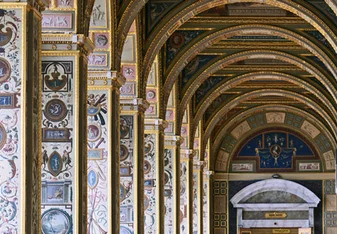
ST. PETERSBURG: Located in northwestern Russia, St Petersburg does not look like a city originally built in a marshland. Paris has the Eiffel Tower and Rome boasts the Coliseum but St. Petersburg has become a global model of architectural beauty--just take a stroll down the three-mile long Nevisky Prospekt Avenue to gaze at the monuments, canals, and bridges.

There's more to the city than pretty sights though: St. Petersburg is arguably Russia's most westward-leaning and progressive cities, making the city perfect for study abroad. The famous Russian author Fyodor Dostoyevsky called St. Petersburg the "most abstract and intentional city on the entire globe." I guess you'll have to study abroad in St. Petersburg to discover exactly what Dostoyevsky means...

St Petersburg
St Petersburg

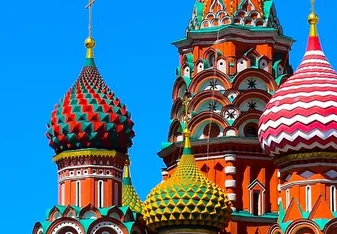
MOSCOW: Moscow, the nation's capital, is home to sprawling squares and spiraling minarets. The city's 190-mile long subway system is the second largest in the world, making Moscow's economy a hub of activity and constant interaction. Every corner teems with photo opportunities so never stray too far without a holster-full of film.

To obtain a Russian visa, certain documents are required:

  • An original letter of invitation from the Russian Ministry of Internal Affairs
  • HIV test results that are completed at least 90 days before departure
  • Proof of departure from the airline

Check out VISA HQ for more information about student visas in Russia.

Russia is part of the European Union but the country operates on the rouble, a currency that is renowned for being stronger than the dollar and thus more expensive. Thankfully, scholarships are available to help keep a student's already low bank account from drying out.


Contributed by Daniel O'Kelly

Do you think there is something missing in our guide to studying abroad in Russia? Contact us and let us know! We want to make sure our information is relevant and up to date.

Find Travel Opportunities Through Student Universe
Sort by Reviews:
Term:
City:
Sign up with AIFS to study in the most European Russian City- St. Petersburg. Summer, semester and academic year terms are available at St. Petersburg State Polytechnic...
98
This program has been
rated awesomely fun!
100
This program has been
rated highly supportive!
1
This listing has
an alumni interview.
100% Rating
»
» More Programs
Conceived by Peter the Great as a "Window to the West," and christened "The Cradle of the Great October Socialist Revolution," St. Petersburg is the perfect setting to...
» More Programs
ISEP offers this exciting program at three different universities in three separate Eastern European countries. Study for a week in each of the following: University of Tartu...
» More Programs
Vladivostok State University of Economics and Service (VSUES) invites students to come study abroad in Vladivostok, Russia for a semester or academic year. A variety of...
60% Rating
»
» More Programs
CSA Study Abroad Programs, Interviews and Reviews
CSA
Study Russian in its purest form in the St. Petersburg Language Institute! Through a four-tiered language program, the Institute ensures that students are placed in the...
» More Programs
The Russian Gap Year course in Moscow is designed for gap year students taking a long-term break and practicing their Russian. This programs allows students to practice their...
» More Programs
Knowledge Exchange Institute (KEI) logo
KEI
Study abroad with the Knowledge Exchange Institute (KEI) in Moscow, Russia at Moscow State University. Known to many as the heart of Russia, Moscow has remained the political...
» More Programs
Sign up today with Eurocentres to study the Russian language in Russia! Language schools are located in both Moscow and St. Petersburg. Students can choose between three...
» More Programs
The NRCSA offers two great options to learn or master your Russian language skills in Russia. The NRCSA Centers in Moscow and St. Petersburg were established in 1992, and...
» More Programs
Learn Russian in St. Petersburg by taking a long-term gap year or serious career break and work with other students who are also working to improve their Russian. skills....
» More Programs
Language Studies International welcomes you to Russia to help you learn or master the Russian language! Between two locations, one in Moscow, and one in Belorusskaya, just...
» More Programs
Whatever your reasons for learning Russian today, you are in good company. Interest in the language of Pushkin and Tolstoy is no longer confined to the academic world. Demand...
» More Programs
Whatever your reasons for learning Russian today, you are in good company. Interest in the language of Pushkin and Tolstoy is no longer confined to the academic world. Demand...
» More Programs
Live Languages Abroad offers a range of Russian Gap Year Courses in Russia for Gap Year students. These short-term and long-term courses are held in Moscow and ideal for...
» More Programs
Live Languages Abroad offers a range of Russian Gap Year Courses in Russia for Gap Year students. These short-term and long-term courses are held in St Petersburg and ideal...
» More Programs