study abroad, international college, New Zealand, Wellington, Victoria

Victoria University of Wellington

Why choose Victoria University of Wellington?

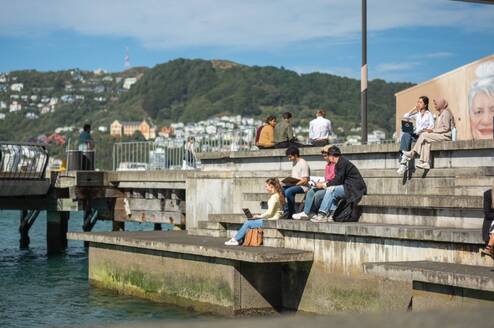
Located in the southern tip of New Zealand’s North Island, between a beautiful harbor and rolling green hills, the vibrant and cosmopolitan city of Wellington is the political, cultural and creative capital of New Zealand.

Victoria University of Wellington offers a comprehensive range of internationally recognized courses and degrees, consistently ranking highly in the QS World Rankings by Subject. In addition to AACSB-approved Business courses, the University offers Sciences, Architecture, Design, Education, Engineering, Health, Music and a wide variety courses in New Zealand's highest ranked Faculty of Humanities and Social Sciences.

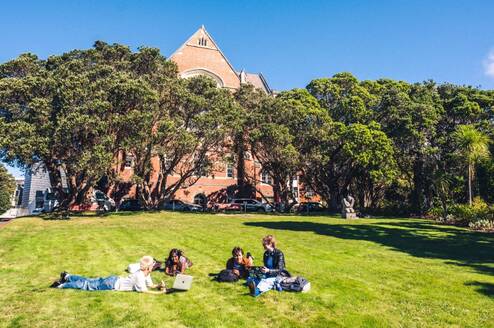
Home to around 17,000 students, including 3,000 international students, Victoria University of Wellington offers the opportunity to study at New Zealand's top ranked university for research, in a spectacular location with fantastic facilities. Terms start in February and July.

Website
www.wgtn.ac.nz
Founded
1897

Scholarships

Victoria University of Wellington International Scholarships

Victoria University of Wellington offers a variety of scholarships for international students, ranging from NZ$15,000 for undergraduates, NZ$10,000 for postgraduates, and up to NZ$1,000 for study abroad participants, helping to make studying abroad in New Zealand more affordable and accessible.

Value
$1,000 - $15,000

Diversity & Inclusion 💙

Victoria University of Wellington's population includes people from a diverse range of communities. We have student support networks like our VIC. Without. Barriers community for Refugee-Background Students, and Māori and Pasifika Hubs for Indigenous students looking to connect with their communities on campus. Student are encouraged to join clubs like the Victoria International Students Association and the Tramping (Hiking) Club, among 100+ other student clubs at the university!
At Te Herenga Waka—Victoria University of Wellington, our lesbian, gay, bisexual, transgender, queer, intersex, asexual/agender (LGBTQIA+), and takatāpui communities are known as the Rainbow community. The University's rainbow and inclusion service supports LGBTQIA+ and takatāpui students and works with our community to make sure our campuses are a safe and inclusive environment for students of all sexual orientations, gender identities, and sex characteristics.
Te Amaru—Disability Services works in partnership with staff, students and the disability community to strengthen Victoria University of Wellington’s culture of inclusion, celebrate disability and ensure students can fully participate and achieve their aspirations. We encourage students with accessibility concerns to register with Te Amaru—Disability Services to receive individualized tailored support and access to key services such as a Disability and Inclusion Advisor, Access Suites, Inclusive Learning Software, Adaptive Technology, and more.

Impact 🌎

Victoria University of Wellington is championing a sustainable future by fostering the leaders of tomorrow, delivering world-class research, and building a sustainable campus. Our university is committed to becoming a net zero-carbon organization by 2030.

We rank #1 in New Zealand for Climate Action and Affordable Clean Energy (THE Impact Rankings). On campus, reusable cups are the norm, and we even have a recycling wall where you can take empty packaging that can be difficult to recycle at home. When you study with us, there are numerous ways you can contribute to our sustainability initiatives, including participating in the University's annual "Growing our Future" tree planting initiative to help restore native forests around the Wellington region.

Reviews

Victoria
5/5
Yes, I recommend this program

Incredible Study and Travel Experience

I've really enjoyed my time traveling and studying in Wellington. It's one of the most beautiful and charming cities that I've ever lived in, filled with so much life and community. I've found that the accessible public transport and the city's landscape layout make it one of the most walkable and convenient areas to travel around in the North Island.

It's an incredibly safe environment to be in, and I'd especially recommend studying here for first-time exchange students and travelers.

One of my favorite aspects of living here has been the community of friends and students I've been able to surround myself with. The Sunday Market along the harbor is also a really affordable way to get weekly groceries and a charming part of the city.

What was the most surprising thing you saw or did?
Since spring has begun, a small flock of Kākā have started visiting the trees outside my bedroom window. So I get to wake up to the sound of Kākās preening one another and snapping twigs to bring back to their nests. They were cute at first, but then one decided to make direct eye contact with me before flying up to a branch above me to poop on my arm while I was leaving for class. That thing was pure evil. I came to New Zealand to study wildlife and native flora, and I'm now at war with the birds outside my window.

Anyways, 10/10 experience. Would recommend. Just don't get pooped on like me, I guess.
Sam
4/5
Yes, I recommend this program

Great City

Wellington is an incredibly cool city. The public transportation is well-organised, making it easy to explore a significant portion of the city and its surrounding nature. The school has a wonderful campus, and student support is taken very seriously. There is so much to do, including fun bars and clubs, walks in the bush or on the beach, lots of restaurants, and so much more. The most shocking thing is how steep everything is. While the walks to and from school can be brutal, it also means that the views are incredible.

Olivia
4/5
Yes, I recommend this program

MCrim at VUW

I am getting my Masters in Criminology at the Victoria University of Wellington. I'm only one trimester in but have immensely enjoyed the program so far. I came to New Zealand to experience New Zealand as a whole, not simply for an education, but I have enjoyed the education as much as the country. The lecturers and course coordinators are extremely knowledgeable in their chosen fields and have made my MCrim experience extremely worthwhile. The campus is beautiful, and the integration of Māori culture is commendable.

What was the most surprising thing you saw or did?
I took a ferry from Wellington CBD to Matiu/Somes Island and got to see an entire pod of dolphins swimming and jumping along the ferry. Definitely not something you see everyday!
Pros
  • Knowledgeable professors
  • Surrounded by nature
  • Parliament is close by
Cons
  • Lack of communication within program
  • Hard to make friends in postgrad
Elizabeth
5/5
Yes, I recommend this program

Incredible Experience

I am studying a Master's in Marine Conservation by coursework. Within the first trimester, I have already been exposed to many new concepts in the field, which have expanded my understanding of conservation. The coursework is manageable, but sufficient for a graduate program. Expect to spend your time reading a lot of journal articles!

I have had so many opportunities to expand and grow outside of the classroom as well, which has really added to my experience. One of my favorite things is that the School of Biological Sciences has a weekly seminar series with internal and external speakers. This is just one example of the many ways you can augment your studies here at VUW. I highly recommend studying here!

What would you improve about this program?
I wish there was better communication regarding expectations. This goes for university accommodation, coursework, and exam procedure. I felt like there were several things I had to just figure out along the way when they could have just been clearly communicated in advance.
Lenny
4/5
Yes, I recommend this program

Undergrad at VUW

My classes have had a good level of information without unnecessary vigor. The bio labs are very hands on and greatly supplement my learning. My professors feel incredibly approachable and are often quite excited to speak with ambitious students. There are also a wide range of opportunities to work with faculty, particularly in science, if you just ask your lecturers to work on their projects. This is quite different to the cutthroat nature in the US. One of the biggest downsides is that the range of classes offered is not nearly as expansive as that of a US university. I have had to take some random general bio classes that don't quite apply to my marine bio major. I am doing a dual degree with Global studies which feels very "create your own adventure." I've been able to take classes from Contemporary Issues in Science, Technology, and the Environment to Capital Cities: Their Cultures and People which all apply to my degree. The academics overall have been incredibly fun to engage in. Another downside is that there is not a "club culture" like there is at US universities. Most social clubs are skills based (sports, languages, etc) or academic or religion based. There is no milk and cookies club or crochet club. You have to work harder to find social groups outside of university.

The uni dorms are a bit different from the US. Single rooms are the standard and it is not a given that everyone will go to halls, many people opt to go flatting (live in an apartment) in their first year. Dining halls have far less options, usually one or two mains to choose from at each meal, and there is no on campus "dining dollars." There is also no "on campus" housing, although the closest hall is on the outskirts of the main Kelburn Campus. The hall staff are much more engaged with residents and their wellbeing here than in the US. There are also second year and up independent living halls which place you in apartments rather than dorms, so older students and those in study abroad have more flexibility.

Coming from the US, the cost of living is incredibly cheap, especially coming with savings. Everything is an equivalent cost, eg a coffee is $6 in US and NZ and rent is around $1500 monthly both here and there. HOWEVER, wage is much higher, generally $27-30 per hour, so daily expenses don't take nearly as much out of your paycheck. There's also no tipping or added tax, so the price you see is the price you pay, no $15 lunch turning into $25.

The city of Wellington is quite sleepy when compared to US cities, but it is SO MUCH safer. It's small size also lends itself to easy daytrips into the surrounding nature, even by foot, if you enjoy outdoor activities. The south coast has beautiful swimming and diving. Suburbs Aro Valley, Karori, and more have incredible hiking.

Overall, I've really enjoyed my time at Vic! It is definitely different than what you would find in the US, but I highly recommend looking into it for globally minded individuals looking for a new adventure.

Programs

Displaying 1 - 3 of 3

Alumni Interviews

These are in-depth Q&A sessions with verified alumni.

Why did you choose this program?

One of the main draws for the Master's of Marine Conservation program at VUW was affordability. I was able to obtain a well-rounded, practical, and high-quality education for the fraction of the cost of an almost identical program in the US.

Additionally, the advisors were quick to answer my questions before enrolling, were personable and passionate about my interests in marine science, and seemed excited to have me as a student. This enthusiasm was lacking in every other program I applied for and it made my decision to attend very easy.

What did your university assist you with, and what did you have to organize on your own?

The university has an amazing support system for international students. They provided help and advice for organizing travel and accommodation as well as how to extend my visa at the end of my studies. They even provided a pick-up service from the airport to ensure I felt welcomed upon arriving in New Zealand.

What is one piece of advice you'd give to someone going on your program?

New Zealand is amazing, so be prepared to never want to leave! With that being said it is very isolated and traveling home is time-consuming and often expensive.

I have always told any of my friends who want to go overseas to go for it, it was the best decision I have made so far. Getting away and seeing how other parts of the world operate and live is an essential life experience.

What does an average day/week look like as a participant of this program?

Honestly, it varies and that's the best part, the class structure is an equal split between seminar/discussions and field-courses.

For a seminar you can expect an environmental professional from industry, government, or a non-profit to come speak to you about the particular conservation issues they face and how to approach them, providing knowledge and ample networking opportunities.

As for a field course, we spent a week on an isolated island in the Wakatobi, Indonesia. A day on Hoga consisted of environmental assessment snorkels over coral reefs and other tropical habitats in the mornings to develop practical skills, followed by a lecture in the afternoon. During the field-course, we worked with students and lecturers from Indonesian which provided a unique educational and cultural experience I will never forget.

Going into your experience abroad, what was your biggest fear, and how did you overcome it? How did your views on the issue change?

My biggest fear moving to New Zealand was being so far from home, but this was quickly remedied by the amazing group of peers I was able to study with.

Upon beginning my courses I found myself surrounded by a group of like-minded people and friendships were formed almost instantly.

After this experience I continue to realize how much I enjoy meeting people from different backgrounds and going abroad is the best way to achieve this.

What makes New Zealand different from anywhere else in the world?

Where do I begin... it is an island nation providing all of the best things in the world for someone who loves the outdoors. From dramatic snow-capped mountains, to beautiful beaches, temperate rainforest, glacial lakes, and volcanic fields, just to name a few. Beyond awe-inspiring views is the community and respect for nature that everyone seems to share is unheard of. Science is something often worked on collaboratively for the greater good of the environment, industry, and government with the hopes of a sustainable future for all the above. I have never had to hesitate when asking for help and advice from my colleagues or other scientists and in this way New Zealand is unique.

Staff Interviews

These are in-depth Q&A sessions with program leaders.

Kelsey Jackson

Job Title
Regional Manager, The Americas
After studying abroad in France, Germany, and Italy, Kelsey knew she wanted to help other students have the same life-changing experiences and build a career fostering global citizenship. Kelsey now serves as the Americas Regional Manager at Victoria University of Wellington, where she advises students from the US, Canada, and Latin America who are interested in studying at the university. Kelsey is based on the East Coast of the USA, and spends her time traveling the country to connect with students.

What is your favorite travel memory?

My favorite travel memory was the first time I went to New Zealand - in 3 days I was able to see Mt. Taranaki, Rotorua, Lake Taupo, and the Rangipo Desert. New Zealand is full of amazing landscapes and warm, kind people. Everywhere I went, I felt at home! It is one of the most beautiful places I've ever been!

How have you changed/grown since working for your current company?

Working at VUW has allowed me to connect with students from all over the Americas, and grown my appreciation for international education. Since I am based so far away from the University, I have learned to be creative in how I connect with my colleagues, work independently, and learn new and fun ways to connect with students. I learn new things every day from the students I work with, and love hearing each of their motivations for taking the leap to study halfway across the world.

What is the best story you've heard from a return student?

It is not uncommon to talk with someone who has studied in New Zealand, and immediately fell in love with the country and never wanted to leave. So many students have chosen to build their careers and lives in New Zealand after studying there, which tells me we must be doing something right!

The best story I have heard is from a former student who spent a semester at the University - he was majoring in computer science, but chose to take some animation and visual arts courses during his time at the university. As a result, he published his own illustrated children's book and is now illustrating a comic column for a local newspaper. It was incredible to hear how he was able to learn outside of the box and delve into a whole new area, which he turned out to love!

If you could go on any program that your company offers, which one would you choose and why?

If I could study abroad again, I would 100% go to New Zealand. It's an amazing place, with such a warm, welcoming, and unique culture. When else in your life will you be able to travel that far, and spend 4 months in place, for this cost?

I spent all of my study abroad experiences during my undergraduate and graduate degrees in Europe, which were incredible experiences as well! However, Europe is relatively easy to get to from many parts of the US. As an adult, its a bit harder (and more expensive) to go as far as New Zealand. I wish I would have taken advantage when I could have!

What makes your company unique? When were you especially proud of your team?

The staff and support teams at Victoria University of Wellington are what make us unique - nearly half of the university staff are from outside of New Zealand, and most of us have traveled or lived in other places. We bring a wide array of experience and knowledge, which in turn helps us be the best support system for our students!

What do you believe to be the biggest factor in being a successful company?

Having people who love what they do, and can relate with students, makes such a difference! To understand what it's like to live in a new place and learn a new culture helps us to better support students and relate to their experiences. It also creates a really fun and collaborative working environment!