English Opens Doors
Programs and Reviews
The English Opens Doors Program is a English education initiative developed by the Chilean Ministry of Education, and is supported by the United Nations. It was established in 2003, and has since flourished. The Chilean Ministry seeks to advance the level of English education throughout Chilean public schools and provides students with many resources such as summer learning camps, competitions, and scholarships. We seek talented and ambitious teachers to come join our teaching program in Chile, and make a noticeable impact in Chilean English education throughout public schools. Avoid paying any fees to recruiters by applying directly with us.
Programs Abroad
Reviews
90%Overall
Rating
English Opens Doors's Response to j0k3r:
To respond to this review's point about payments:
We state repeatedly and clearly that the volunteer allowance is not a salary, and not meant to be used to live off of. Rather, it is meant to reimburse you for any teaching related costs you incur (for example, if you take a local bus to school).
In addition, as it is paid through the UN Development Program, we do not have direct control over the payments. Instead, we coordinate with them according to their payment schedule. In 2012, volunteer allowances were divided into regular payments that came about every 2 months, depending on when volunteers started. For example, X volunteers were paid in August and Y were paid in September. The amount differed according to the total number of days in their specific programs. Often, volunteers talked amongst themselves and determined that their payments were wrong or late, and never asked us directly about their specific case.
For 2013, volunteers will arrive in Chile with their temporary residence visa already in hand. That means that they will receive their Chilean ID card within about a month of arriving. This will facilitate payments greatly.
60%Overall
Rating
I should begin by saying that I was one of the lucky volunteers who ended up with a great host family, a nice house, and a decent school. However, the program was so, so disorganized, and I heard so many horror stories from friends in the program, that I don't know that I could recommend it to anyone.
A few examples of the disorganization of the program that I experienced.
- They don't tell you what city you're going to until the middle of orientation week in Santiago.
- My host family didn't know I was coming until the day before I arrived. I didn't know anything about them until I met them at the airport. Luckily, they were great, but many volunteers did not have a good experience.
- My first co-teacher was not prepared for me and did not communicate with me. This seemed to be common among the volunteer I knew. He often threw me in front of the class without warning or preparation and sat in the back of the class making noise and contributing to the mayhem in the classroom. I was able to switch to a second co-teacher who was much more organized, welcomed my help, and from then on, I enjoyed my time in the school.
- The 60.000/month is almost nothing, and generally arrives at random times. If you want to go out, buy anything, travel, or do anything extra, this will not get you very far. If you are placed in the northern part of the country, there's really nothing nearby, so traveling involves a long bus ride or a flight. Be prepared with a lot of savings if you want to be able to fully enjoy your time. Also, with all the disorganizaton, the potential issues, having to insert yourself in a school, etc., they really should be paying you more.
I decided to leave the program early because I wanted to work and earn some money. The office in Santiago did not respond positively to this news.
If you're really brave, super flexible, have a lot of savings, good luck and a back-up plan, this program might be a good way to try living in Chile. But, I'd recommend starting with the shortest volunteer service and extending if you're having a good experience. Be prepared to face a lot of challenges!
English Opens Doors's Response to 44gr:
To respond to this review's point about disorganization:
We state repeatedly and clearly the timeframe through which you receive information about your placement.
In 2013, we will be working on helping volunteers become more proactive in working with their head teachers. Schools and teachers who successfully apply to receive a volunteer have committed to certain criteria, are given a manual describing the program, and attend a regional orientation. However, it is still up to the volunteer to have an effective relationship with their head teacher.
Despite the challenges that volunteers might face, we ask that in a situation such as the one described by this reviewer, volunteers fulfill their stated commitment to their school and students. This reviewer had a positive experience and situation, but still dropped out early. When this happens, the students and school are left without the resource that they are promised for the remainder of the semester. In addition, the investment made in the volunteer by Chilean taxpayers goes to waste.
To respond to this review's point about payments:
We state repeatedly and clearly that the volunteer allowance is not a salary, and not meant to be used to live off of. Rather, it is meant to reimburse you for any teaching related costs you incur (for example, if you take a local bus to school).
In addition, as it is paid through the UN Development Program, we do not have direct control over the payments. Instead, we coordinate with them according to their payment schedule. In 2012, volunteer allowances were divided into regular payments that came about every 2 months, depending on when volunteers started. For example, X volunteers were paid in August and Y were paid in September. The amount differed according to the total number of days in their specific programs. Often, volunteers talked amongst themselves and determined that their payments were wrong or late, and never asked us directly about their specific case.
For 2013, volunteers will arrive in Chile with their temporary residence visa already in hand. That means that they will receive their Chilean ID card within about a month of arriving. This will facilitate payments greatly.
10%Overall
Rating
I found EOD through Teach Away Incorporated, who support a variety of different volunteer teaching programs abroad.
I did unfortunately get the short end of the stick
as far as the program goes. I'm going to be completely honest (don't be scared): the program is unorganized and very slow with getting things done (example: each volunteer is supposed to be given a box of school supplies; this box is sent from the main office in Santiago to wherever the volunteers are-- as they told us in our orientation week, it is not uncommon for a volunteer to receive the box with a week left of teaching or not receive it at all). Though in theory I think the program is a great idea, there is a lot of miscommunication and still a lot of issues to work out.
Each city or pueblo a volunteer is placed in has a regional representative-- someone who is your direct contact person and is sort of your middle man with the office in Santiago. The regional representative is in charge of checking out potential host families for suitability. As far as I can tell, there is no standard the houses or the families are held to. Of course no one is expecting a mansion or anything, but in my opinion, there needs to be a standard of cleanliness. I'm no stranger to South American travel, however, this program works directly with unpaid gringos who are here voluntarily... they should place them with the thought in mind that they are indeed here voluntarily and don't have to put up with ridiculousness; the house I was placed in was overrun with cockroaches. I kid you not, I had roaches crawl over my hand while I used my laptop, I had roaches fall on me when I opened doors in the house, they were in my room, they were in my food. I let my regional rep know about this and she delayed for 2 months finding me a replacement family, all the while blaming the delay on the office in Santiago (which I know from the experiences of other volunteers in my region was not the actual reason for the delay-- this woman hung onto some of the other volunteers' passports for 2 months while "helping" them process their visas. When the volunteers emailed Santiago to ask them why it was taking so long, they were informed that the passports had never arrived in Santiago... they'd been sitting on the regional rep's desk the entire time.). Ultimately, she didn't even find me a new host family and I ended up moving in with a teacher who worked at my school.
And this segues into another sore subject: the school. I don't know who exactly is in charge of explaining the goals and teaching model of the program to the school-- the regional rep or the program itself? Either way, my school never fully understood the aim of the program, so needless to say, they didn't really understand my purpose either... no matter how many times I explained it to them and showed them excerpts from the program manual. I spent a lot of time sitting around feeling completely useless and frustrated. I stuck it out for
as long as I could because I loved the kids so much but ultimately I was sacrificing my sanity, dignity, etc. etc. and had to leave the program. I remained in Chile and found paid teaching work elsewhere so I did ride out my stay there as planned, just not with the program.
Now, I'm not trying to be super intense or bitter or anything (believe it or not, this the condensed version of my rant), because, hey, I got to be in Chile, and that's awesome. I know some other volunteers who had
problems like mine, or different but still enough to make them leave the program (I had a friend who arrived at his host family's house and they decided they didn't want to host anymore. The program set him up in a boarding house filled with Chilean sailors and he didn't have a lock on his door). On the other hand, I have friends who had a completely different experience-- wonderful host families, competent and enthusiastic co-teachers, the works, really. One of the former volunteers in my region even went on to work for the main office in Santiago.
In closing, this program is a complete gamble, personally one I would not recommend. I'm sure you can find a similar program that maybe has been around for a bit longer and has some more of its kinks worked out.
English Opens Doors's Response to GringaPa'Siempre:
This review illustrates the importance of being proactive as a volunteer. We do not expect volunteers to stay in a host family situation such as the one she found herself in, and wish that she had communicated directly with the central office. For each of the legitimate complaints listed, we would have intervened immediately on her behalf. In the past, there have been other instances of volunteers having negative experiences or dropping out without ever informing the central office of any issues. For instance, the volunteer mentioned in the boarding house dropped out of the program and left his school, not informing us for several weeks.
That said, the situations described in this review are extremely atypical. 95% of volunteers describe their experience living with a host family as positive, and that their living situation was adequate for a volunteer.
We have instituted a new communication system for 2013, where in addition to the regional representatives, volunteers will have a designated contact person in Santiago with whom they can communicate directly and who will be checking in on them on a regular basis. We have also added a workshop on communication to our orientation to emphasize the volunteers' need to let us know about serious issues. We will continue to maintain our general email account that we check continuously throughout the day, and are available during business hours by phone. We hope that with our new efforts, volunteers with similar problems will bring them to our attention and we can resolve them quickly.
90%Overall
Rating
This can be a wonderful experience, as it was for me, however, it is imperative to keep in mind that it is not this way for every program volunteer. There are a number of uncontrollable variables that heavily influence the participant's experience with the program. I.e: host family, co-teacher, school, location and regional representative. Essentially, the bulk of one's experience lies on the cards one is dealt.
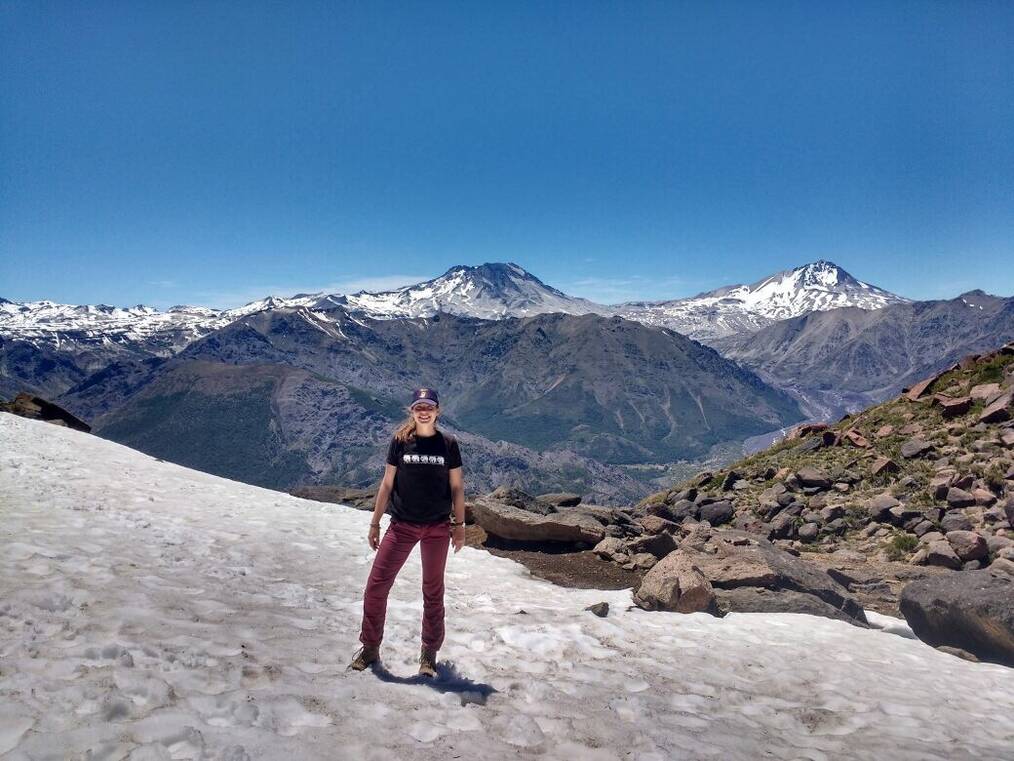
I can, however, say that an open mind, patience, positive attitude, and not asking too many questions will greatly improve the participant's time in Chile. Chile is an incredible country; it is physically stunning, culturally interesting, and the people are warm and welcoming. This was no doubt a life-changing and positive experience for me, and I know many others who are choosing to continue their lives in Chile past the program. I would recommend this program to someone who is very flexible, doesn't mind feeling confused or frustrated, likes learning a new language (Chilean is its own dialect of sorts), has a go-with-the-flow attitude and is up for a challenge.
80%Overall
Rating
From the people I have spoken to, the program has had mixed reviews and volunteers have had diverse experiences. A friend came up with the "two out of three" rule, that for most of us two out of three of the elements (the homes situation, the school situation and the town or city we lived in) we were enjoying. For me, it was my home (my host mum was amazing) and my school (elementary school kids are hilarious and so fun) but my town is super boring. Which brings my on to my first piece of advice, unless you are really, honestly not bothere about where you end up, choose carefully where you want to go (North/South, rural/urban). Not everyone got what they wanted, but most did, and remember 6 months is a long time to be living somewhere you dont want to be.
Take the program say they offer you with a pinch of salt, I never received a carnet or a visa for a year. It depends on your region. From what I've heard by and large the regional representatives leave a lot to be desired. Ours wasnt great, she rarely responded to our emails and misinformed another volunteer about a visa which lead to some problems.
Remember that this program isnt easy, and the teachers have jumped through a lot of hoops for you to be there and when a volunteer drops out, it does put out the school quite a bit. If you are not serious about it, its better not to do it.
Overall I had a positive experience of the program, it is extremely rewarding and a great opportunity to get hands on experience teaching.
Critical Feedback:
Re-train or fire and find new representatives, most of them are not too bothered about doing their jobs.
Alumni Interviews
Staff Interview
Interview with Dave Hanegraaff, who now works with EOD after being a volunteer teacher himself
Go: Tell us a little about English Open Doors' background.
Dave: EOD is part of the National Volunteer Center which is supported by the Chilean Ministry of Education. The Volunteer Center sends volunteers to schools throughout Chile as an initiative to improve English language learning in the country. EOD also runs public speaking debates, spelling bees, a rural program called "It's My Turn," teacher development programs, and popular English summer and winter camps.
Go: How many volunteers has the EOD program had?
Dave: Since the program's inception in 2003, EOD has brought almost 1,500 volunteer English teachers to Chile and the 2012 school year is gearing up to be one of EOD's biggest, most diverse groups of volunteer teachers.
Go: What growth have you seen in the need for and recruitment of English-speaking volunteers in Chile?
Dave: Increase in volunteers to Chile may be, at least partially, due to decrease in program fees and visa fees. Volunteers have desire to learn Spanish, experience culture, and give back, only detrimental aspect is it is volunteering, one of bigger differentiating program not saving money, Spanish is a bigger motivating factor than other languages.
EOD has seven partner institutions from all over the world recruiting volunteers. These organizations, which charge a fee that's unassociated with EOD, have to provide another benefit (like more volunteer support or TEFL certification.) Not a penny of the fees goes to the EOD program.
Because voluntourism is a continually growing industry, it's harder for organizations that aren't fee-based to promote the program and compete for air space with no promotion budget. However, Dave at EOD sees it as a fun challenge to create awesome free programming.


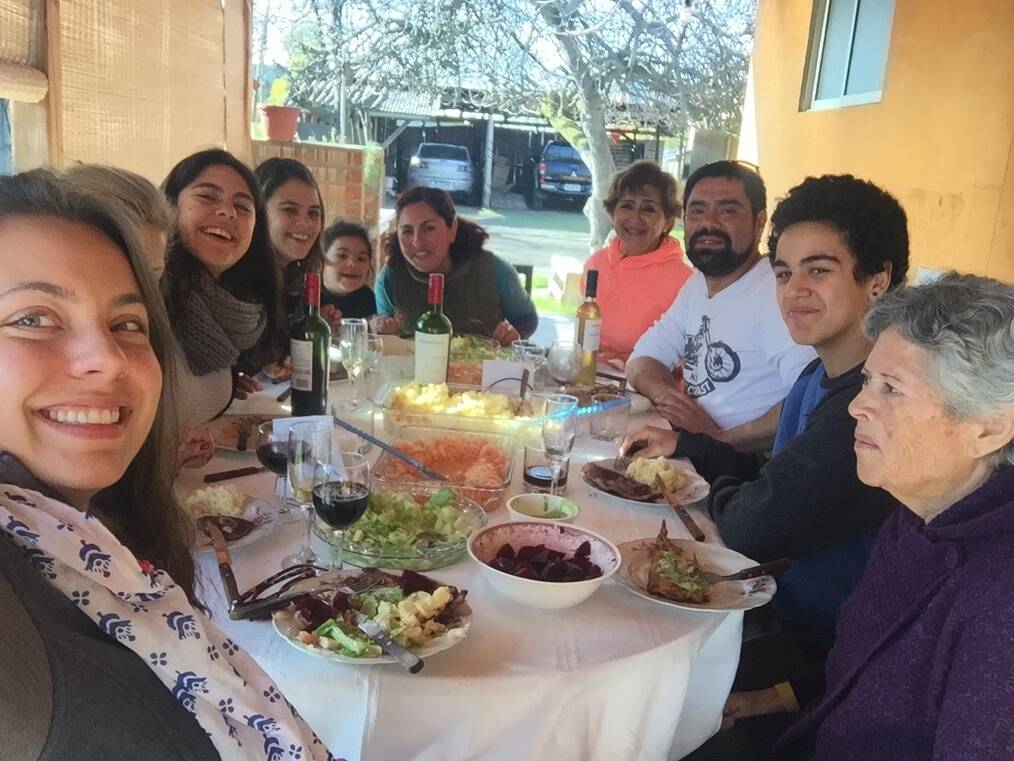
Personally I had a pretty good experience with the EOD program. My host mother was a warm person, great cook and provided me with everything I needed. She introduced me to her family and friends and made me feel welcome. I should say she didn't have internet though. But, there were internet cafes in my town and my school had internet.
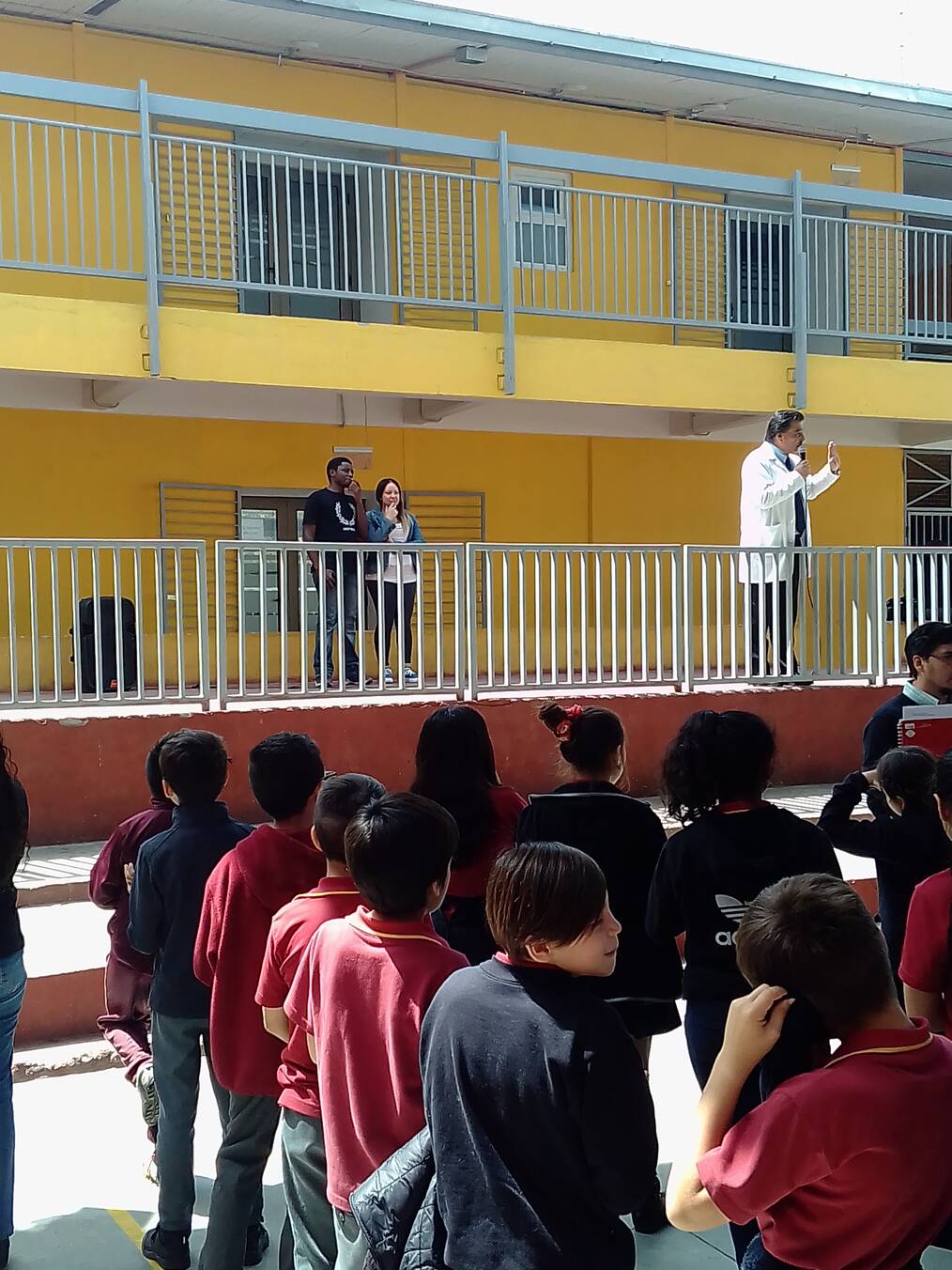
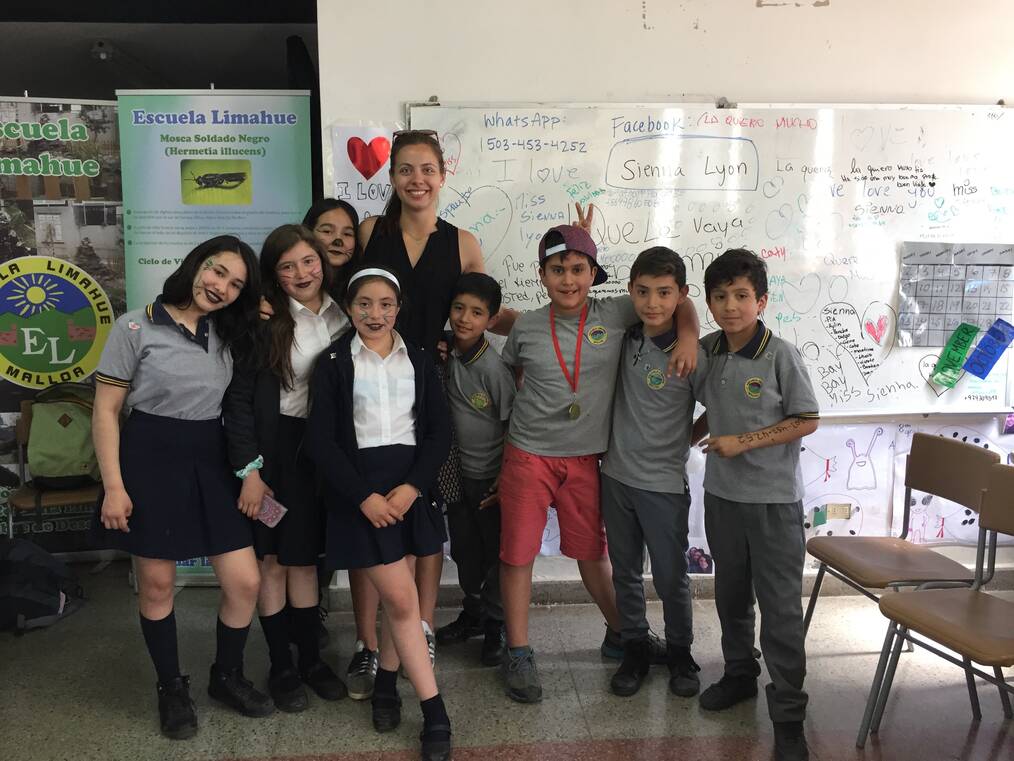
I taught in a public elementary school, 5th - 8th grade. I've never taught before and had very little training. The program provides you with 1 week of training before you head out to your school. Needless to say this part was a challenge for me. Chilean students are known for being difficult to manage in class and my kids could be pretty disrespectful at times. English is not a subject that is focused on heavily in public schools. Example: my students would have 6 hrs each of math and language a week but only 2 hrs of English. It could be hard to motivate them. Definitely be firm at first. I made the mistake of trying to friend them right away and it was tough to regain control of the class many times. That said, they could be lots of fun, they're kids afterall. They're very competitive and love playing games. Bring stickers, they love them. Maybe buy some candy from time to time as well, they love that stuff. The kids were very warm and affectionate. In some ways they'll treat you like a celebrity. Always asking you questions and coming up to say hi and give you a hug. I will miss them. Just lower your expectations of what they will learn with you.
Overall, I had a pretty good experience. I heard about some volunteers who had host families that would take them out traveling and give them the family car to drive and others who had host families that wouldn't even feed them. Some volunteers taught in nice private schools where students knew a good amount of English and were more disciplined and others taught public schools in rough areas where the police would show up on a regular basis. I always got paid on time, but others didn't. Note: Save up some money before you come down, don't depend on the program money.
Because this program is a gamble I would not recommend it to a friend. I'd feel terrible if a buddy of mine didn't get fed and wasn't appreciated at his school. However, from all the volunteers I talked to, I'd say at least 60% had a solid experience. Most volunteers had a decent host family and decent situation in school. Maybe 20% had it real rough, but even then not all of them quit the program.