Semester at Sea
Programs and Reviews
Their Roots: Semester at Sea began at Chapman University in the 60s, but the program was called "University of the Seven Seas." On that first voyage, 275 students set sail for 22 ports around the world aboard the MS Seven Seas to begin a tradition of shipboard education that continues to this day. The University of Virginia has been our academic sponsor since 2006 and we've had our current ship, the MV Explorer, since 2004. We've had many people take the lead over over the years - Bill Hughes, C.Y. Tung, Dr. M.A. Griffiths to name a few, although there have been many amazing people that have helped keep our program "afloat!"
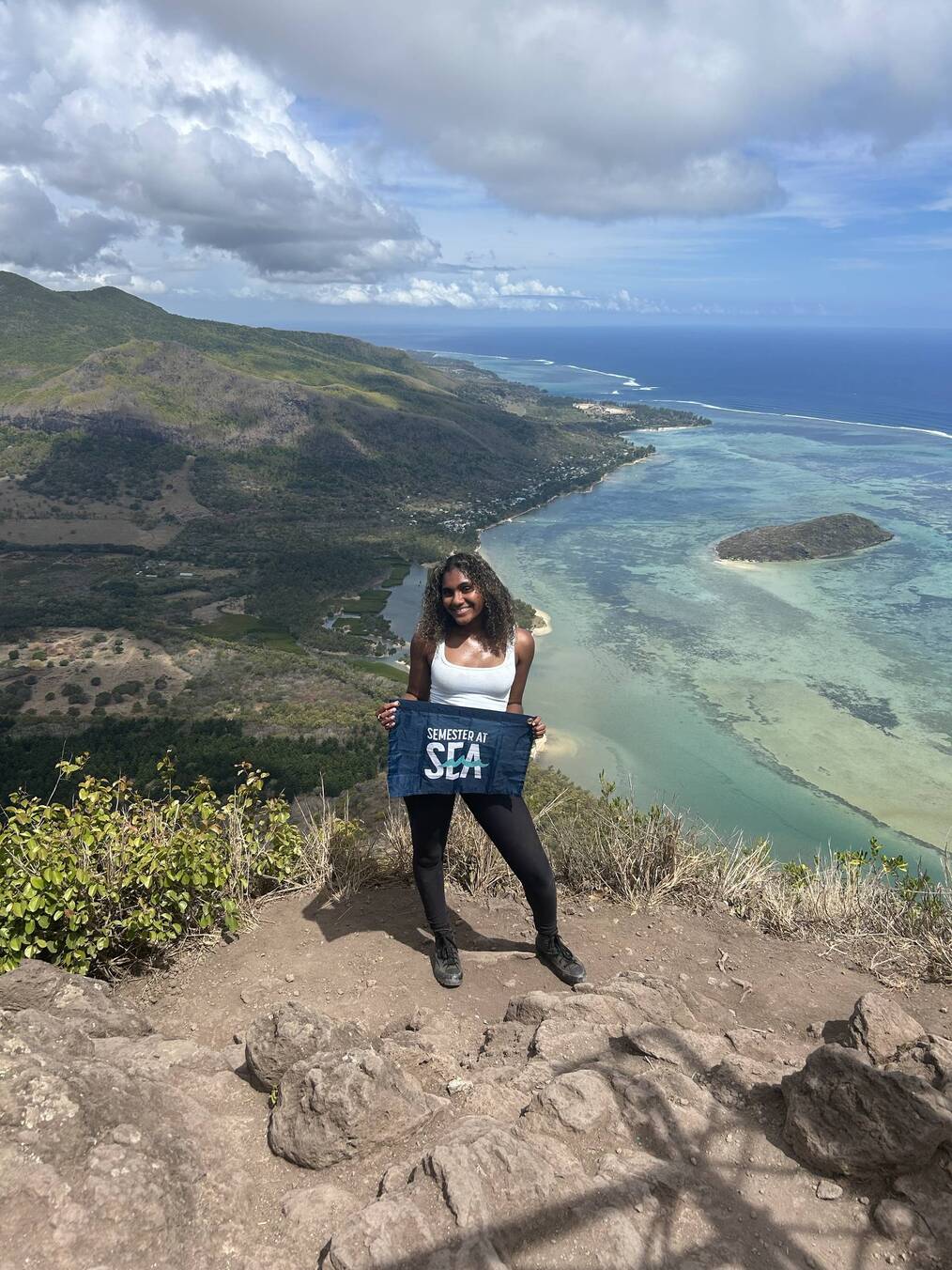
Their Mission: Semester at Sea works to educate individuals with the global understanding necessary to address the challenges of our interdependent world. With the world as our classroom, our unique shipboard program integrates multiple-country study, interdisciplinary coursework, and hands-on field experiences for meaningful engagement in the global community.
They've been around since: 1963
And can be found in: Well, as we speak, the MV Explorer is about to enter the Gatun Lock of the Panama Canal! Our floating university's motto is "The World is our campus." We visit around 13 countries per long semester, so I think it's safe to just say we are located in the ocean! However, our home base is in Charlottesville, VA where the University of Virginia is located.
Nothing looks better on your resume than global experience. And nothing will change you like seeing the world.
Programs Abroad
Reviews
100%Overall
Rating
100%Overall
Rating
I was a college senior, who had never left the country. I had dreamed of studying abroad but couldn't figure out - of all the countries in the world - where I wanted to go. Enter Semester at Sea. A unique opportunity where you live on a cruise ship converted into a university campus and circumnavigate the globe while taking classes from some of the world's most distinguished professors, interacting with ambassadors, and foreign dignitaries (Desmund Tutu spend the entire voyage on our ship), and stopping at over 13 different countries along the way. The experience gave me a truly global perspective, one that I had never had before. (Along with a heavy dose of wanderlust.) I cannot think of a better experience for someone who wants to see the world, and change your life.
100%Overall
Rating
I attended the Semester at Sea program through the University of Virginia. It was, BY FAR, the best time of my life. The professors, ship staff, and fellow students made the program a complete life changing experience. I would do it over again 100 times if I could, and I recommend that every undergraduate consider applying for the program!
100%Overall
Rating
Whenever I look back to my program on Semester at Sea, I have to remind myself that it actually DID happen. The combination of traveling the world, living on a ship, taking intellectually challenging courses, and being surrounded by a supportive community was almost too good to be true... almost. Somehow, Semester at Sea became one of the most definitive life experiences I could have ever had.
To get to the sad-but-true parts out of the way: first, it's pretty expensive. Although the value is second-to-none (think of going on a cruise for 3.5 months, plus the cost of a full course load of tuition, plus what it would cost to get to 10+ countries on your own, and SAS pays for itself 1,000 times over), the actual cost is substantial. I was able to raise the funds through a lot of hard work, but another thing I did not consider in advance was that the socio-economic status of a many of the students was above what I was used to and the shipboard community was not as diverse as my home institution in the U.S. I consider this a bit of a drawback, and I sometimes I had a difficult time relating to my peers. Some students won't even notice this and it's actually probably a reality in many study abroad programs, but for some students who really appreciate diversity you might notice this. Next, it was difficult to stay in touch with friends and family back home. I observed that students who were juniors and seniors on the program handled this much better than those who were sophomores (I never encountered any freshmen) and I was glad I already had some established independence so it made separation easier.
Now, to the good stuff (and most of it is GOOD):
Before we even departed, Semester at Sea advised us how to get visas, gave us options for field programs, and thorough descriptions of courses. I traveled to the program completely by myself and didn't know anyone else who was going, but Semester at Sea helped me feel comfortable with the unknown that lied before me. Whereas many people traveled with their parents, friends, or families before embarkation, I went to the Bahamas on my own to meet up with the voyage and I was completely fine with it because of the pre-departure advice SAS offered.
In my situation, my courses were a mix between challenging and easy. I was one of the few students who stuck through the infamous Global Studies course (required of all students, but too difficult to take attendance for 700 people so many ended up skipping) and I actually liked what I learned--I'm kind of a nerd, sue me. For other classes, some of the professors were really amazing at creating course curriculum that complemented where we were traveling on our voyage and it was some of the most interactive learning experiences I have ever had. On the other hand, some professors of mine were also just as excited to be on Semester at Sea as me, and it was somewhat evident that their lesson planning was lacking while they focused on other things. In the end I was grateful that some of my courses were easy; even as a really good student, I had a hard time balancing all the course work with the overall experience. It was difficult to do homework where there wasn't always a quiet place to "hide" and study and research was sometimes a nightmare (when I was on the voyage, we had strict internet restrictions) and the on-ship library only went so far. There was also the several aspects of time to adjust to that weren't standard: at sea you attended classes, at port you had an open schedule; we didn't have weekends, we had new countries. Instead of schoolwork we often wanted to take the time to plan what we were going to be doing with our friends in the next destination. Additionally, my voyage (Spring 2008) went eastward around the world, which meant we lost an hour every few nights as we crossed time zones. I didn't get enough sleep in college when I had 24 hour days, so imagine how tired I was when days would last only twenty-three hours! In the end, I was so grateful I only took 12 credit hours, even though back home I was used to 15 or so credits in a semester.
Before each new destination, we were given information about customs, money conversions, etiquette, recommended places, safety & emergency procedures, and more. Semester at Sea worked with local tour operators for added field trips (sometimes they were incorporated into a class) or you could go travel on your own. The only restrictions were international travel (at least for my voyage--we didn't go to Europe or anything) but otherwise students could travel anywhere nationwide while the ship was docked. I personally stayed close to the ship most of the time to keep within a budget, but you don't necessarily have to travel anywhere to find great museums, bars, beaches, mountaintops, coffee shops, and new friends. I could talk for days about all the different countries, but given that voyages vary and there are plenty of guidebooks to read, I'll speak more to life on the ship. Daily meals are prepared on board, and even in port you can always come back to the ship for lunch or sleep in your cabin if you're on a budget (although the meals did get repetitive after a while and "Taco Day" is infamous"). There were cabin stewards who straightened up your room every day (you're expected to tip) and the crew were some of the nicest people hailing from around the world--many became good friends of ours. The staff members and professors are all carefully selected and all are amazing and brought something to the shipboard community. Activities were planned, professors would give bonus lectures or seminars, people would teach yoga or dance classes--it really was up to the students, faculty, staff, and family members to make what they wanted out of the experience. One of the coolest aspects of the ship is how close-knit of a community it became and it's something that can't really be recreated anywhere else. There's a unique sort of bond you form with 700 people sailing around the world together. Before I went on Semester at Sea and I would interact with alums of the program I thought they were all ridiculous in their obsession about the program it was over, but now I get it; you have to somewhat be indoctrinated into that way of thinking. There really is nothing like Semester at Sea, and there's only so much anyone can say before you just have to experience for yourself.
100%Overall
Rating
One Field Trip that I went on in Japan represents an extremely profound memory during my time on Semester at Sea. On the second day in Kobe, I went to Hiroshima with my International Relations class. When we arrived in the city, our guide told us that the people of Hiroshima don't have any resonating feelings or attitudes towards anti-Americanism, but just hope and prayers for world peace and understanding. As a developing world citizen, this inspired my commitment towards learning how to appreciate different perspectives and cultures; it also helped me shed any ethnocentric views that I had about World War II and allowed me to go into the day with a totally open mind.
After a full day of touring the memorial museum, the monuments, and the t-shaped bridge that was the atomic bomb's target location, the students, faculty and I were completely emotionally and spiritually drained. The memorial museum displayed informative photographs that helped explain World War II and shed light to foreigners on how the atomic bomb devastatingly destroyed Hiroshima's people, culture and infrastructure. It was difficult to read through the sections describing the Untied States' justification for dropping the atomic bomb and why Hiroshima was the target location. Even though I didn't feel any bitterness towards me from the local people because I am American, I felt a need to show the Japanese, who were around me, how moved and touched I was by their suffering. I hoped that they would consider me a global citizen part of a united teamwork, rather than an American student who is just studying for school.
When I got on the bullet train that evening to travel back to Kobe, I sat down in my seat and within five minutes an elderly Japanese woman came and sat down right next to me; I learned later that her name was Kekune. We exchanged smiles and had our own two seats together, isolated from the bustling of the other passengers around us. Right away I could tell that she didn't speak a lick of English, and I thought that maybe we could communicate through writing words and drawing pictures in my journal. As I was flipping through the book, she saw the stamps from the Hiroshima Museum that I had pressed onto one of the pages earlier that day. She started pointing to the stamps and tried so hard to tell me something.
After an hour train ride, body language, drawings, and a translator to help us communicate, I found out that she was thirteen living in Hiroshima when the bomb dropped. Both of her parents were killed the day of. She spent two days after the bomb dropped looking for her parents' corpses; officials finally found them and delivered them to her. She suffered a lot of radiation sickness and so did her siblings, whom she raised herself after that day. She showed me her survivor booklet, which we had seen at the museum earlier that day and that all survivors carry with them at all times. Now, she is a widow with two children, one of them named Hiroshima.
This experience was incredibly meaningful. The energy between us was so powerful, despite the language barrier. After a full day of learning the importance of becoming a global citizen and caring for the cultures and economies outside of America, and then sitting next to a survivor of that source, instilled the values of worldwide compassion, understanding and learning into me. I was provided with a living example of the need to push us out of our comfort zones at home and learn how to make our own contribution towards making the world a better place.
Staff Interview
Holly Tawil is the Assistant Director of Admissions for Semester at Sea - and loves the opportunities she has to communicate with students, universities, and the organization's recruiting team across the country (in addition to all of her opportunities to visit and work on the ship itself).
MEGAN: What has been your career path so far - how did you end up at Semester at Sea?
HOLLY: I started as a resident assistant and leader in my campus community at St. Edward's University in Austin, TX. When I graduated, I worked at the University of Texas at San Antonio (UTSA) as an admissions officer and loved it! I obtained a master's degree at Texas State University in Student Affairs in Higher Education. I knew I wanted to combine my passion for studying abroad with my passion for student affairs, so here I am!
MEGAN: Did YOU study abroad?! If so, where and what inspired you to go?
HOLLY: I studied abroad as a graduate student through Semester at Sea's Student Affairs at Sea. Most of the ship's 740 passengers were undergrads, which was a lot of fun. We read about what higher education looked like in other countries and then visited those places in person. It was the best semester I ever had (no offense, alma maters)!
I always wanted to study abroad, but I loved my leadership roles so much in college that I never wanted to leave and give those up. Finally, it was my last chance in college and I knew it was "now or never." My family does not travel so it was my first time out of the country, and guess what: I went to EIGHT countries!
MEGAN: What separates Semester at Sea from other study abroad program providers?
HOLLY: Semester at Sea is the ultimate in comparative global education. It can be hard to decide on one country to spend a semester in, so why not visit a lot? Not too many people can say they literally travelled around the globe. I also like the fact that we visit some of those "destination" locations, but we also go places that are not so main stream. Oftentimes, that ends up being a student's favorite place. Some of our students even decide to study in a particular country or express a newfound interest in the Foreign Service as a result of their voyage, which is very meaningful to us.
We have some really prominent people board our ship as voyagers or speakers. Some of those notable people include Archbishop and Nobel Laureate Desmond Tutu; former president of Cuba, Fidel Castro; Nelson Mandela; Mother Teresa, and the list goes on. Students become inspired to be servant leaders. They become aware of human rights issues in countries all over the world. They become global citizens.
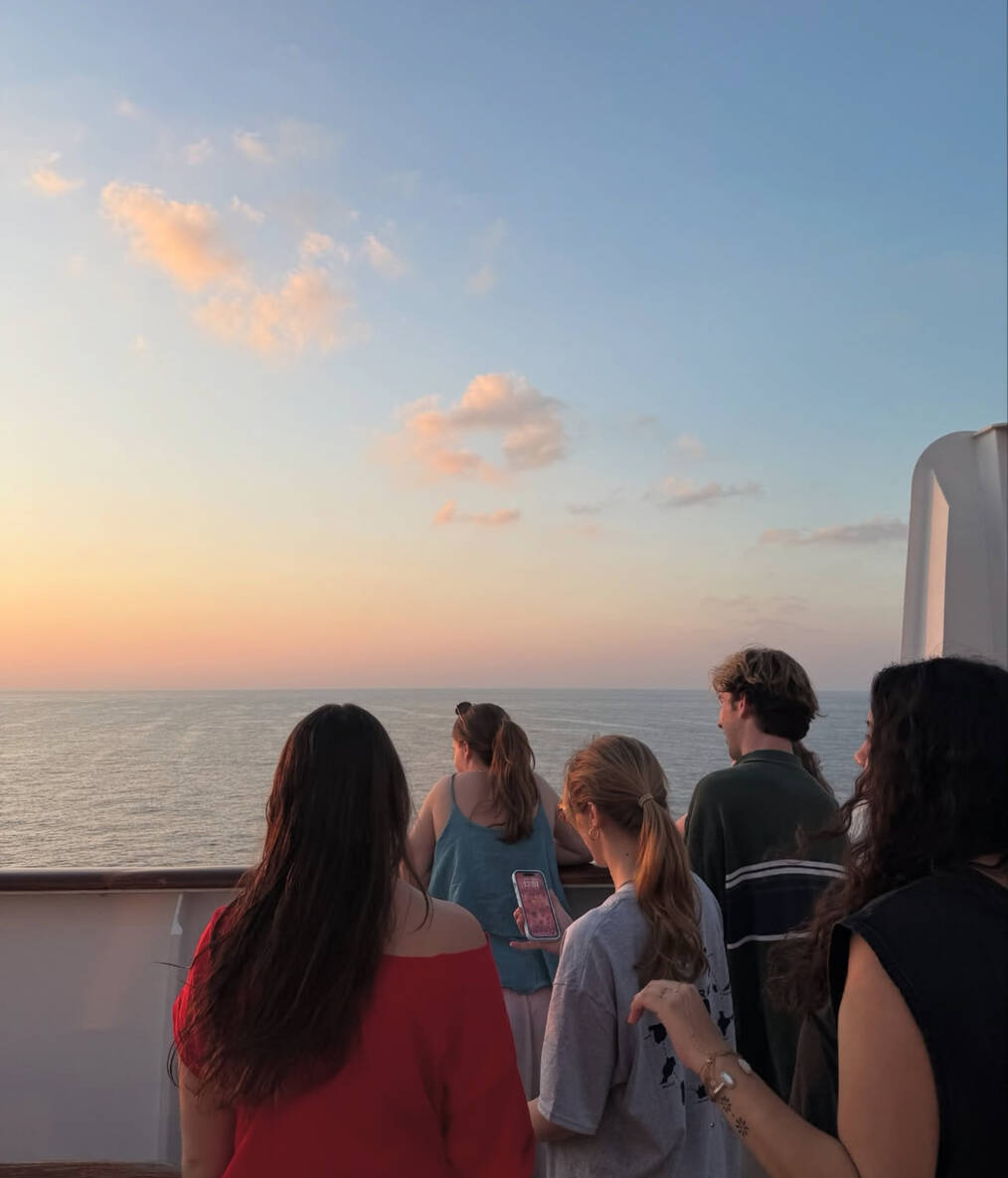
The ship itself is also very magical. Is it cheesy to say "magical?" It offers services that a typically college campus would offer (health center, library, student life, recreation facilities, etc), but you are surrounded by the beautiful ocean. Look at what our Fall 2011 voyagers put together just a few days ago...it went viral!
MEGAN: What does the future hold for Semester at Sea. Any exciting new programs to share?
HOLLY: We have over 55,000 alums, so we are constantly listening to them in order to make our program strong. We are always welcoming really interesting guests on board that impact the program's future in very positive ways. We're always looking into new ports to visit. Check out our short term 2013 voyage--we'll be travelling all over northern Europe which isn't one of our regular itineraries. I'm really excited about Gdansk, Poland. There is so much in that city for history buffs. I think students will really learn a lot about WWII, the Cold War, and the Solidarity Movement/fall of Communism in Poland. (Uh oh, my nerd is showing!)
MEGAN: What about the future of the industry? How do you think study abroad and international education will change over the next 10 years?
HOLLY:I think studying abroad is becoming more of "the standard" in a college experience. More universities are stressing the importance of international education and students are spreading the word about their experience. Studying abroad is also becoming more diverse in terms of who studies abroad and where they go. With all of these current trends, I think we're going to see international education more accessible and desirable.
MEGAN: How do you think study abroad and international education will change over the next 10 years?
HOLLY: The future of U.S. study abroad is very bright, indeed! Data in the recently released 2011 Open Doors Report from the Institute of International Education confirms that an increasing number of U.S. students are experiencing the benefits of international study. In fact, the 2009/10 academic year saw a 3.9% increase over 2008/09. Moreover, study abroad is becoming more accepted as a critical component of the well-rounded undergraduate experience. SAI is proud to be part of this movement towards a greater cosmopolitan emphasis in American higher education.
I wish I had considered Semester at Sea more seriously while I was an undergraduate in college (but as Holly said - its never too late!) Her parting words were particularly poignant: "Students, when you walk across the stage at graduation, don't think about all the things you wish you would've done. Think about all the things you accomplished. That said, just go for it!"
Studying abroad is a great conversation starter, especially in job and graduate school interviews. The experience allows you to reflect on so many aspects of your life: career choices, personal values, goals, and your interactions with people. It is also a great opportunity for language acquisition!


Living with amazing college students from all over the USA, learning from professors who have great passion, seeing so much of the world - what more could you ask for! If you have an adventurous spirit, this is the place for you. I saw so much and met great friends and really tasted the life of travel and adventure and I have never turned back - still living overseas now, currently in Switzerland!