Why did you decide to volunteer with Adventures in Preservation in Albania?
I participated in the Adventures in Preservation volunteer workshop in Gjirokastra, Albania in September, 2010. I enjoyed the experience a lot, both on a personal and a professional level. Previously, I participated in many other workshops and conferences in Canada and the U.S., published a few articles, got involved with other non-profit organizations, and worked in the field of heritage conservation since 2003. I came to Adventures in Preservation (AiP) with certain expectations related to my own professional development, only to find out that it is a different and complementary kind of workshop compared to my other experiences.
Adventures in Preservation is a United States organization whose mandate is to help preserve World Heritage sites by providing support for community projects with a focus on sustainable development. In most of their workshops around the world, AiP is organizing the work, finding the experts and networking with participants and other organizations. This particular workshop in Gjirokastra had an important partner organization for this 2010 workshop: Cultural Heritage Without Borders, a private Swedish foundation established in the Balkans to protect cultural sites threatened by war, natural disasters, neglect and political, social and economic conflicts. Beside CHwB, AiP is partnering with the local authorities and organizations, experts and various stakeholders.
Describe your day to day activities as a volunteer.
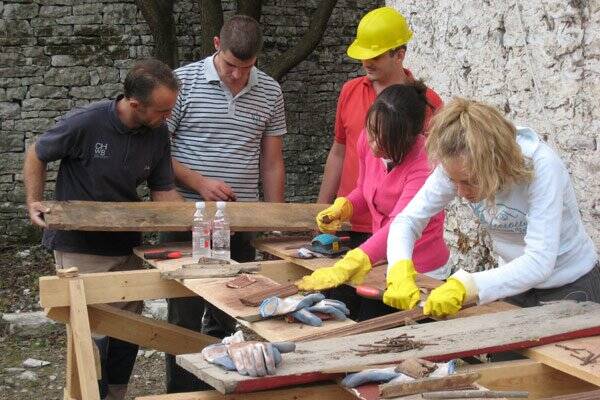
A normal day would start early in the morning in a lecture room where various experts would present about architectural techniques in Albania, lectures on history, and best-practices in conservation. Towards the end of the morning we were on the building site with other experts who would teach us either woodworking or plastering techniques. We would work until 17:00 (5pm) or 18:00 (6pm). On certain days, we would either visit the local museums or other heritage sites.
Although we were two groups (the one from AiP and the one from CHwB), we blended well together. Of the 20 or so participants, slightly fewer than half were Albanian architecture graduates, while the other half were mostly young professionals from about 12 countries who were interested in acquiring practical knowledge, developing networks, studying best practices associated with community heritage preservation projects, or just in search of a hands-on experience. Most of us were not new to conservation / preservation, but all of us were new to plastering a wall with the traditional techniques of Gjirokastra!
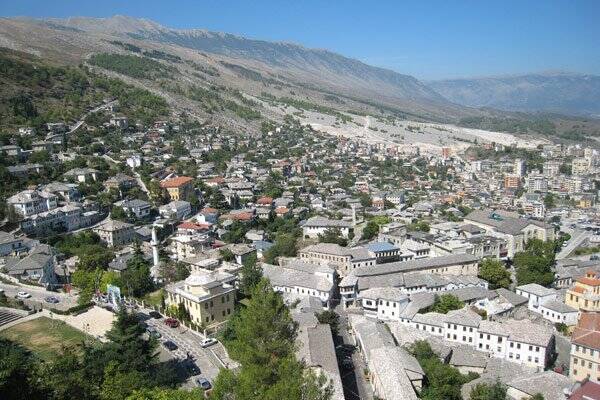
Workshop participants took part in restoration and rehabilitation work on a former residential building with fortified turrets (kule) called Babameto I. Because of the materials used and its stone construction, this building of Ottoman design is characteristic of Balkans region architecture in the 17th and 16th centuries, particularly in the city of Gjirokastra. The district around Babameto I was a former Ottoman trading centre and was designated a “museum city” by the government in 1961. Later in 2005, it was listed on the UNESCO List of World Heritage Sites. The building has Category 1 protection (no changes to the exterior are permitted), as do nearly 10% of the 600 other buildings within this World Heritage site. Despite this recognition and legal protection, Babameto I is in an extremely precarious situation. Because of complex problems of property rights, large numbers of tenants during the 20th century, neglect, lack of maintenance, and economic problems in general, these buildings are quickly deteriorating and at risk of collapsing under the enormous weight of their stone roofs.
In 2002, local stakeholders believed they could no longer be saved, as did many observers when the buildings were included on the List of World Heritage Sites in 2005. However, in spite of funding and corruption problems, it should be said that the considerable effort invested by governments and international organizations has helped to awaken an interest in communities and regional organizations, which are now taking charge of heritage preservation activities in Gjirokastra.
What kind of instruction does AiP provides?
First, AiP provides practical instruction via the experts. There's a team of local experts, but sometimes there's also a project leader who can join the team from a different country. This team usually provides the tools, the building materials, and the know-how. The instruction is provided in English. To my knowledge, this doesn't lead to a certificate or any credits in a continuous learning program recognized by architectural or engineering societies. However, any employer would consider it a relevant experience on your résumé.
Second, AiP also provide theory instruction. Depending on the nature of the workshop, its funding, etc., this theory can vary a lot.
Third, you would be provided with an incredible networking opportunity. This is an important benefit if you intend to be working in the field of heritage conservation in the future, but also true if you're a curious traveler who wants to expand your knowledge of the Balkan culture and meet interesting people.
Fourth, there could also be some opportunities to get other kind of instruction, depending what your personal learning objectives are. In my case, for example, I was very interested into learning more about policies and management of this world heritage site. I mentioned it to my AiP leader in advance, and she helped me meeting people in Gjirokastra and learning more about the interaction between the various organizations.
How has this experience impacted your future?
I found many benefits attending this workshop. On top of everything else, this was a very hands-on experience and a great opportunity to be working actively on a historic resource. I appreciated that however well organized the leaders are, it was still up to the participants to bring in their own background experience in order to make this workshop something more than just lime plastering or woodworking. The knowledge and the know-how provided through this AiP workshop was based on shared experience.
It was also great to be able to know more about the administrative and political forces that are driving conservation projects in Albania, as well as to compare it with the standards and guidelines developed elsewhere.
In regards to Adventures in Preservation and Cultural Heritage Without Borders, not only did my participation in this workshop allowed me to learn a lot about the best practices developed by these non governmental organizations involved in heritage preservation, but it also reminded me that heritage preservation is primarily a community driven force.