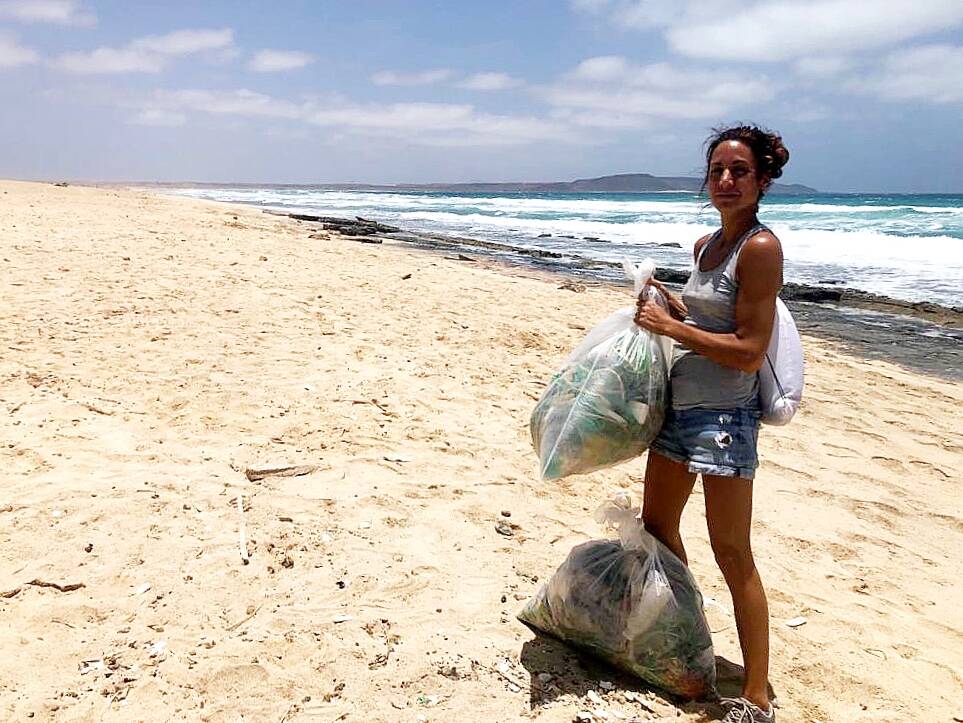
Graduating as a marine biologist in Barcelona, she started her career as a conservationist in Costa Rica. After that, she arrived in Cape Verde as a volunteer for a marine turtle conservation NGO, and she didn't leave the country. Berta is one of the founders of Project Biodiversity, and she's been its director for 7 years.
What is your favorite travel memory?
Traveling always brings you unforgettable experiences that crystalize as unique memories, but I guess that the ones that impress the most come from the first big trips that one takes.
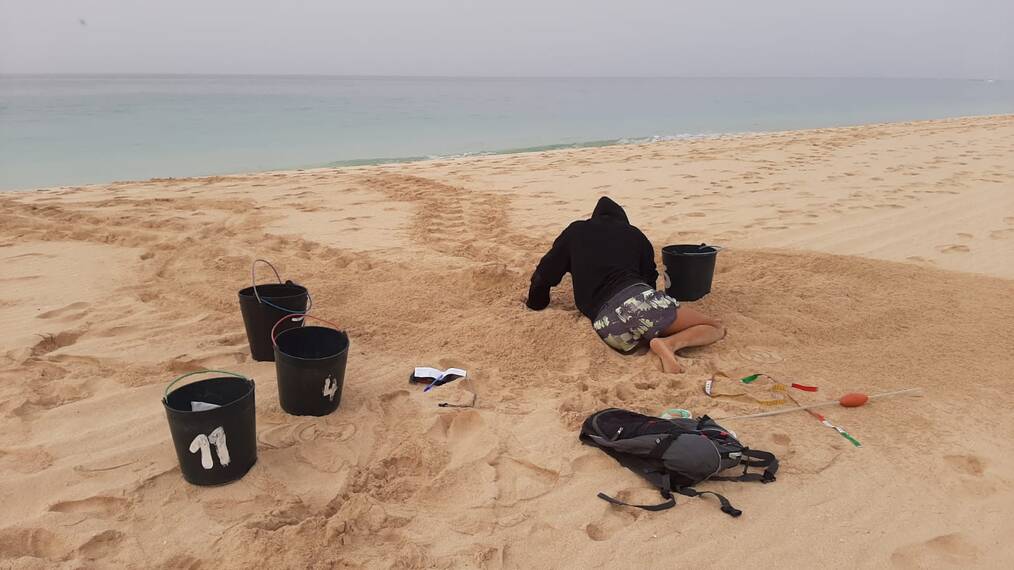
One of my favorites is my volunteering experience with the Olive Ridley turtle in Playa Hermosa, Costa Rica. At first, it was truly hard to get used to the night shifts, the long walks carrying bags of eggs, the sand fleas, and the Gallo-pinto; but at the same time the landscape and the people who we were with at the station were, and the feeling of contributing to something bigger was so incredible, that I had to pinch myself constantly to make sure I was not dreaming.
How have you changed/grown since working for your current company?
Professionally, I've discovered that I have many skills that wouldn't know or wouldn't be developed if I wouldn't in this position. We started Project Biodiversity from scratch, with no resources and barely any funds, and the need for survival, together with a strong belief in our vision, pushed us to navigate unknown venues, in which I have been able to grow my natural organizational and mediatory skills.
Learning from my mistakes, from listening to others, and from successes, has given me a solid foundation for carrying on my job.
What is the best story you've heard from a return student?
One of our favorite stories, which is really inspiring, is Caroline's story: she joined the marine turtle protection campaign for two weeks in 2019. Despite a relatively short stay, the experience she had was so impactful that she decided to change the course of her professional career on her return.
After several years in the management of QHSE (Quality, Hygiene, Safety, Environment) risks in the industry, she decided to deepen into the Environmental side and specialized in sustainable & ecological habitats. She's currently fully dedicated to actively promoting sustainable development!
If you could go on any program that your company offers, which one would you choose and why?
I am going to get involved soon in the Marine Monitoring Programme, which is starting in mid-2022. Performing the director role has kept me away from the field for long years, despite that, I always tried to squeeze some time for it when I could. As a marine biologist, I've been missing the more direct contact with the ocean.
I always like to join activities in as many programs as possible, as I like to be involved from within (it helps to know your organization better), but I must admit that I have a weakness for the Marine Turtle Conservation Programme, as turtles were the reason that brought me to Sal in the first instance, and the reason to create Project Biodiversity.
What makes your company unique? When were you especially proud of your team?
It is unquestionable that one of the bigger strengths of Project Biodiversity is our resilience and an extremely strong commitment to our mission. We all share this innate spirit that pushes us to go beyond what could be considered "enough"; we only know to stop when the objectives are achieved, helping each other to achieve them.
I've felt my dreams become true on many occasions along these years, and it has always been possible thanks to teamwork. Even at this point in which the organization has wrong to have more than 15 permanent staff, we still feel that we're like a family.
What do you believe to be the biggest factor in being a successful company?
I believe that what makes Project Biodiversity unique -our strong commitment, is also the key factor for its success.
We have a broad and inclusive vision: in our context, we do not understand conservation as an isolated concept, or as an oppositional action. Instead, we intend to make conservation part of everyone's lives, encouraging the involvement of all spheres of society, from governmental institutions to the private sector, to the local community, and to the international community and volunteers.
We understand that conservation is not only a conservationist's thing but everyone's responsibility for a better world.