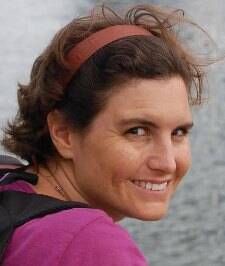
What position do you hold at TRACC Borneo? What led you to join them?
Now, I'm the administrator. I do the paperwork, manage all the bookings, answer all the e-mails and make sure TRACC is well represented electronically. But I joined TRACC as a volunteer, then as an intern and finally as paid member of staff.
As a biologist it can be very hard to get your foot in the door. You have a degree but no experience and there is this wheel of stone that can be very difficult to crack. No job = No experience = No job = No experience.
Volunteering at TRACC gave me my first opportunity to actually put my theoretical knowledge into practice. Then, knowing that they offered internships to promising volunteers I committed myself 100% to putting the most in and getting the most out of my experience.
What do you find most challenging about your role? Most rewarding?
The most challenging part of my current job is managing people's expectations. We're not a hotel! Our primary objective is reef restoration and conservation. Everyone does their laundry in buckets because we don't waste our financial resources on generating the masses of electricity required to run a washing machine or paying else someone to do it.
A project we have in development is trying to set up a school for stateless children so that we can break the vicious cycle of illiteracy, poverty, lawlessness, statelessness and non-sustainable development that they are stuck in. That needs our resources far more than having an unlimited supply of fluffy white towels!
The most rewarding thing about working for TRACC is when you realize you did in fact make a difference. The little moments that prove all this work actually achieved something. When you dive on the reef, and yeah, you can see the plastic bottles and blocks of cement, but it's also covered in coral and fish and life that 12 months earlier wasn't there.
When you go into a village and realize the birth rate has dropped 80% because 5 years ago, you introduced a group of illiterate village women to the concept of family planning. When your local friends and staff and interns start to campaign and educate their friends about shark conservation or turtle egg poaching or recycling. When your boat man shouts at kids for throwing a plastic bag into the sea....
What has been your favorite story so far of a volunteer's experience with TRACC?
We were going out for a dive one day, and it was the perfect day; The sun was incandescent, the sky was a perfect hemisphere of brilliant blue and the sea was like a mirror, not blue, but silver, like driving through liquid mercury. Then, over to our right, there was a sudden movement on the surface, and another, and another, like someone was throwing pebbles into the sea.
So we turned the boat towards it, cut the engines and just drifted. As we got closer to this curious patch of motion you could hear every movement going pfft, pfft, pfft and suddenly we were completely surrounded by this huge pod of dolphins! They weren't going anywhere or doing anything, they were just hanging out.
So we put our mask and snorkels on and just lay there, in absolute stillness, watching them for at least half an hour. There must have been 60 or more; diving, swimming, chasing each other, but mostly just indolently floating. It was fascinating.They were so serene.
And whilst it was a perfect moment, it was also curiously dissociated. Nobody made a sound. I don't even remember breathing, as though the slightest movement would break the spell. We all said, afterwards, how privileged we were to have been there and seen that.
What do you hope volunteers take away from their experience at TRACC?
I hope our volunteers leave us with their eyes opened. Bomb fishermen are just trying to feed their families. Statelessness means you get a job anywhere someone is willing to skirt the law to employ you, you keep your nose clean and you save up to buy your children an identity so that your grand children might go to school.
Ecotourism doesn't just mean taking tourists to a pretty bit of biodiversity but making sure that their tourism dollars goes into to maintaining, improving and expanding it. I also hope our volunteers have a great time, make great friends, do great things and are inspired to do more, travel more, meet more people learn more, live more.
What advice/tips do you have for anyone considering volunteering and scuba diving in Borneo?
Get off the internet and do it!! The hardest part about doing anything incredible is deciding to do it. People think it's difficult, but really you just need a plane ticket. Once you've got that, everything else falls into place.