
My name is Gemma Pitcher and I'm the volunteer coordinator for Fundacion Mariposas Amarillas in Santa Marta, Colombia.
Staff Spotlight: Gemma Pitcher
Photos
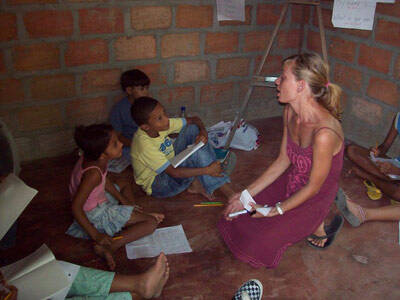
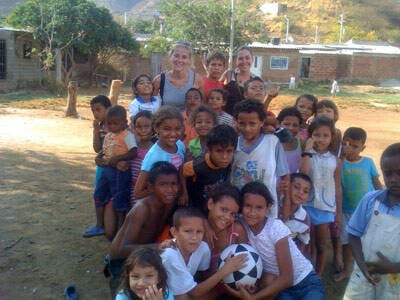
Gemma Pitcher is the volunteer coordinator for Fundacion Mariposas Amarillas. Gemma, and the rest of the Amarillas organization, work with poor neighborhood communities in Santa Marta, Colombia. Their goal is to invest time and resources in students to provide them a better future. They regularly bring on international volunteers, but pride themselves on working closely with the local community.
Lets start with a brief introduction. Who are you, where are you, and what are you doing?
How did you get involved in the volunteer industry?
I'm a journalist by training, and last year I took six months off to travel around the world as a career break. I also wanted to do some writing and photography of my own, which is what led me to Mariposas Amarillas. I turned up one afternoon to meet the volunteers and visit the school and I was hooked!
Tell us about Fundacion Mariposas Amarillas, and your role within the organization.
Mariposas Amarillas is a small Colombian grassroots organization committed to supporting disadvantaged children and families around Santa Marta, Colombia. Its founder and director, Oscar Cortes, grew up on the streets and missed out on an education while trying to survive. He's now dedicated to making sure other children have the chance he missed out on – a safe space to learn, the support of adult mentors, and hope for the future.
We provide services (education, psychological assistance, recreation), supplies (food, clothing, items for school and home), and information on nutrition, education, and childcare to families in Santa Marta’s poorest neighborhoods.
My role is to recruit volunteers and to do the communications – keeping the website updated, making sure we're listed across the internet, and looking after the Twitter and Facebook accounts. I also answer the emails and respond to enquiries from prospective volunteers, partner organizations, and the media. I am also always looking for opportunities to organize fundraising events or attract donations.
How does Fundacion Mariposas Amarillas work with local communities?
We run two schools, which children attend in the afternoons. Some go to public schools in the morning, but for many we are their only source of education. We teach classes in reading, writing, mathematics, art, sports and geography to kids aged from three to fourteen. Altogether over 200 children attend our schools.
How can volunteers stay centered with realistic expectations?
It's easy to get carried away and think that you can change things overnight. But our communities, although very friendly, are also very fragile, and a soft approach is needed before we suggest any changes to parenting, nutrition, or education. We also remind our volunteers that without a regular source of funding, they will need to self-start any projects they might want to run, so ambitions need to be balanced with realism about how much money will be available and how much time everything will take.
The important thing is to get a structure in place so that the gains made by one volunteer can be passed onto the organization and used to benefit the community as well as helping to inform future projects. Our volunteers need to think not just about what they're doing while they're here, but how to make this sustainable once they've left.
What is the continuing benefit of volunteering abroad?
Volunteers learn a lot of skills that are beneficial in their future careers – how to be flexible, how to adapt to unfamiliar or even difficult situations, how to work with people from different cultural backgrounds and how to surmount the language barrier.
Volunteering in Colombia is immensely rewarding, and as we are such a small organization we have a very flat hierarchical structure so there's a real opportunity to learn about the inner workings of a grassroots organization, which is tremendously useful for volunteers hoping to go on to jobs in development or community work. Additionally, we provide an excellent way to fast-track Spanish skills! I also think that the perspective of working with people from such marginalized backgrounds can be very valuable when a volunteer returns home to the comfortable life they left behind – nothing will ever quite be the same.
How do you respond to some criticisms that volunteering abroad does more harm than good?
200 children who would not otherwise receive a quality education are able to attend school every day thanks to our organization. We receive no funding other than the donations from the volunteers, and would never be able to afford to run our schools with paid employees. Without our volunteers, we simply would not exist; it's as simple as that.
What are some of the less obvious benefits of volunteering abroad?
The friends you make, the crazy nights of salsa dancing, the smiles on the faces of the kids when you turn up at the school. Many of our volunteers say that the weeks they spend with us are amongst the best experiences of their lives.
What does the future hold for you?
I've now returned to Australia, but will be back in Colombia next month to carry on volunteering. I'm also studying for a Masters degree in Photojournalism, with the goal of ultimately working for an NGO as a photographer.
Famous last words?
If you're thinking of volunteering abroad, don't pay too much for it – there are thousands of grassroots organizations like ours who need your help desperately and won't charge you the earth.