

Why did you choose this program?
I chose this program as I valued cultural immersion as much as academic immersion, and APA was recommended to me as a program that shared my values. I had a friend who had done the program and told me that students are given an excursion calendar alongside of an academic calendar, and I was sold. On the academic front, I was advised by by professors that if I wanted to study French colonization and post-colonization, studying in France would not suffice as I would need to explore the repercussions in the Maghreb and Western Africa. APA proposed a program where I would be able to do just that.
What did your program provider (or university) assist you with, and what did you have to organize on your own?
The Particularity of going abroad with APA is how detail-oriented and involved the program is. The program provides housing, whether it is with host families or a dorm. They will pick up students from the airport. They arrange multiple excursions and weekend trips! The fact that the program itself plans trips and activities for the students is such a gift because the team on the ground, whether in France, Morocco, or Senegal, are native,s. Hence, the activities planned and the places visited on weekend trips are places and activities that locals enjoy and love. So as a student, I would have never known about certain activities orgoneo to certain plays and concerts, had the the program not taken us or booked the sold-out tickets months before our arrival. The program also organizes vaccine appointments upon arrival, provides transportation passes, and even provides students with a list of medications to bring. As someone who had to get visas for all countries, the program assisted me with all the required documentation. I remember in Morocco and Senegal, I needed to renew my visa, a and a member of the team took me to all of my appointments! The program booked all the flights between each country. The program even provided us with Therapy! Truly, the list is endless. The program assists students with nearly everything if you ask.
What is one piece of advice you'd give to someone going on your program?
I have so much advice, but I would advise my friend not to put too much pressure on themselves or the country being visited to be life-changing. Going abroad is a transformative experience; there is beauty, culture, and cuisine out there far beyond anything I could have ever dreamed of! But, realize that people in Europe, Africa, and anywhere around the world have the same problem. So don’t put too much pressure if at some point you feel homesick, or if you are still anxious! You are human, enjoy the experience,e don’t I idolize it! Also, pack light, you will come back with an extra bag of souvenirs!
What does an average day/week look like as a participant in this program?
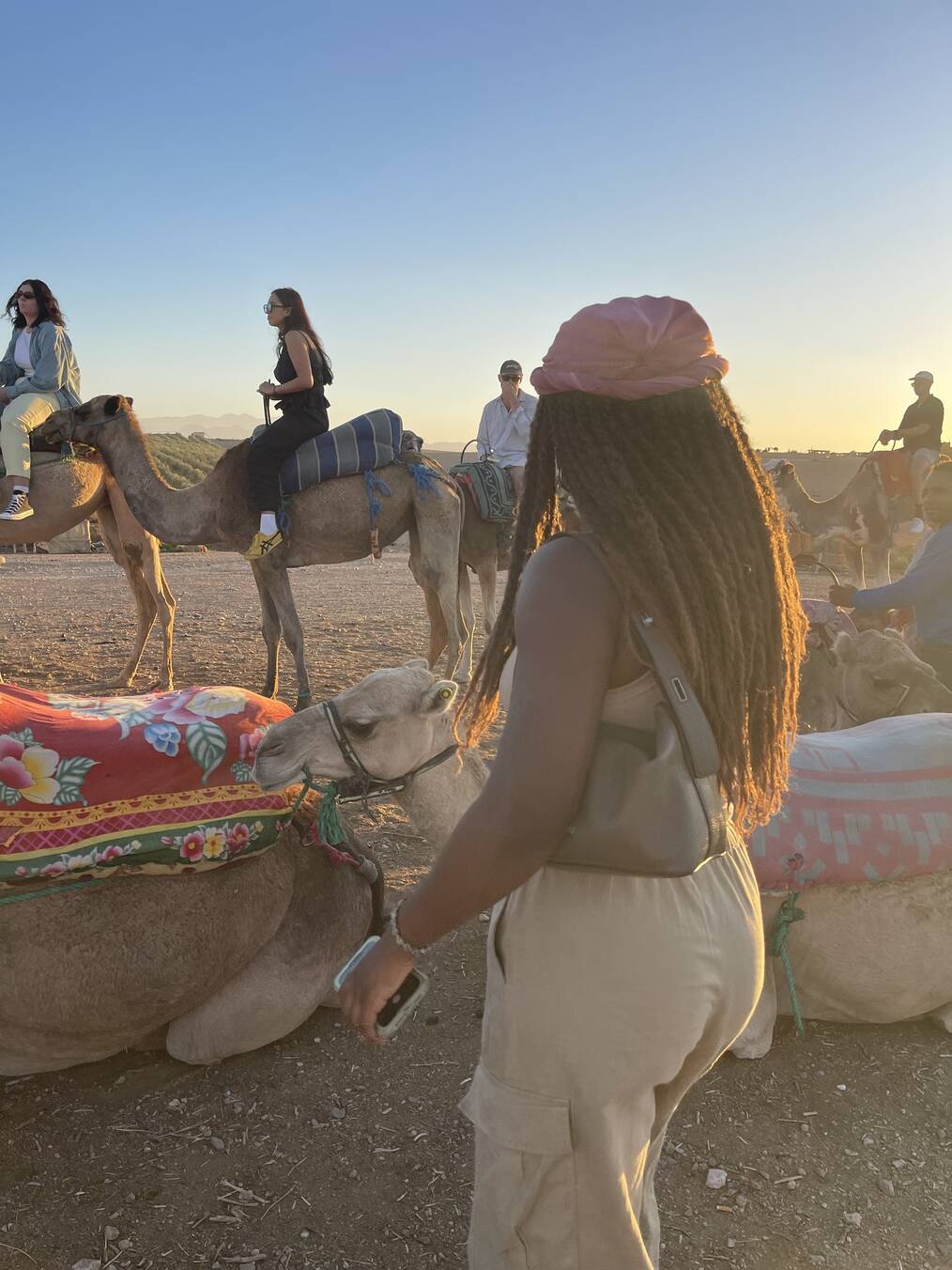
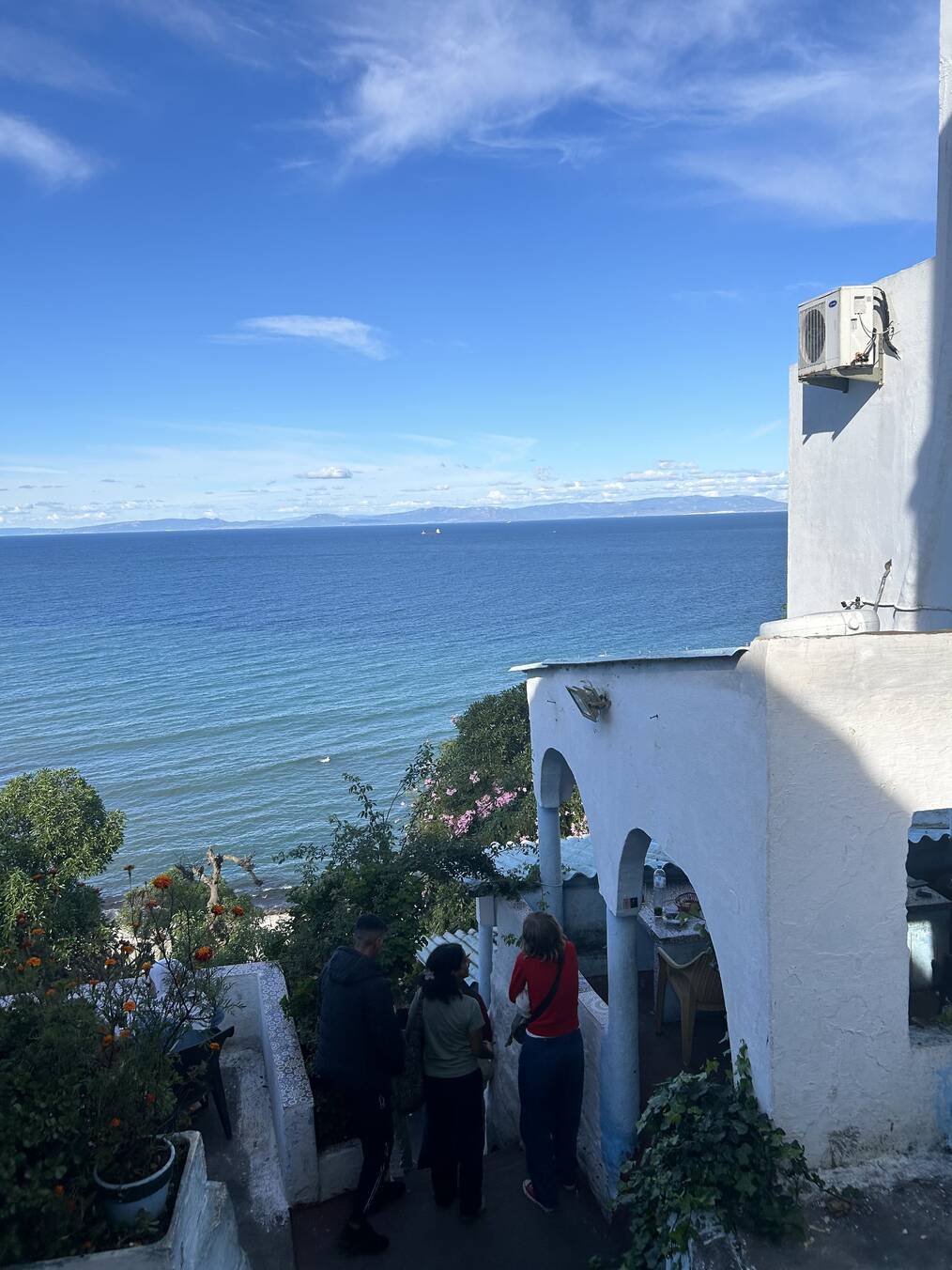
An average week as a participant of APA Multi-country France, Morocco, Senegal will look entirely different based on the country, but the framework remains the same. Student weekdays consist of going to class, weekly excursions, spending time with the host family, and going on a weekend trip arranged by the program. In France, I lived in the 13th arrondissement of Paris, which was close to our classes, so from Tuesday to Friday, I would go to classes in the morning, then in the afternoon, we would have language support twice a week. Students had individual and collective language support. At individual language support, I would go to the office of the program to meet with a French tutor who would go over my homework for any grammatical errors and work on my oral proficiency. Twice a week,k we would have excursions, so maybe e Tuesday , someone on the team would accompany all the students to an École du Fromage to learn how cheese is made and have a cheese and wine tasting. Then, on Thursday, the program would organize for all the students to go to a jazz concert. For the weekend, students would be directed to meet early morning to spend a weekend in the Bourgogne countryside of France. Outside of my schedule with the program, I would travel to northern France to visit family, spend the evenings with my French host family making fresh yogurt, and watching movies. The difference in Morocco would be that our excursions would be boat rides, bread-making workshops, mosques, and we would spend our weekends traveling to Fes, Volubilis, and Meknes. In Sénégal, we would spend the weekend at Sine Salum, staying at a lodge by the water. Nonetheless,s no two experiences are alike. While in Paris, I spent my night having dinner with my French host family and making Fresh yogurt. My friend in the program, who is a film major and was matched with a host who is a filmmaker, spent their evenings bar-hopping and discussing movie ideas. In Senegal, while my host mom took me to a traditional wedding, my friends spent the weekend at her host family's elaborate vacation home on the other side of the country.
Going into your experience abroad, what was your biggest fear, and how did you overcome it? How did your views on the issue change?
My biggest fear going abroad was that I would struggle to adapt. I was scared that I was not proficient enough in French to advocate for myself in case something went wrong. I was scared to navigate public transport and public spaces. I was scared that going into Muslim states and living with host families in Morocco and Senegal, I would not be able to integrate or connect as a Christian. I was just fearful. Two of the main things that calmed my fear were lived experiences and the support Team of APA(my study abroad program). By lived experience,e I mean being put into situations where I had to just do it! Taking the trains in Paris, taking a taxi in Morocco, and Senegal, I realized I just had to put myself out there and do it. After taking the train in Paris for the first time, I realized it’s not different at all from the States (better, actually). After bargaining with a taxi driver in Senegal to lower the price of the ride and the driver joking about how stubborn I am, I realized I might have been in another country, but people are human everywhere—they want to work with you, they have the same sense of humor. Living with my Muslim host families made me realize how many similarities there are between Christianity and Islam, which grew my respect and appreciation for the religion. Living with host families in France, Morocco, and Senegal made me realize that I might not share the same culture, nationality, or religion as those around me, but our fears and aspirations remain the same. I realized that the common humanity of the world's population means that I will be able to adapt to living in any country. In other words, the best way to overcome your fears about going abroad is to go abroad and learning how self-sufficient you are and learning how similar you are to people across the world. The second way to mitigate your fears is to choose a great program to go abroad with. APA anticipated all my fears. They had orientation where they connected the students with mental health resources, they provided public transportation passes, they paired each student with a tandem(a local student who helps us get to know the city and connect us with the youth culture)they took us to get our SIM cards, they even taught us how to bargain, when to bargain and common slang of each country to better assimilate.
Why choose to extend your academic and personal experience abroad across three countries?
Multi-country study abroad program is not often the norm for students looking to spend a semester studying abroad. So why choose to extend your academic and personal experience abroad across three countries? Studying abroad in 3 countries helped me break the mundane rut I had entered my sophomore year, as it asked me to constantly adapt. Studying abroad helped me rediscover my love for learning, as it presents you with the opportunity to immerse yourself in new cultures and ways of life. Studying abroad increased my confidence, as I was prompted to trust myself as I was navigating foreign settings. To put it simply, at Harvard, I am Michelle Jean-Louis. But, in France,e I was Michelle Gerin-Roze. In Morocco, I was Michelle Benabdelkader. In Senegal, I was Michelle Diop. The relationship and routines developed with each of my host families have allowed me to discover and adopt different customs into my way of life while simultaneously helping me rediscover pieces of my own history as a Haitian woman that I never knew I had lost. The academic experience of studying French colonization and post-colonization across two continents and three countries helped me understand that knowledge rooted in one context, in one place, produces a narrative, but knowledge acquired across different contexts equips students with the necessary perspectives and nuances to process a full story, a history.