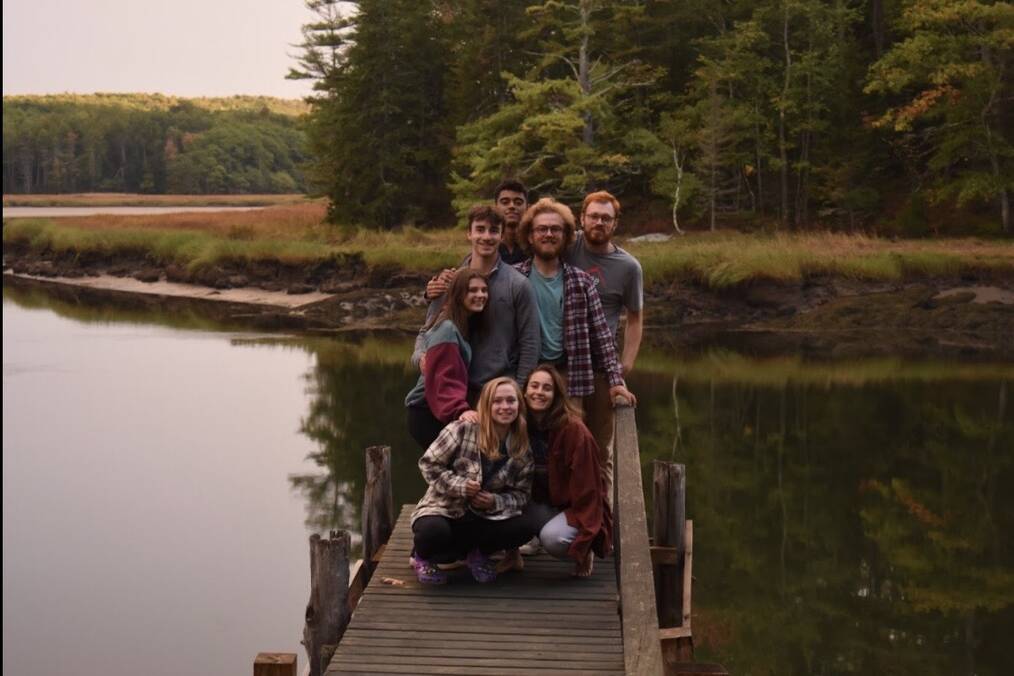
Why did you choose this program?
I chose to attend Seguinland Institute's Good Life Gap Semester program in 2020 because I did not want to begin my time in college virtually in my childhood bedroom. Seguinland promised the opposite - an opportunity to learn experientially and in community, to put down my phone, and come to know a place through immersion in the natural world.
What did your program provider (or university) assist you with, and what did you have to organize on your own?
Seguinland prepared us for the program by hosting full group zoom calls before we arrived on site, providing us with packing lists, and sending welcome packets in the mail. At the program, Seguinland provides food and Seguinland staff lead the charge in making community dinners. They also provide camping supplies for trips, books, art supplies, yoga equipment, and more. After the program, Seguinland made it easy to get transferable course credits. The only thing I had to organize was providing my own transportation to and from the program.
What is one piece of advice you'd give to someone going on your program?
My advice for someone going on this program is to be prepared to open yourself up to the new and uncomfortable. Ask questions and embrace the humble state of being a beginner. Be curious about others, about ways of living and relating that you have not encountered before. It is not always easy to live so closely with others, to put down one's phone, to go canoe-camping, or even to ponder the deep questions posed by the program. However, opening oneself up to these discomforts is not only a precondition for learning, but deepens the strength of one's connections to others.
What does an average day/week look like as a participant of this program?
On an average day, participants in this program wake up in shared cabins and prepare breakfast with their housemates. Then, they walk across a bridge to a large treehouse, the Gathering Space, where they practice yoga and mindfulness. Next, participants have class, where they discuss questions like "What does it mean to live a good life?" and read foundational texts in nature writing and philosophy. They prepare their own lunch and then often have an outing or activity in the afternoon. This could be a trip to the beach; a workshop in mushroom foraging, saur-kraut making, or halloween costume creation; a trip down the river in canoes; or a drive into Portland for an artist studio visit. During the weekends, there's lots of time for rest, catching up on readings, and hanging out with friends. Some weeks, there is a longer multiple day camping trip.
Going into your experience abroad, what was your biggest fear, and how did you overcome it? How did your views on the issue change?
My biggest fear was that I wouldn't be able to create the depth of relationships with my peers that I was hoping for. From the first day of the program, I knew that I would no longer have to worry about this. My fellow participants were all so eager to get to know each other, though many of us were very different and came from different backgrounds. The program facilitated these connections by encouraging us to think about how to intentionally relate with each other as we lived, learned, and explored the land together. At Seguinland, we felt a spaciousness that many of us had not experienced in high school, where we were so focused on a particular notion of academic achievement and applying for college. Now, for the first time, we felt we had permission to equally value the nourishment of our interpersonal relationships with our study. Years later, I am still in regular contact with my friends from Seguinland and consider these friendships some of my most cherished relationships.
What impact did your time at the Seguinland Institute have on you after the end of the program?
At the end of my time at Seguinland I had a clearer sense of the conditions I need in my life to feel happy, engaged, and empowered to contribute to my communities. In college, I continued to study topics introduced to me at Seguinland, including the philosophy of a good life, nature writing, environmentalism, and creative writing. I also continued to practice yoga and mindfulness. Because of my transformative experience of community living at Seguinland, I continued to seek out opportunities to live intentional alongside others, both in school and after graduating. I felt that Seguinland not informed the system of values that I carried with me into college, but gave me practical tools for living according to these values. As a result of Seguinland's efforts to regularly reach out to and provide additional opportunities for alums, I maintained my relationships with the staff and my peers, even returning to campus for the May term program and an alumni reunion weekend.