Ceiba Foundation Logo

Ceiba Foundation for Tropical Conservation

Why choose Ceiba Foundation for Tropical Conservation?

The Ceiba Foundation is a nonprofit conservation organization that seeks to connect people and nature, saving tropical species and habitats while helping communities improve their lives and livelihoods. We focus on Ecuador's coastal forest and orchid-rich mountains, two of the most threatened and diverse ecosystems on Earth. Our approach keeps land in local hands by emphasizing conservation easements and financial incentives to promote sustainable land stewardship. Our study abroad programs give students the unique opportunity to conduct hands-on fieldwork that contributes to tropical conservation, and the programs are all accredited by the University of Wisconsin-Madison.

Reviews

Anna
5/5
Yes, I recommend this program

A Conservationist's Dream Program

This program offers education and field experience in diverse ecosystems, making it the perfect opportunity to explore your interests in conservation. The opportunities to design, execute, and analyze field research under the close mentorship of course instructors were not only pivotal learning experiences that prepared me for post-grad; they were also unbelievably fun! Tracking monkeys through the Amazon, swimming with sea lions in the Galapagos, and exploring nature all with the purpose of learning how to protect it is truly an unparalleled and rewarding experience.

Ceiba is a nonprofit organization that has a lot of conservation projects underway that uplift local communities, in addition to their study abroad programs. I was fascinated to see what real conservation looks like in practice, and to consider how socioeconomic factors play a role in conservation strategies.

What was the most surprising thing you saw or did?
The last month of this program is spent at a conservation internship of the student's choice. I interned at Amazoonico, an animal rescue center located in the Amazon, only accessible by canoe, where I assisted the lead researcher with behavioral data collection. There were about 11 interns from all over the world that had various other duties at the center. I was surprised that by the end of the month, we had defied language barriers and quickly became an extremely close group of friends.
Pros
  • Hands-on field research experience with direct guidance from experts
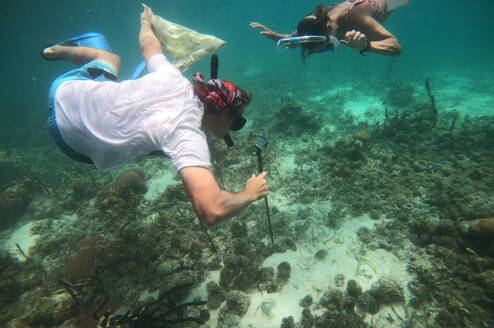
  • 1 week on a boat touring the Galapagos Islands, snorkeling everyday, and learning about everything you see
  • Cultural immersion via host families - my Spanish improved so much and I learned a lot about Ecuadorian culture. I also bonded with them and we still talk today!
Madison
5/5
Yes, I recommend this program

Rural and urban public health - beyond the classroom!

This program exceeded my expectations! Our experience was filled with immersive field work, hands-on lab experience, and insightful collaborations amongst rural and urban community members. This trip emphasized producing sustainable and tangible methods for water quality improvements in rural Ecuador as well as bridging connections across cultural and language barriers! This trip was an awesome experience jam packed with learning, site-seeing, and fun new connections! I'm so thankful to have been a part of this study abroad program!

If you did this all over again, what's one thing you would change?
I would pack more soap, towels, and rags! Coastal Ecuador was even more damp than expected and I would be more prepared with quick drying clothing and bathing materials.
Pros
  • Great food
  • Awesome site-seeing
  • Meaningful work
Cons
  • Damp conditions in Coastal Ecuador
Kaitlyn
5/5
Yes, I recommend this program

Best Teaching Staff!

Water for Life was a wonderful experience that not only allowed me to develop my Spanish skills, but allowed me to work closely with some of the most amazing teaching staff I have ever met! They made me feel safe and encouraged me to step outside of my comfort zone for the whole trip! I gained invaluable experience doing community-based research in rural regions of Ecuador that I have been able to bring home and compare to the systems in the United States. Studying Global Health has been one of the greatest privileges of my academic experience!

What is your advice to future travelers on this program?
Bring a quick-drying towel! The forest got a little more humid than I expected!
Pros
  • Excellent teaching staff
  • Valuable research experience
  • Practicing Spanish
Cons
  • A little humid in the forest!
Alec
5/5
Yes, I recommend this program

Phenomenal

My water for life Ecuador trip was one of the best experiences of my life. The hikes were beautiful and the people were all really nice and passionate about their jobs. The academics were fascinating and I learned a lot. Collaborating with local universities also allowed me to make some really cool connections. I was also able to get some quality Spanish speaking practice in. Overall the trip was a great balance between different social and academic aspects, as well as getting to explore the beautiful country of Ecuador.

What was the most unfamiliar thing you ate?
I ate a full tilapia fish. It looked crazy when I first got it but it was delicious.
Michael
5/5
Yes, I recommend this program

Great Semester to Learn Tropical Ecosystems and Spanish

I finished my Tropical Conservation Semester (TCS) back in 2017 and had such a great experience. In fact, I enjoyed my time so much that I went back and worked with Ceiba at Lalo Loor Dry Forest Reserve during graduate school in 2022. During the TCS Semester, after learning about tropical ecosystems in the classroom, we were then able to explore them in person. The diversity of ecosystems in Ecuador is also incredible, from the high Paramo to the Amazon to the Galapagos Islands. I saw so many cool animals, with favorites being the Plate-billed Mountain Toucan, Galapagos Penguin, Marine Iguanas, and Spectacled Bear. Additionally, I lived with two host families over my semester, and this provided a great way to solidify my Spanish. I also enjoyed learning more about Ecuadorian culture with the two families. Lastly, the other students in the TCS semester were fantastic. We became a tight knit group that supported each other as we were adjusting to life in Ecuador.

What was the most unfamiliar thing you ate?
I ate small ants in the Amazon that tasted like lemon. Don't worry - a local guide showed me what I could eat.
Pros
  • Unbelievable diversity of tropical wildlife and ecosystems
  • Amazing staff from Ceiba to teach and support
  • Experience life in Latin American Country
Cons
  • Group of students tend to speak more English with each other if learning Spanish is your main goal

Programs

Displaying 1 - 3 of 3