Study Abroad Programs in the Middle East
The Middle East is home to beautiful literature, poetry, and languages, global economic and political significance, with a rapidly-developing economy. If you’re interested in architecture, horse racing, adventure, history, culture, music, and fragrant meals, consider studying in the Middle East!
Dubai, UAE
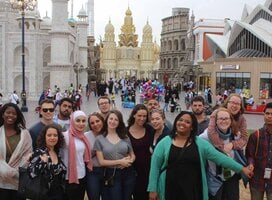
Visit this tropical metropolis for an ultra-modern cityscape and lively nightlife. Home to the world's tallest building, Burj Khalifa, and the largest artificial islands, the Palm islands, Dubai appeals to crowds that want the biggest and best. From the largest natural flower garden in the world to the deserts open for a dune buggy adventure, there's an activity in Dubai for everyone.
Abu Dhabi, UAE
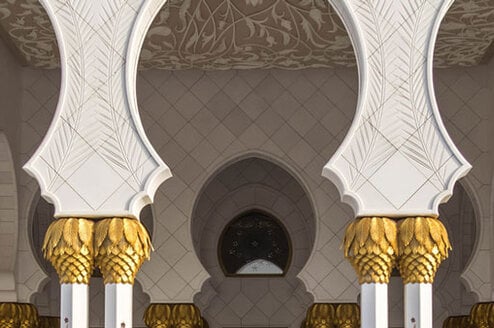
If you're craving a more authentic, Arabian vibe, check out Abu Dhabi, the capital of the United Arab Emirates. Integrating the modern and the ancient is the norm here, and you'll find lots to see between the beautiful Sheikh Zayed Mosque and the Emirates palace.
Petra, Jordan
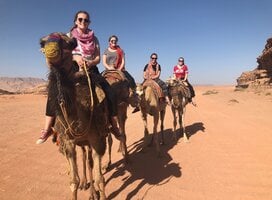
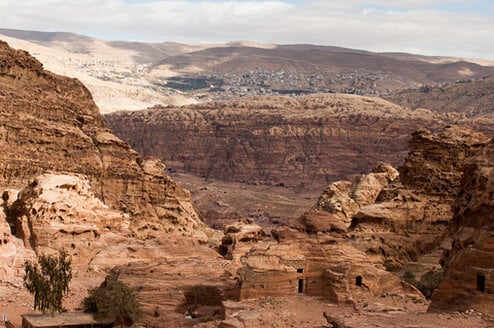
Explore one of the new seven wonders of the world. Petra, a UNESCO World Heritage site, is a great choice for history buffs and adventurous travelers with a variety of sites to explore. From al-Khazna, the 2,000-year-old Treasury to the challenging climb to the High Place of Sacrifice, Petra has a wealth of historical artifacts hidden within its city.
Jerusalem, Israel
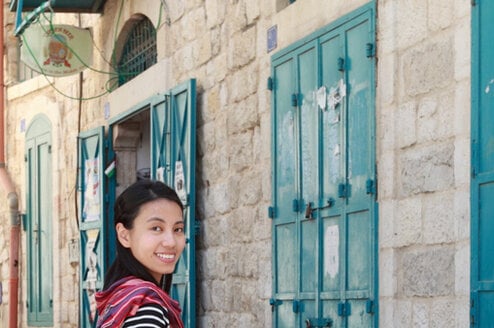
This historical city is popular for religious pilgrimages and has lots to offer for those who love historical sites. Grab a falafel and visit the vibrant Old City, filled with different cultures and colors at every corner. The Yad Vashem, the Holocaust memorial, and the Western Wall are popular for their moving, emotional experiences. When you're finished, head over to the Israel Museum to see real sections of the Dead Sea Scrolls, among other ancient documents.
Tel Aviv, Israel
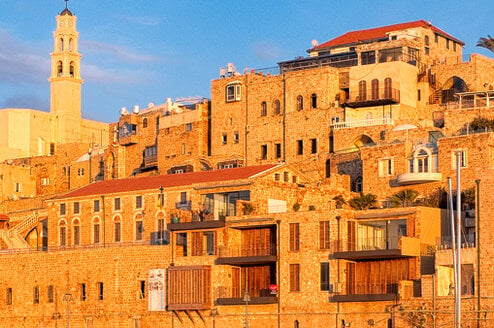
This young city is great for those craving relaxation in a lively area. Stroll along the coastline on the Tayelet into Jaffa Old City, a picturesque old town full of narrow streets, small shops, and things to do. There are plenty of museums and art districts to visit. Or, lounge on the clean, sandy Tel Aviv beach and grab a bite to eat.
Cultures and Customs
The Middle East can be roughly divided into three major regions: North Africa, the Levant, the Arabian Gulf countries. Though cultures of the Middle East can vary drastically country to country, roughly speaking, countries within the same region are similar to each other. Countries around the Mediterranean Sea, for example, manifest a stronger European influence -- in food, language, dress and music -- while the Gulf countries are more conservative.
With that in mind, consider your destination and its influences. Consider the conservativeness of the area, the official religion of the country, and the other main religions within it. Many Middle Eastern countries are officially Islamic nations with significant populations of other minority (or majority) religions. How will you dress? How should you interact with your opposite-gender peers? In more conservative cultures, it is not acceptable to hold hands in public, women are encouraged to dress modestly though -- significantly -- not required to veil, and you may find interactions more distant or more formal, depending on location.
Two other major factors to think about are alcohol laws (Gulf nations in particular have strict laws about buying and consuming alcohol) and religious holidays. You will find that the weekends in many Middle Eastern countries are Friday-Saturday, and that religious holidays go by the sighting of the moon. If you go by the calendar dates, then, you may have to adjust your plans.
A great place to start cluing into culture is What's Up With Culture. It is a series of modules designed to help soon-to-study-abroad students learn about and adapt to their host culture. Your study abroad office may include it as part of your pre-departure work and whether it does or not, it is worth checking out. You will learn more about yourself, your presumptions, and worldview, and how to enjoy and understand your host culture more deeply in order to have a richer experience. And, we hope, to avoid an embarrassing faux-pas.
Major Universities
American University in Cairo (AUB) in Egypt and American University in Beirut (AUB) in Lebanon both have long-standing reputations of academic excellence, and AUC in particular has a robust study abroad program.
American University of Sharjah in the United Arab Emirates is much newer--only 15 years old--but is fully accredited and ranked among the world’s top 500 universities. The Gulf countries of Qatar and the UAE have worked in the last two decades to become a hub of higher learning, and boast numerous excellent universities.
In Morocco, Al Akhawayn University is an increasingly popular destination, though it has an established reputation for Arabic instruction. Israel is also home to several excellent institutions of higher learning, chief among them Hebrew University.
Contributed by Anna Ray
Many are understandably wary of traveling to the Middle East because of the recent events occurring in neighboring or associated countries. However, this doesn't mean that the Middle East is off-limits entirely. Below are some tips for staying safe.
Read Reviews
Beyond news reports, try finding accounts of personal experiences that can help you make your decision from the perspective of a fellow traveler.
For example, many tourist-heavy areas receive higher security to ensure travelers' safety, and some Middle Eastern areas are completely safe to travel to depending on the place and time.
Countries like the United Arab Emirates and Jordan have remained relatively peaceful and very safe for foreigners to travel to for the past few years. On the other hand, you may want to avoid areas in a country that border places of conflict or are in political turmoil.
Look for Recent News
Look for the most recent information as possible, both from news outlets and real individuals who have traveled to the area you're interested in within the past year. Take a note of any current events that have occurred, and try not to jump to conclusions! Some sources tend to be more biased than others, so collect as much data as you can before finalizing your decision.
Check Your Government's Website
Your government will issue travel advisory warnings and alerts for various regions that are unsafe or risky for travel. It's a good idea to compare the travel warnings across more than one government to get a better sense of the big picture.
Take Precautions Based on the Area
Just like cultural customs, the precautions that you need to take vary based on where you're going. Not all countries in the Middle East require the same level (or type) of caution. Take what you've learned from your research and confirm with your provider, institution, or guide on which safety precautions to take beyond the normal ones.
Be Informed, but Don't Be Scared
There's nothing worse than being unable to enjoy a trip you've painstakingly planned because of your worries. Be informed and take the necessary precautions, but above all, remember to relax and enjoy exploring the area that you decided to study abroad in.
Cost of Living
Overall, the Middle East is an economical place to study (non-traditional locations tend to be), though of course costs of living varies widely by country. As a general rule, the Middle East--like the rest of the world--is more expensive in places that are more developed, so for example, the Gulf countries and Israel are more expensive than Yemen and Egypt. Some things to keep in mind when budgeting:
Public Transportation
How far is the university from your residence and/or the rest of the city? Will you have to depend on public transportation, and how much will that cost you?
Currency
Jordan, for example, is a relatively inexpensive place to live, but the US Dollar is only worth 70% of the Dinar (1JOD=$1.40) and with taxi rides, food, ATM fees and commission fees, etc that difference in exchange rate adds up fast. XE is a good resource for exchange rates.
Activities
The Middle East is a great place to travel, and also a great jumping off point for adventures in Europe and Asia. What activities or international travel will you be doing abroad? What about visas and insurance?How far is the university from your residence and/or the rest of the city? Will you have to depend on public transportation, and how much will that cost you?
Your study abroad office or program provider/host institution should be able to provide more detailed cost estimates for your intended destination. Michigan State University also has some good tips for budgeting, including this worksheet.
- Least expensive countries: Yemen and Egypt
- Most expensive countries: UAE and Israel
Scholarships for Study in Middle East
Consider these great scholarships to offset your costs when studying abroad in the Middle East next semester.