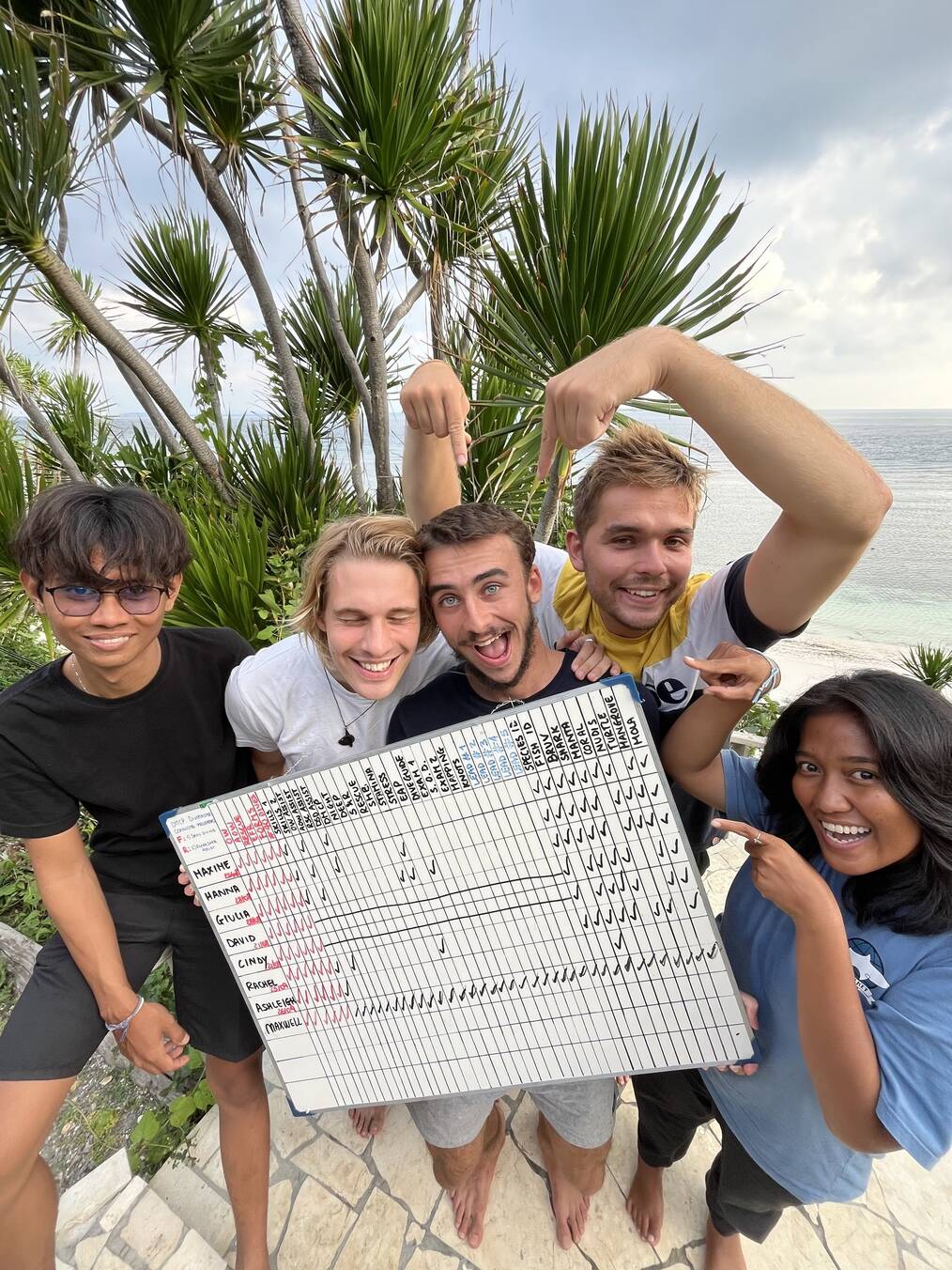
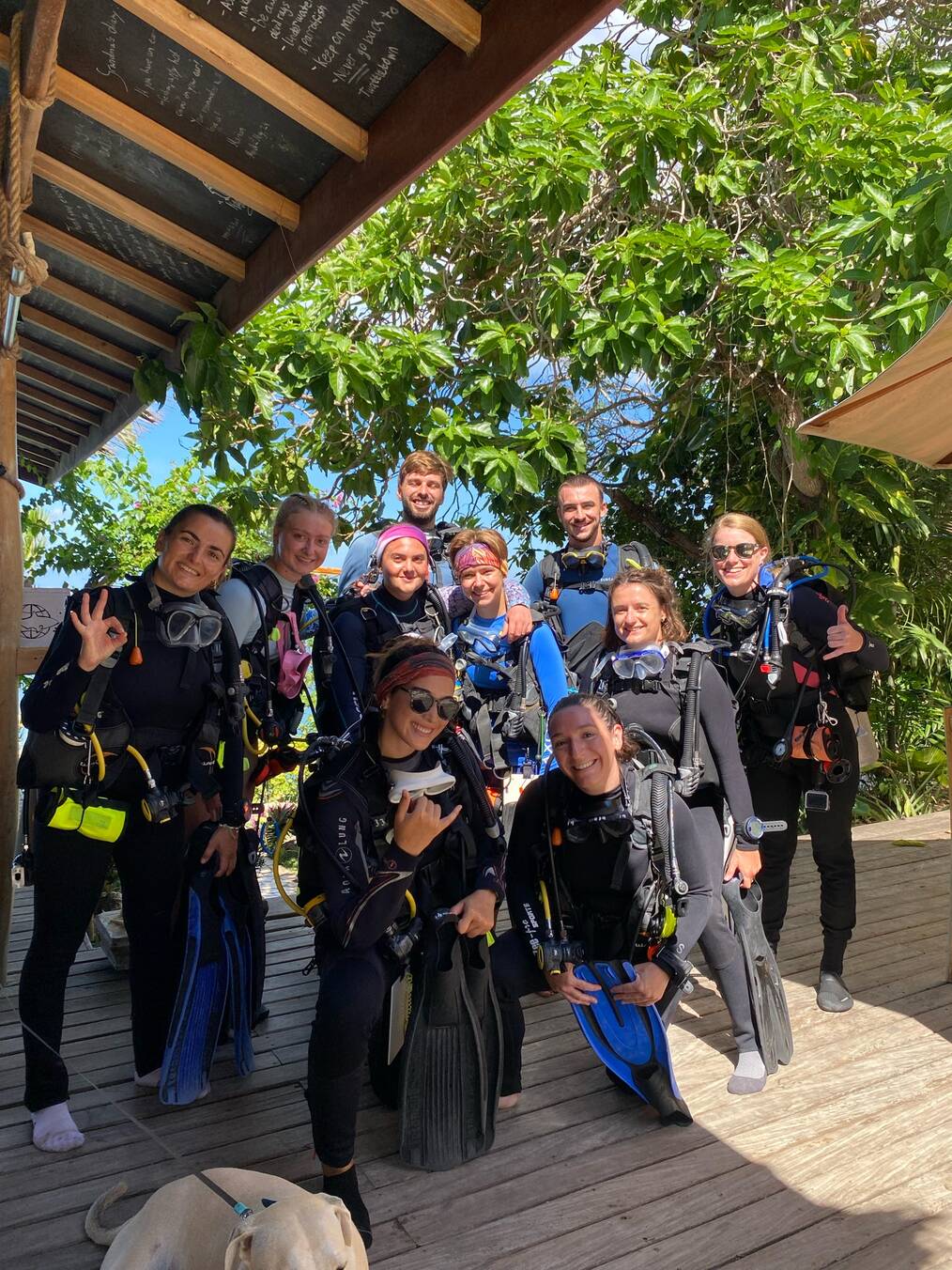
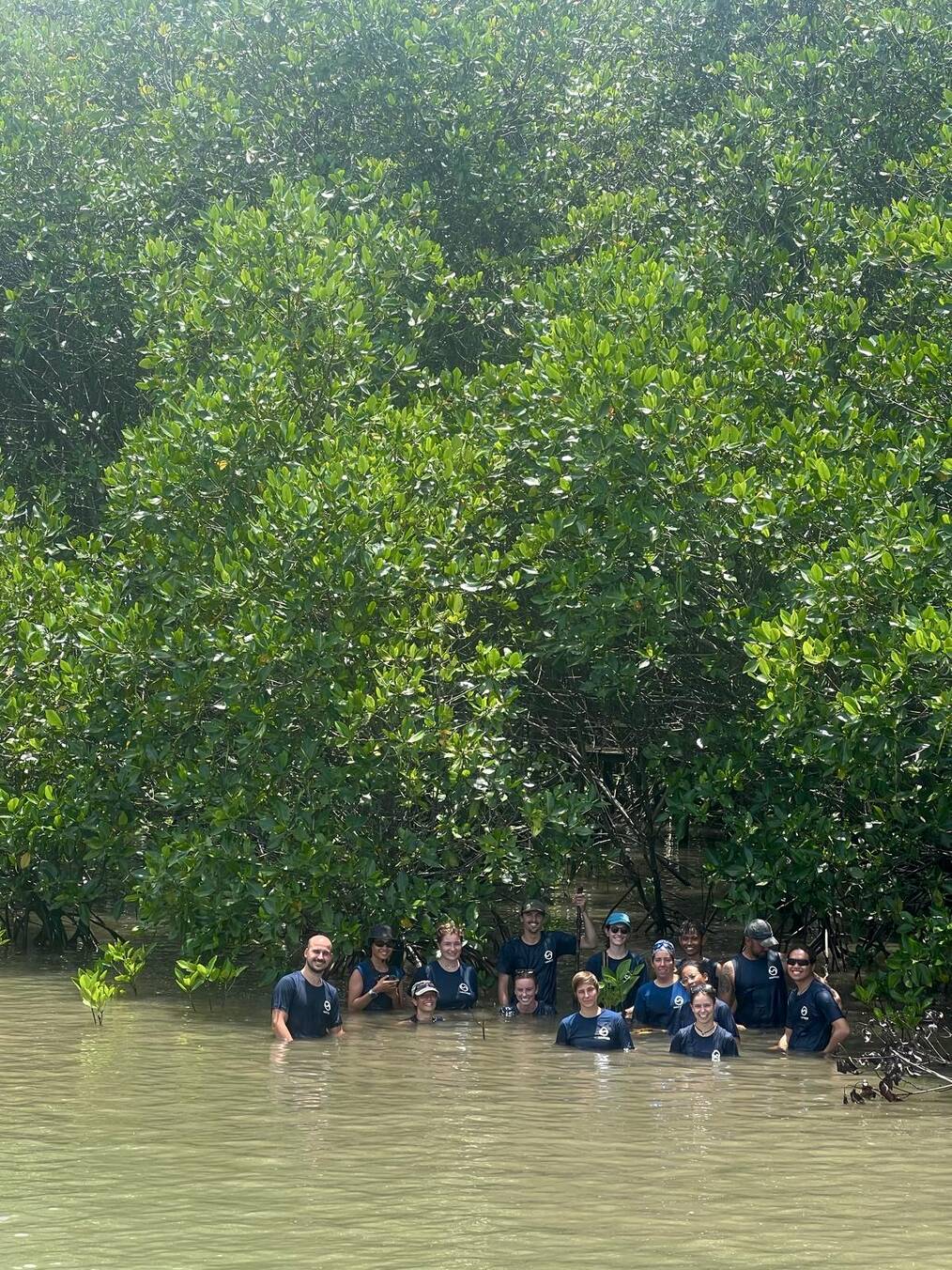
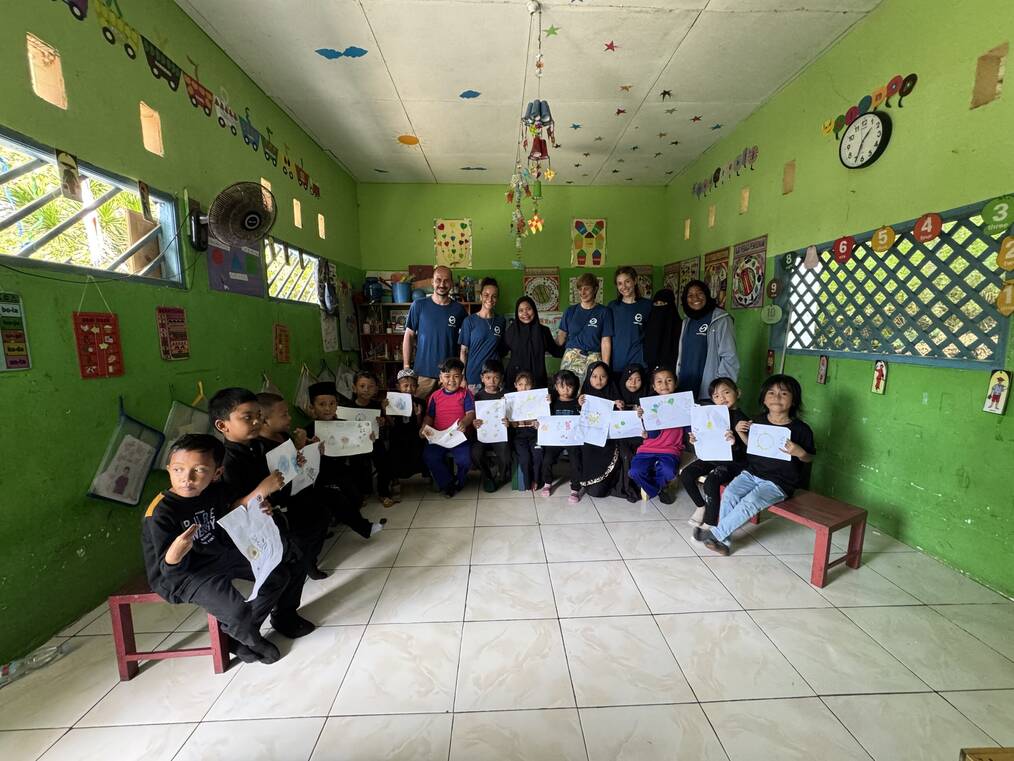
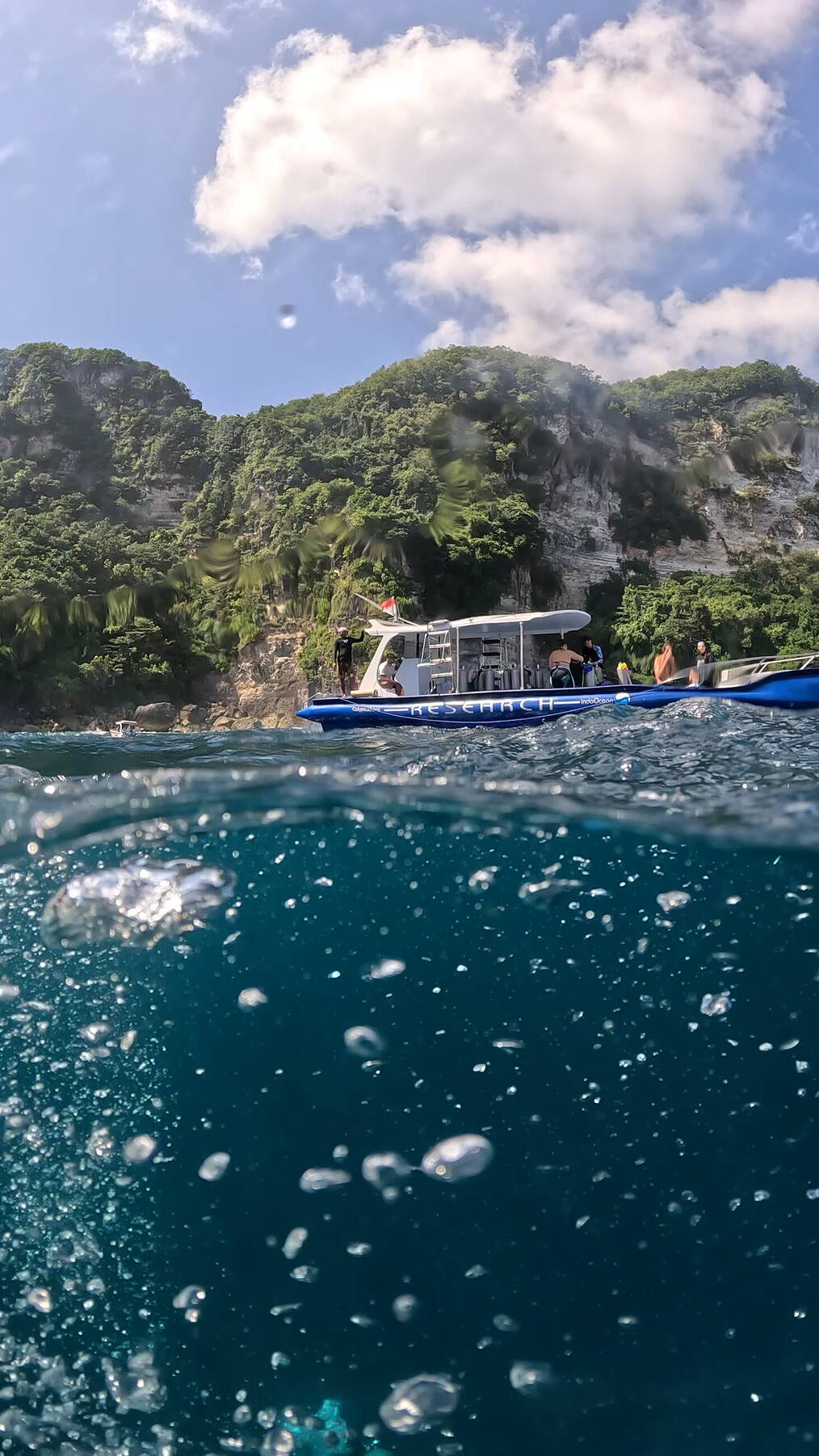
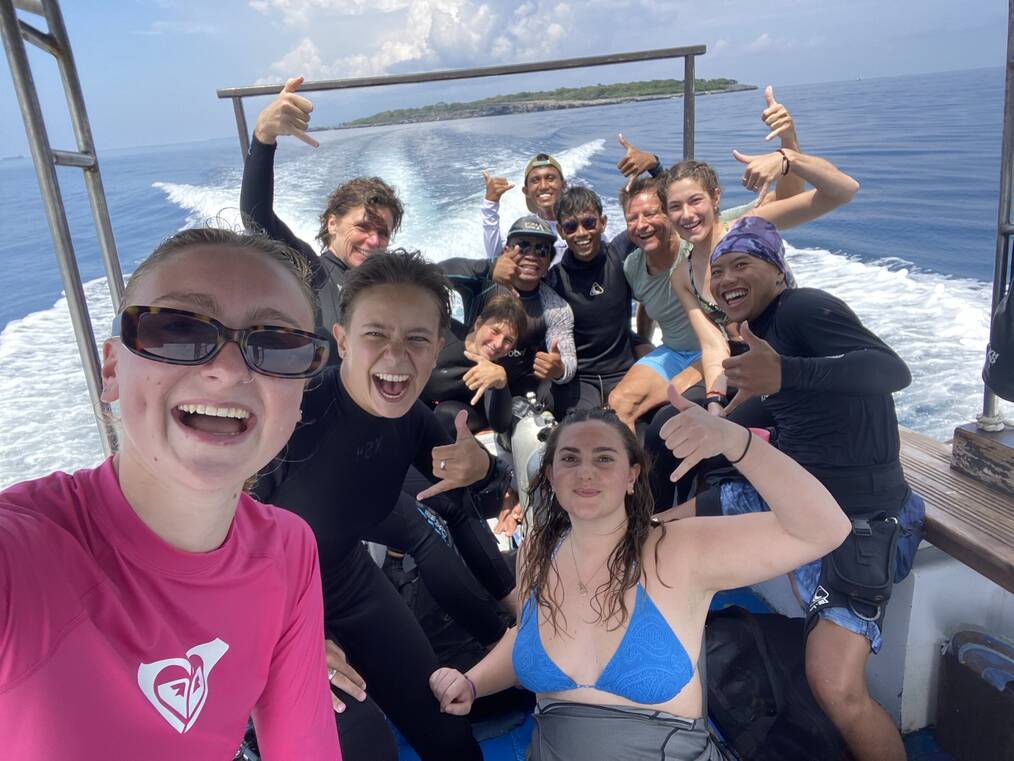
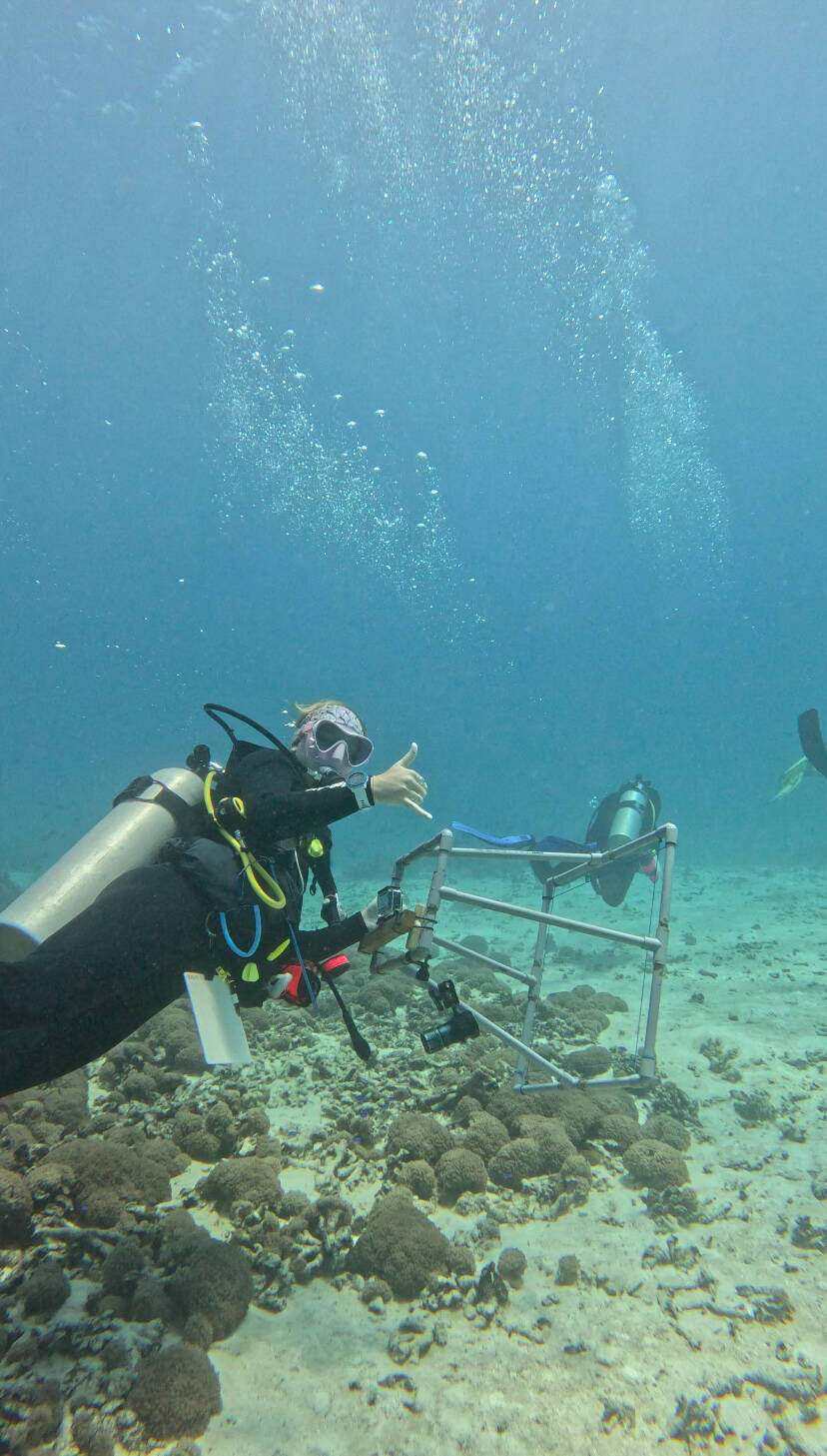
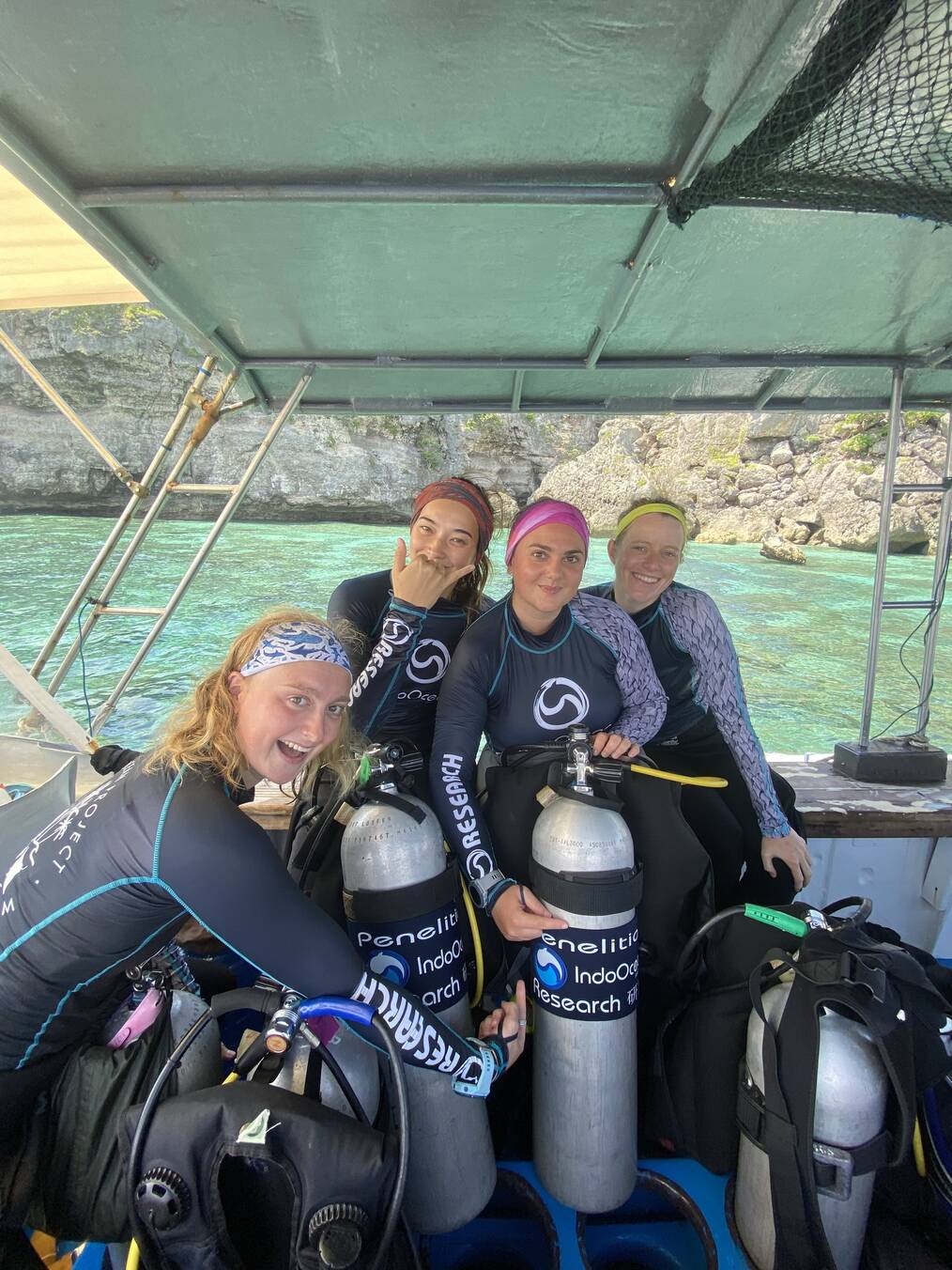
I combined the Divemaster and Research Diver program with the Research Fellowship for my master's thesis with Indo Ocean Project. For this, I got to spend 6 months in Bira, South Sulawesi. During the first 2 months, I've been trained to be a Divemaster, improving my underwater skills, from buoyancy to skills, to assist and lead dives. In parallel, I've learn so much thanks to the ecology workshops, in particular, I've learn how to do BRUVs (Baited Remote Underwater Video), the focus of my thesis, from planning, deployment, retrieval and analysis. During the last 4 months, I focused on collecting data for my thesis on the population of Whitetip Reef Sharks of Kambing Island, through BRUVs and Unite Bira, the citizen science program of IOP.
I really want to thank the IOP team; they've been amazing with me. The sweet Yuly, who helped me analyse the first BRUVs and let me help her with the Benthic Survey's footage analysis. Sudar has been a wonderful scientific supervisor, always ready to answer my questions and help me develop a laser structure to measure sharks. Greg made it all possible, organizing the dives and schedule and giving me valuable advice and guidance. Kert is one of the best instructors that I've had, always by my side and ready to help me when I was leading the dives.
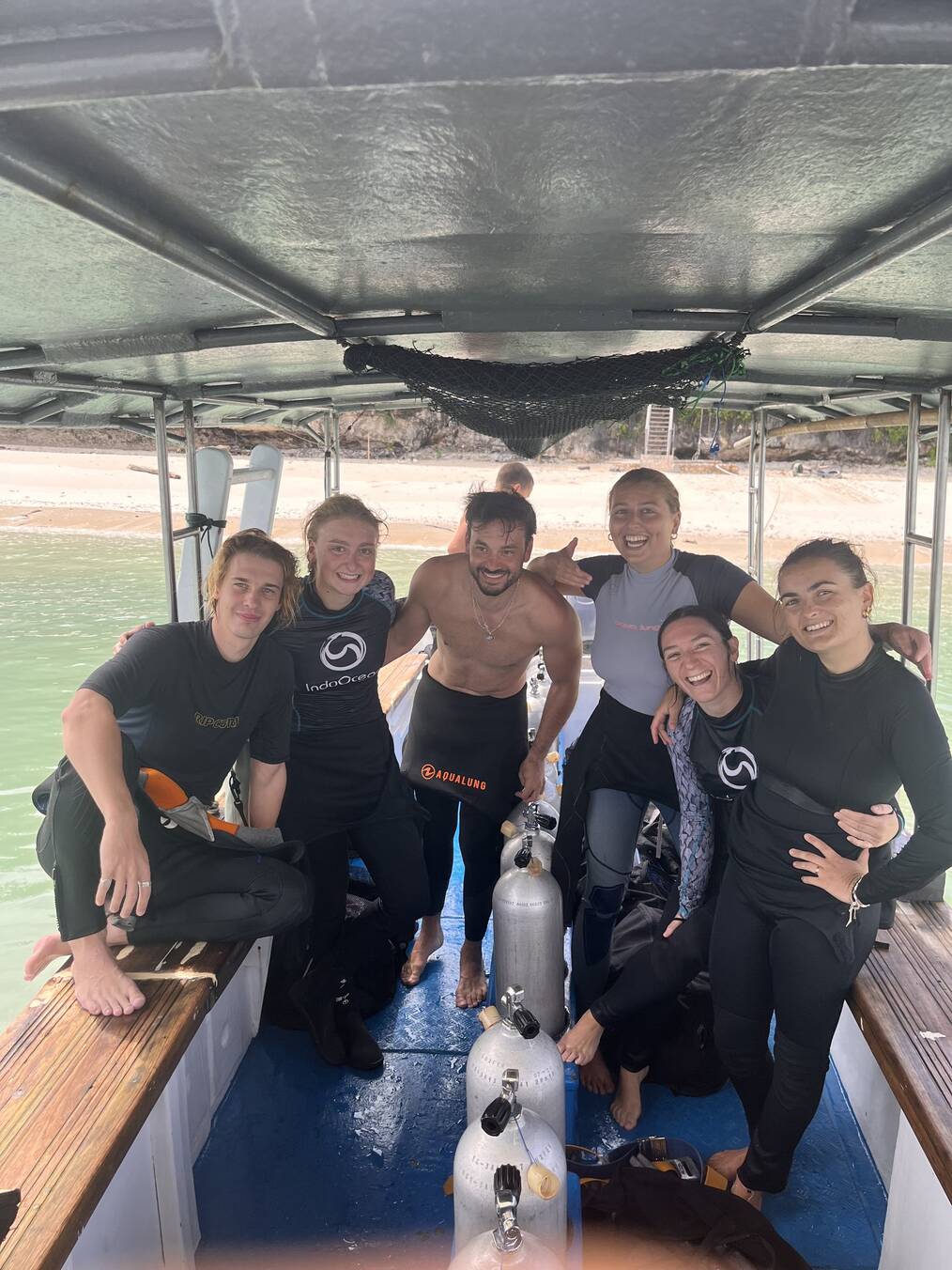
This program is so much more than a normal internship: you learn a lot, but you also meet amazing people on the way, who share your passions and enthusiasm. No space for complaints or laziness, on our days off we would always find an adventure or a side quest: from cliff jumping, to visiting underground caves, to building a volleyball field using a ghost net, and to visiting the Phinisi boats building sites. You never get bored, and you're never alone. I'm so grateful to have experienced this, and I really, really recommend it.
What was the most nerve-racking moment and how did you overcome it?
The most nerve-racking moment of the project came when we deployed a BRUV in strong currents. At the beginning of the dive, we had to swim down quickly to reach the reef before being carried too far away. One of the team members panicked a little because she was carrying the BRUV base frame and was struggling to swim with it. She wanted to let go of the frame and ascend with her buddy. I was the dive guide for that dive, and luckily I noticed what was happening and acted quickly: I managed to reach her, help her with the frame, and bring it down to the bottom, where we secured ourselves with reef hooks.
At that point, I put into practice the techniques we are taught during the Divemaster course—making contact, maintaining eye contact, and calming her down. Once she had caught her breath and settled, she chose to continue the dive. In the end, we successfully deployed the BRUV and even had time to enjoy the dive. One of the program instructors was with us and ready to step in, but since I was handling the situation the way I had been trained, he let me take the lead.
For me, this episode really shows how effective the training we do in the program is: things aren’t always perfect or easy, but we have the skills to manage both ourselves and others, and to get the job done despite the challenges.