
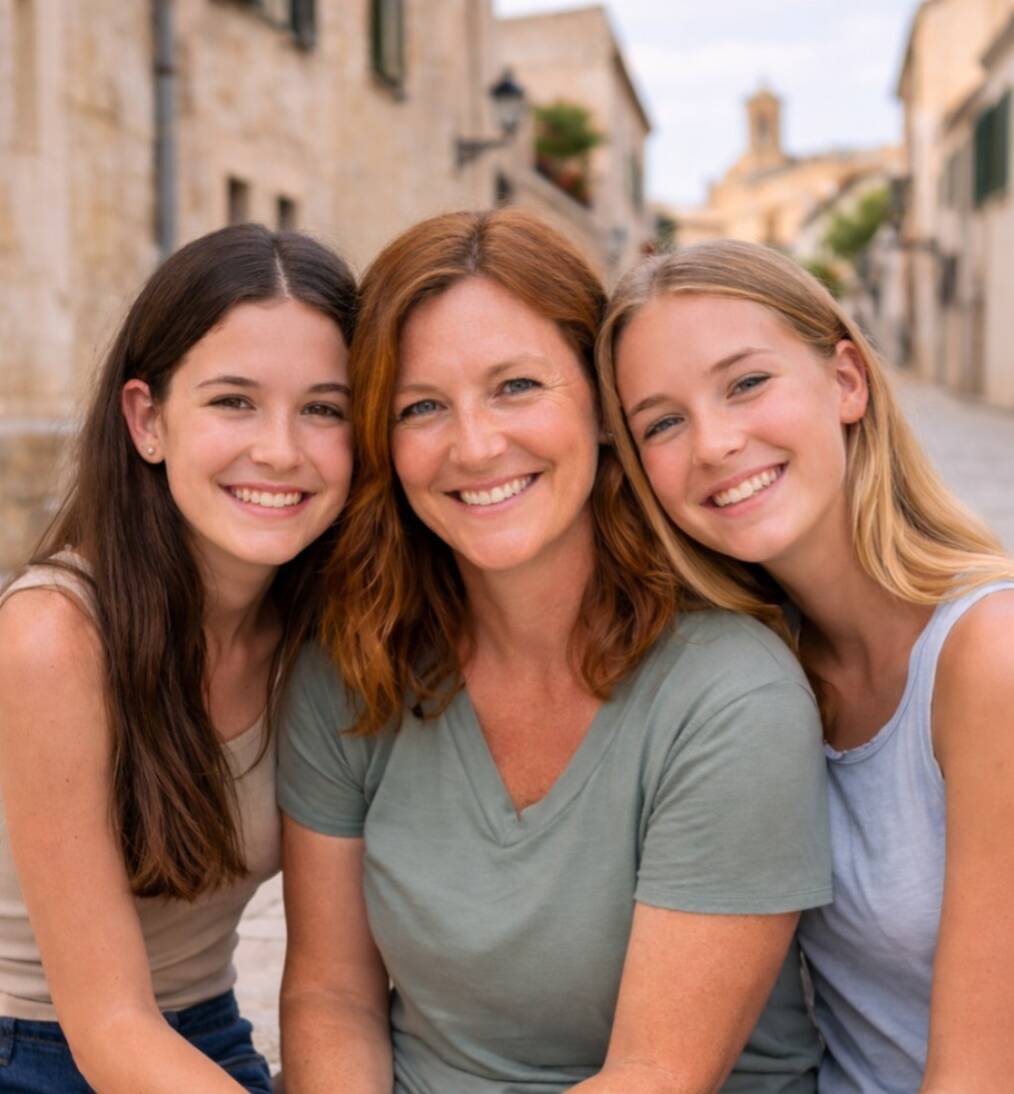
Why did you choose this program?
We chose the Spanish Homestay Immersion Program because we wanted a meaningful language-learning experience for our family, especially for our two teenage daughters. The program offered a unique opportunity to experience immersion in two different locations: one week staying in Dosrius near Barcelona and one week in Ciutadella de Menorca. Living in the teacher’s home meant Spanish became part of everyday life, which felt natural and effective for our teenagers. From the start, Mónica’s warmth, constant smile, and relaxed approach helped our whole family feel comfortable and excited about the experience.
What did your program provider (or university) assist you with, and what did you have to organize on your own?
Our host teacher, Mónica, provided the homestay experience and created a structured yet welcoming environment where Spanish was used throughout daily life, meals, and activities. Her ability to balance organisation with warmth made the program feel safe, relaxed, and ideal for a family with teenagers. This made the program feel well organised and reassuring for us as parents. We organised our own travel between destinations, but once we arrived, the immersion experience itself was very smooth.
What is one piece of advice you'd give to someone going on your program?
Come with an open mind and be willing to use Spanish all the time, even if you make mistakes. Living in the teacher’s home is what makes the program so effective, so it’s important to participate fully in daily conversations and activities. Having a host teacher like Mónica, whose sense of humour and contagious laugh make learning feel effortless, really helps everyone relax and participate. For families, encouraging teenagers to engage independently really helps them gain confidence.
What does an average day/week look like as a participant of this program?
Each week had its own rhythm.
In Dosrius near Barcelona, our days included daily life in the homestay and exploring Dosrius, nearby towns, and Barcelona city, including the Gothic Quarter, Las Ramblas, Park Güell, and the Sagrada Familia.
In Menorca, days focused on island life and history, with visits to Ciutadella old town, Museo Can Saura, the Naveta des Tudons, Mahón, and watching the sunset at Faro d’Artruix. Throughout both weeks, Mónica naturally turned everyday moments into learning opportunities, so Spanish was practised constantly without feeling like formal study.
In Dosrius near Barcelona, our days included daily life in the homestay and exploring Dosrius, nearby towns, and Barcelona city, including the Gothic Quarter, Las Ramblas, Park Güell, and the Sagrada Familia.
In Menorca, days focused on island life and history, with visits to Ciutadella old town, Museo Can Saura, the Naveta des Tudons, Mahón, and watching the sunset at Faro d’Artruix. Throughout both weeks, Mónica naturally turned everyday moments into learning opportunities, so Spanish was practised constantly without feeling like formal study.
Going into your experience abroad, what was your biggest fear, and how did you overcome it? How did your views on the issue change?
Our main concern was whether our daughters would feel confident using Spanish consistently. However, the safe, structured, and supportive environment helped them feel comfortable very quickly. Mónica’s patience, encouragement, and positive energy helped remove any pressure, allowing the girls to use Spanish naturally and confidently. By the end of the program, both girls were more confident and motivated to continue learning.
How did sharing this immersion experience impact your family dynamic?
Experiencing language learning together strengthened our bond as a family. It gave us a shared goal, encouraged open communication, and allowed us to support each other through challenges. Watching my daughters grow in confidence while learning together made the experience deeply rewarding for all of us.