Internships in Costa Rica
You are probably thinking of going on an internship experience abroad in Costa Rica; searching for possible options is definitely the first step. Maybe you have been bitten by the travel bug and want to go far away from home, or maybe you are passionate about Latin American cultures; maybe you have heard something special about this little country.
Costa Rica is a small but unique country in the middle of two big masses of land and in the middle of a natural path, giving home to an incredible set of circumstances all in one green, fresh and happy place. Let’s get started with a bit of everything important you should know in advance on this juicy thoughtful guide for interning in Costa Rica.
Education: You can find many internship programs in Costa Rica in the field of education by helping teach foreign languages and taking part in improving the educational infrastructure, or simply cooperating with the regular educational system. It's all a knowledge process, given to the whole community for free as part of the national agreements for not having an army, thus the money goes into education and healthcare. Despite this, human resources are always the main thing keeping the chain alive, especially for kids in isolated regions.
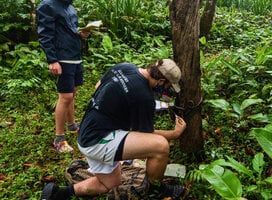
Environmental: This green country is well known around the world for the richness within the flora and fauna, which makes it one of the most important areas for holding internship programs; a great combination for curious travelers with a sustainable-environment conscience.
Health: As with any other country, you will find areas where poverty strikes more than others, making a limited social condition for certain groups of citizens in several areas, not only social but also on health issues. This can be seen in several towns, rural or not, which has lead to the creation and cooperation within several organizations for improvement on every aspect possible along these areas under risk.
Social Development: There is a wide range of programs involving social development and improvement for lower social classes living on poor conditions, including giving them new homes for a better quality of life, both in rural areas or city neighborhoods with social risk.
Veterinary and Animal Protection: If you are passionate about animals and pets of all kinds, you can also find something in this area. In Costa Rica they love conserving and making a safe place for animals, especially for endangered species around the protected natural areas, whether it’s on a forest, at sea, or in adoption centers. They all deserve a happy home and many organizations in Costa Rica work really hard in order to try and give the same opportunity for everyone.
Now that you have a general overview about Costa Rica, now it's time to get into some details about the internship programs going on in this great spot. Costa Rica is definitely for people with some particular interests as you might have noticed by now!
When and Where to Look for an Internship
Costa Rica is a tropical country, meaning there are only 2 seasons: rainy and not-rainy...although you can still get rained on the not-rainy season! The best time to intern in Costa Rica is definitely between December and March. Those are the most dry and sunny months almost in the entire country, except for the Caribbean coast, which has very unique weather, but still enjoyable and workable if necessary.
Locations on internship programs are usually away from San Jose, the capital city, however there are programs right there too if wanted. Working outside the city center is also a great way to experience working in rural areas, such as the provinces of Guanacaste, Puntarenas and Limon.
Specifically, you can look for areas like Talamanca, where the only indigenous citizens remain and struggle to survive within national laws that seem have been less protective in recent years. Indigenous citizens get a lot of help year round, mostly from free health and veterinary services by national colleges' programs. Indigenous citizens also receive assistance through private volunteering programs for construction and upgrading their homes due to harsh weather conditions and difficult means of transportation, making them a very isolated community.
Costa Rica is quite a small country, so it's hard to say if one region or another is better or worse. It is very easy to move around in terms of time, however the transportation/roads system is not very efficient, which can be a major problem while you're in Costa Rica.
Cost of Living in Costa Rica
The cost of living in Costa Rica depends a lot on the area you are in. Definitely a lot cheaper on rural areas than the city. Costa Rica can be a very expensive site for its location, and as obvious as it is, even more on touristy places.
For a single person sharing an apartment in the city between two people (taking into account basic expenses such as food, water and electricity on a monthly basis), you should consider budgeting $600-700/month. In rural non-touristic areas, this would drop down to about $400-500, with complete comfort. Also consider the improved transportation system in rural areas, your may even be able to ride a bike to work, rather than having to pay for regular transportation!
For budget prices on food, it's better to avoid the Walmart chains (yes, it is more expensive here!) and also Automercado markets, delicatessen style. Look for these markets: Palí, Hipermás and any local grocery store anywhere. For fresh in-expensive vegetables, always consider visiting the Saturday/Sunday “ferias”, usually held at the main plaza of every town or neighborhood. Definitely fresh and cheap!
In case of work needed, it will probably be easier in rural areas. Within the city, they will ask for legal permissions for being a worker in the country. The common thing as in almost every country is to have a regular and legal basis, with a social security number since this will be part of your monthly payment. It takes some time to get all this in order. However, there will always be options for some seasonal jobs, so don’t be afraid! In touristy areas, it will be even easier to find something for a few months. There is no useful link to find jobs around Costa Rica. The easiest way is to look on local newspapers in the job section, and also asking directly to businesses and people around town.
Work Culture in Costa Rica: Etiquette
First of all, Costa Ricans are well known as “ticos”, a nice way to refer to them when talking about Costa Rica. People are very warm and welcoming in this interesting corner of Earth, just like its weather!
- Ticos tend to be very trusty and friendly people, also open to tourists and anyone from a foreign country with a smile.
- If you are in a rural area, it will be common for somebody to offer you a drink of cold natural refreshment, especially to workers and people passing by their home. Feel free to ask for some if feeling thirsty. This won’t happen in the city though! Careful there.
- In the city, robbery and violence are quite high, so people have trust issues there. No matter if it's driving a car, or on the bus or at a restaurant. Have good manners, but don’t trust your things or hang your bag on the back side of your chair. It will be gone sooner than you've have a change to think about it.
- Don’t hold your laptop wide open on a park or on a bus, don’t leave valuable things unattended, don’t wear expensive jewelry when walking on the street...they will grab it all from you, even in a painful and fast way. Just use some common sense, and you will be fine.
- When eating out, is not common to leave a tip. It is already included on the price. Costa Ricans never do, they know it is already there. Tourists do leave a tip since is quite common in countries like USA and Canada. But not here, so don’t worry or feel bad about it. They can never ask for you to leave a tip, you are free to say no because it’s already included.
Language
As for language, you might want to learn a few handy phrases!
- Pura Vida! can be used in many many ways: as hello, goodbye, all is good, as a yes too. Quite a local phrase, probably the most popular worldwide from this country.
- Mae is used within informal conversations as for “dude”, like they have “Tío” in Spain or “ché” in Argentina.
- Tuanis & Chiva refers to something great, awesome or cool. All well used in general terms.
- Gracias & Por favor: who doesn’t appreciate a well said “thank you” or “please”? Costa Ricans do too (very polite people all the way), so why not give some back too!
Work and Labor Laws in Costa Rica
Costa Rica is very protective of its local labor force, and therefore the laws favor the hiring of local Costa Rican workers. On the other hand, it does have an established process to obtain work permits, making it easier for foreigners coming to Costa Rica with an established company and also for those those who can clearly demonstrate that they have a skill set required by the country. For a detailed labor regulation guide you can read the official Costa Rica labor regulations.