Internships in Palestine ( Human Rights I Media I Education I Israel/Palestine Conflict) 2026/2027

Internships in Palestine ( Human Rights I Media I Education I Israel/Palestine Conflict) 2026/2027

Location
  • Palestine
Length
1 to 12 weeks
Industry
Design Education Film Journalism Media Relations

Program Details

Compensation
Unpaid
Timeframe
Year Round
Housing
Apartment Host Family
Language
Arabic
Weekly Hours
30
Age Min.
18
Age Max
75
Qualifications
  • No Qualification is required.
  • Interns are not obligated to know Arabic in order to participate in the program.

Pricing

Starting Price
350
Price Details
This includes the following :

- Accommodation.
- Field visits & meetings.
- Day trips to refugee camps in Hebron and Bethlehem.
- Local visits within the city of Hebron.
- 3 hours of Arabic classes a week.
- Daily Palestinian breakfast.
- Certificate of participation, and a recommendation letter.
What's Included
Accommodation Activities Some Meals Wifi
What's Not Included
Airfare Airport Transfers Some Meals SIM cards Travel Insurance Visa
Jan 14, 2026
Mar 03, 2026
3 travelers are looking at this program

About Program

Gain hands-on experience and immerse yourself in Palestinian society with Go Palestine’s 2026/2027 internship program. Designed for students, recent graduates, and young professionals, it offers opportunities in Media, Education, and the Israel/Palestine conflict, combining professional development with cultural immersion. Work with local organizations, schools, and media outlets, while experiencing daily life and traditions in Palestinian communities.

Interns also explore the conflict’s historical, political, and social dimensions through field visits and expert guidance. With flexible durations and full support from Go Palestine coordinators, this program provides a transformative experience that fosters career growth, learning, and meaningful contribution.

COMMUNITY REVIEWS SUMMARY

Participants found the program offered deep cultural immersion, meaningful media and human rights learning, and strong community connections.

Video and Photos

Program Highlights

  • As part of the program, you will have the opportunity to engage in dialogue with journalists, professors, and conflict experts.
  • During the program, you will visit local radio stations, universities, and schools, as well as meet organizations working in the Israeli-Palestinian conflict field.
  • The program includes day trips to visit refugee camps in Hebron and Bethlehem, as well as other politically significant areas.
  • Each participant will receive three hours of Arabic language lessons per week as part of the program.
  • Participants will be provided with accommodation throughout the program, either with a Palestinian host family or at our 8th-floor apartment. Private accommodation is also available for an additional fee.

Related Programs

Program Reviews

4.93 Rating
based on 14 reviews
  • 5 rating 92.86%
  • 4 rating 7.14%
  • 3 rating 0%
  • 2 rating 0%
  • 1 rating 0%
  • Growth 4.75
  • Support 4.8
  • Fun 4.8
  • Housing 4.95
  • Safety 5
Showing 1 - 8 of 14 reviews
Avery
5/5
Yes, I recommend this program

Voices from Hebron to Masafer Yatta

It was a powerful and eye opening experience for me. It helped me understand the reality of daily life in the West Bank beyond what I had read in the news. In Hebron and Halhul, we met inspiring activists and local organizations working in human rights and community support. Listening to their stories made the situation feel very real and personal.

One of the most impactful visits was to Masafer Yatta, where I saw the threats families face from nearby settlers. It was difficult to witness, but important to see the reality on the ground.

This internship gave me deeper knowledge, perspective, and respect for the resilience of the Palestinian people. I highly recommend it to anyone who wants to understand the conflict from a human perspective.

25 people found this review helpful.
Hannah
5/5
Yes, I recommend this program

My Human Rights Journey in Palestine

I joined the Human Rights Internship with Go Palestine for three weeks, and it was an eye-opening and meaningful experience. During the internship, I met several local human rights activists, especially Mr. Ahmad, who was very informative and open. He took the time to explain the human rights situation in Palestine in a way that felt real and grounded in everyday life, not just theory.

Besides the field visits, I also had English conversational classes with Palestinians, which were one of the highlights for me. These sessions felt more like real conversations than classes and allowed for genuine exchange, shared stories, and different perspectives. I also had Arabic lessons with my wonderful teacher, Dalia. She was patient, encouraging, and made learning Arabic enjoyable, even when it was challenging. These lessons helped me connect more deeply with the people and the culture.

Overall, this experience helped me understand the human rights situation in Palestine on a much deeper level. It was not just educational, but personal. I would strongly recommend this internship to anyone who wants to learn, listen, and engage directly with the local community.

What is your advice to future travelers on this program?
My advice to future participants is to really throw yourself into the experience and be open to everything it offers. Talk to the local activists, like Mr. Ahmad and the others, I learned so much just by listening to him explain the human rights situation in Palestine in a way that felt real, not just theoretical.

Don’t worry about making mistakes in Arabic or English, the language classes were some of my favorite moments. They felt like real conversations, not lessons, and helped me connect with people in a meaningful way.

Most importantly, be curious and open minded, and take the time to really listen to people’s stories. This internship isn’t just about learning from a distance, it’s about experiencing life and culture alongside the local community. If you go in with an open heart, it will be eye opening and unforgettable.
Pros
  • Experience daily life
  • Talk with locals
  • Meet local activists
Cons
  • Constant reminders of the occupation
  • Some emotional moments
36 people found this review helpful.
Response from Go Palestine - The Palestinian Center for Cultural Exchange

Thank you so much for sharing your experience! We’re delighted to hear that your Human Rights Internship with Go Palestine was meaningful and eye opening. It’s wonderful that Mr. Ahmad and your other connections helped you understand the situation in a real and personal way. We’re also glad that your English and Arabic lessons added to the experience and helped you connect with the community. Your reflections are inspiring, and we’re happy you recommend this internship to others who want to learn and engage deeply with Palestine.

Gean
5/5
Yes, I recommend this program

VERY VALUABLE EXPERIENCE

My Experiences in Hebron

About me:
The name I use in Palestine is Gwen Geirionydd, the latter being the beautiful location in North Wales where I live. It has a history of poetry and song, with which I am very much connected. I studied Welsh and Music at the University of Bangor and received a master's degree in Welsh Ethnological Studies at Cardiff University. Before that, I trained as a social worker, and as the research and performance of Welsh music is not paid very well, I continued to work in this profession. I mainly worked in child protection and parenting support, trying to teach parents more cooperative and understanding approaches to child care, listening to their children's needs, rather than making them always obey their own standards.

I am married and have two adult children; my daughter just gave birth to our first grandchild. We live in a small coastal town called Deganwy, near Llandudno, near the coast in North Wales. Llandudno is a tourist town and has just been voted the 'best staycation location in Britain'. We have a garden where we grow some vegetables. I try to be as active as I can, all my shopping is done by bicycle, I am a singer in a Welsh folk usic group; we perform regularly in informal locations. I am also a member of a classical music choir, performing oratorio and traditional choral music, sometimes with large orchestras.

I have come to Palestine to experience for myself the reality of life here and to compare this with the relentless, biased reporting that we are exposed to by the Western media. I have opted for the media internship that GoPalestine offers to obtain some alternative views on reporting on the raw reality that is the daily experience of Palestinians today.

How did I find Hebron?
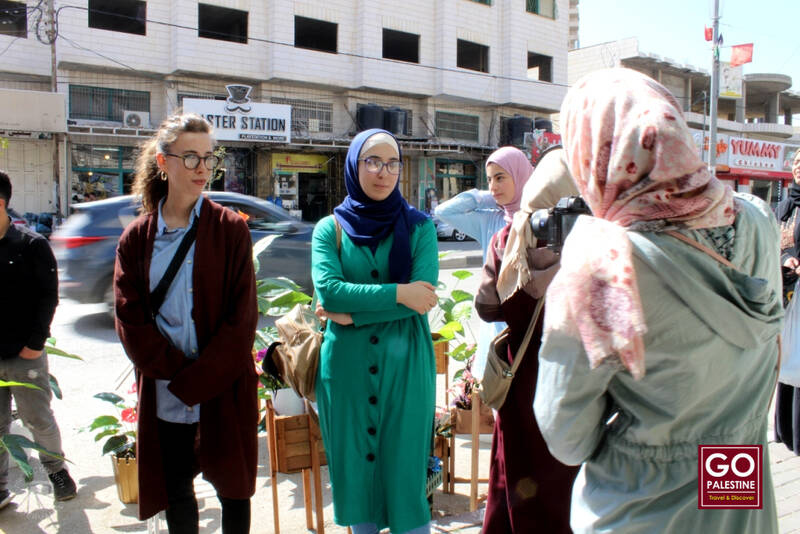
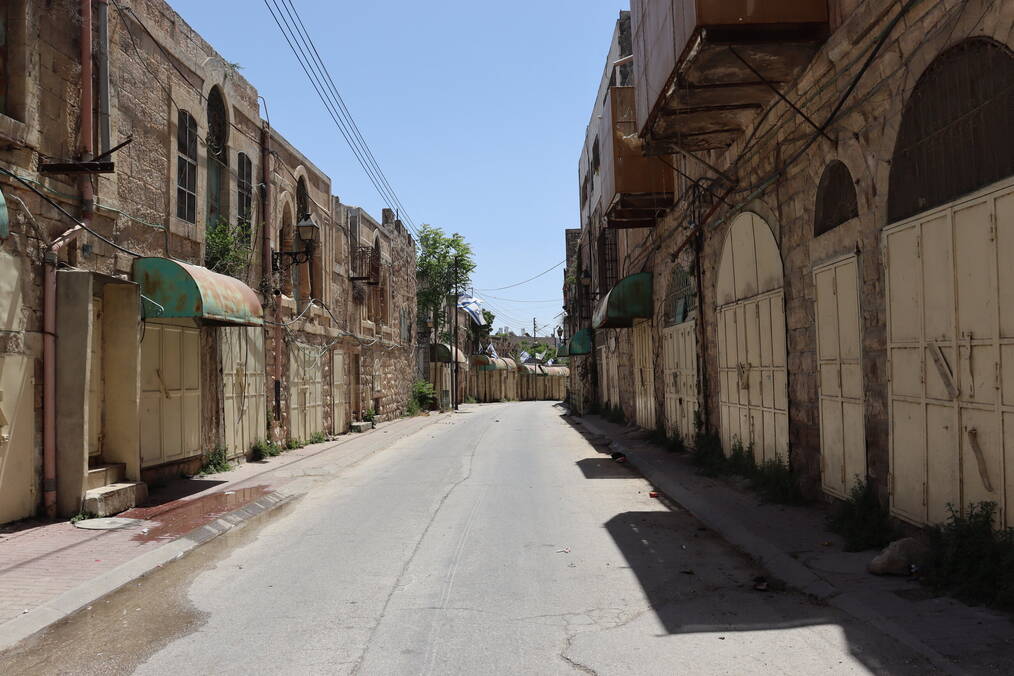
My first impression of Hebron was at the city tour where we were shown the old city by the manager of the centre, Mr Tamimi. We went to the magnificent old city with its ancient winding walkways and shops that offer traditional crafts, food, plenty of fresh fruit and vegetables and everyday household items. Mr Tamimi introduced us to some of the shopkeepers who shared with us their experiences. I later conducted some interviews with them as part of my media studies and potential publication work.

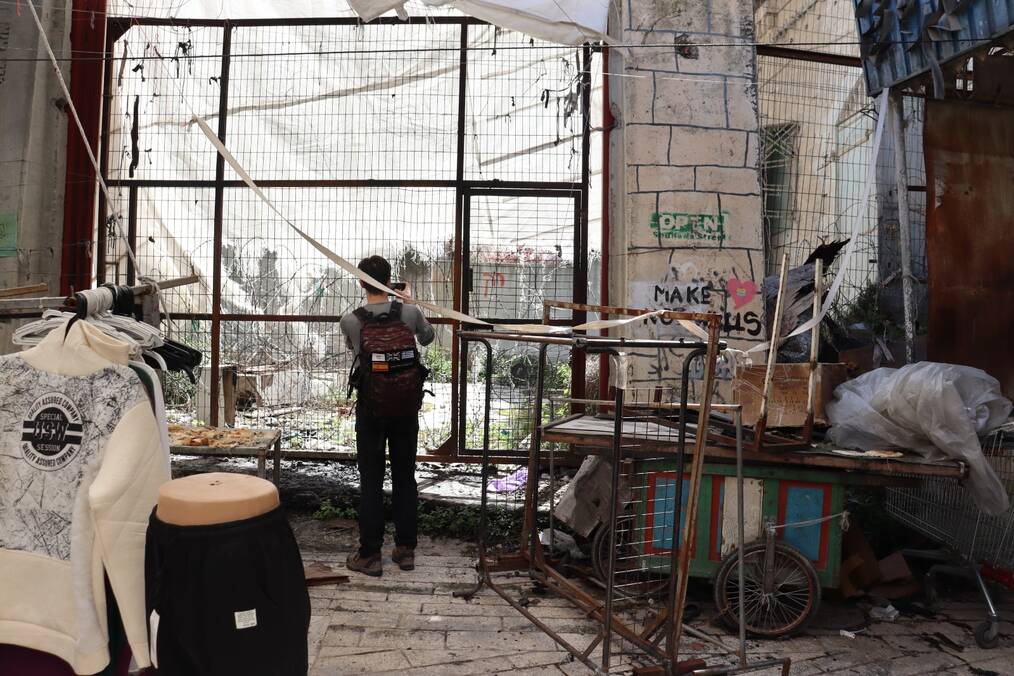
What strikes you immediately when visiting the old city is the jarring intrusion by concrete and barbed wire, steel barriers, and checkpoints directly and without consideration for environment or aesthetics imposed on the beauty of the ancient architecture, a deliberate attempt to degrade and to insult the tradition, taking possession of an area that is claimed, taken and occupied. Hebron is surrounded by large settlements since 1967; they are ever-expanding and 'secured' with ever more barriers and checkpoints. Even some houses above the shops have been taken, barbed-wired, barred, and concreted. Settlers regularly throw rubbish and sometimes sewage and other grossities down on the Palestinians who try to protect themselves as well as they can by wire meshing and tarpaulins.

We went to the beautiful and spacious Ibrahimi mosque, which is said to be the resting place of some of the prophets and some of Abraham's wives. However, the actual tombs are only visible through thick steel windows, as the Jewish settlers have taken 2/3 of the mosque under their control. Palestinians are only allowed to visit this remaining third, the other part it permanently occupied for Jewish worship, protected by strong walls, as usual, without any regard to the ancient holiness of the place, encircling it with concrete, barbed wire and checkpoints.

As my passport allowed me to do, I visited the occupied 2/3 of Ibrahimi, which they call the 'cave of the patriarchs'. Huge halls are equipped with a desk on which Jews do their Tora studies and congregate for chanting and dancing. The clear majority of these Jews are orthodox, judging from their attire. The place was full of them, even though it was an ordinary weekday. The occupation of the mosque seems to be firmly established, still, at least four checkpoints with armed soldiers are surrounding it, who claim that they have to protect the place from 'terrorist'. Questioning them about it only meets with derisive sneers, making clear that they firmly believe that it is their god-given right to displace and dishonour everybody else around them, especially those of Arab origin.

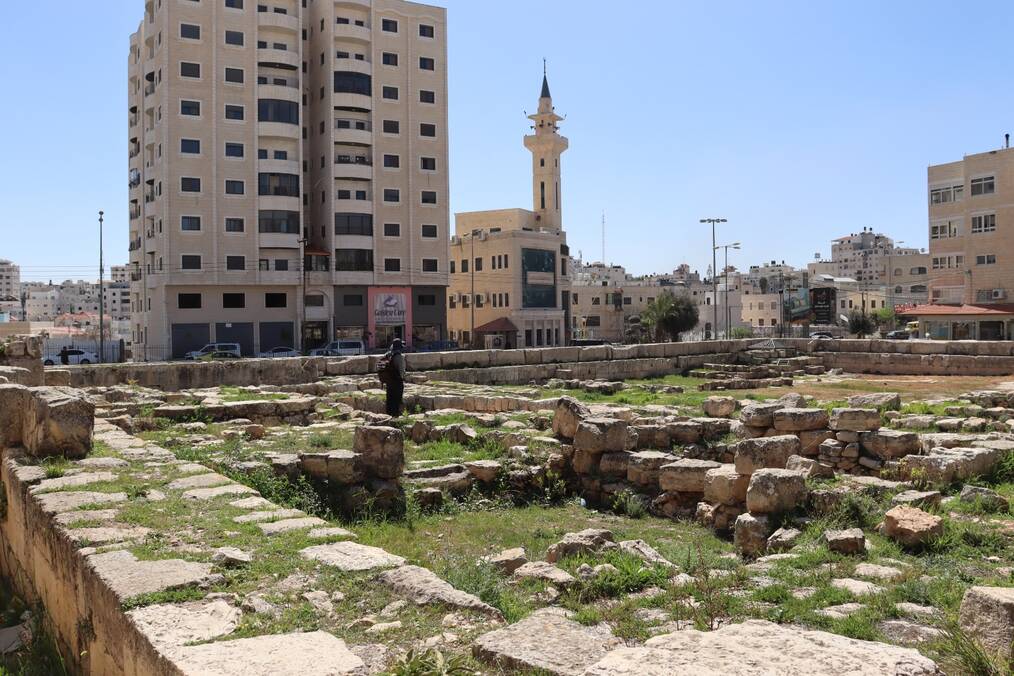
While on the other side of the barrier, I also visited the area of Tal Rumeida, a settlement around an archeological site that is claimed to be the resting place of the biblical Ruth, which is for them another excuse to occupy the entire area and claim that all of Hebron and around it belongs to them.

Hebron is also home to a two-hundred-year-old Russian Orthodox church, Al Musquobia. I visited the beautiful church adorned with Christian icons. Its grounds house an ancient oak that is called 'Abraham's Oak'. The withered remains of it are kept in a box to protect them from deterioration. It is said to be 3000 years old.

It is clear that people in Hebron are proud of their tradition and of their Islamic identity. The overwhelming majority of women wear hijab and the calls to prayer are heard from several mosques at the same time, five times a day. There is no compulsion or rejection of this tradition, nobody is obliged to comply. The family is strong and influencial, and although that can be quite oppressive sometimes for the young adult daughters in the familes, they are committed and safe, not in a hurry to make major changes to their lives and to comply with their families' traditions how to be engaged to be married, following a quite strict procedure. All of Hebron people are open, willing to tolerate our few, sumbling attempts of offering our few phrases of Arabic and try their best to practice their often quite sophisticated knowledge of English. They are helpful and will make every effort to be of any assistance you might reasonably require.

The programme:
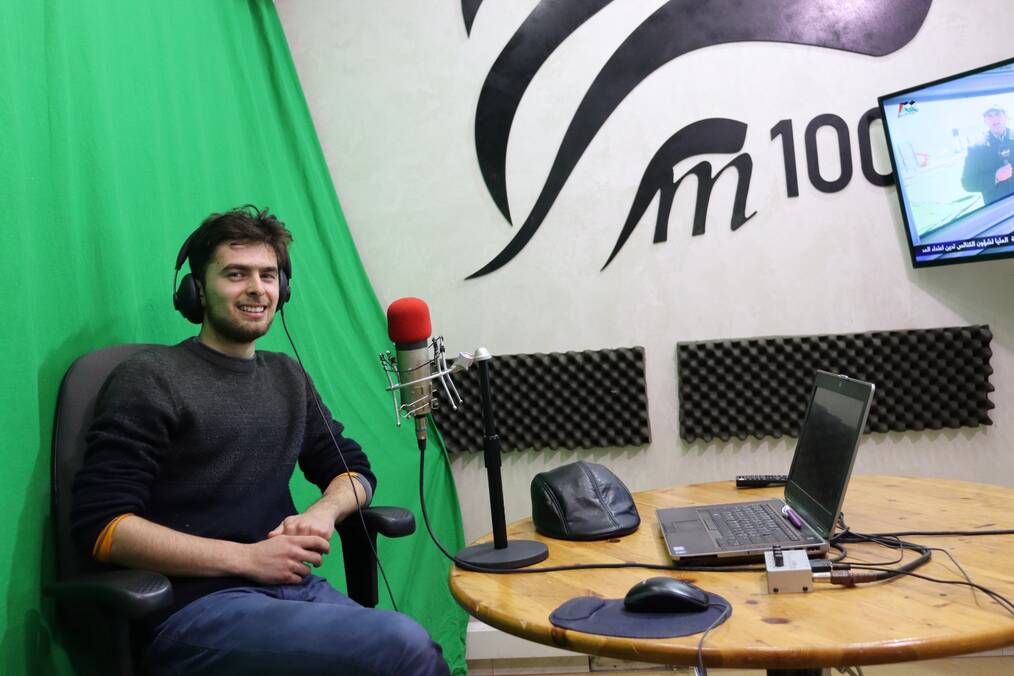
I was introduced to several television and radio stations in Hebron, many of which has experienced sharp censorship from the inception of the occupation in 1967. On several occasion Radio Hurriya was invaded by IOF soldiers, the staff was threatened with machine guns and the equipment was destroyed. There is no justice for Palestinians, once the occupation destroys or confiscates things, they only need to claim 'Israel's security' and all the damage is to be tolerated by the victims. Therefore, mindless vandalism goes on the rampage. We have seen pictures of the destruction after one of these 'visits', the costs must have been in the 10s of thousands of dollars. Especially poignant was the case of one of the managers of Radio Arooba, who is completely blind and needs a special computer. No replacement was obtained for a long time, which rendered her without the means to function effectively. Only mild mentions in the media about the true situation caused by the occupation will cause these random raids.

This often leads to severe cases of self-censorship. Even the mentioning of the words Palestine, occupation, settler violence and of course genocide might lead to invasion, violence and arrest. Two stations we visited, Hebron Satelilite TV and Hawana TV, clearly indicated the restrictions placed upon them and their compliance. Programmes are restricted to social, musical and entertainment events, sometimes local crime and gossip. This of course contributes to obstacles in the population to experience each others' predicaments and to create ways to object. All radio stations had workable equipment with recording studios for sound and live broadcasting. However, most of them purely rely on advertising and subscription for financial support. Therefore the budget is tight and assaults on them will pose serious setbacks.

We were introduced to the local craftsmen, glassmakers and woodcarvers in the old city and two internatioally exporting local companies, a kaffiyeh factory and Camel, who makes shoes, sandals and other leather items, meeting the requirements and orders of overseas and European markets. Although their machinery is basic it is meeting their needs, producing effective output and employing a number of workers. Of similar size is the kaffieh factory. Contrary to our impression the kaffiyehs only come in black and white, we were introduced to the colours of different localities, all of which are woven on a number of beautiful, electrically powered looms, operated by skilled weavers who can vary the patterns and produce their wonderful embroidery. The economy has sorely suffered since the genocide began in October 2023, people have lost confidence, the salaries have been curtailed and many have lost their jobs. As there are hardly any welfare schemes, people have learned to make do with a dearth of resources for their familes.

In the afternoons we were often asked to tutour young professionals who want to improve their English conversation skills. Their English was generally excellent already, but their ambition is to make it even better and to become as fluent as possible. We had very interesting conversations about their lives, their work, practice of Islam, their attempts and traditions to find partners and the daily harassment they suffer as a result of the occupation. When they talked, I was able to point out some phrases that could be improved, to give them synonyms for simpler words they used or to point out some grammatical or spelling issues that could be addressed. We sometimes had discussions in small groups, which was very helpful for everyone, as it improved conversational interaction and response.

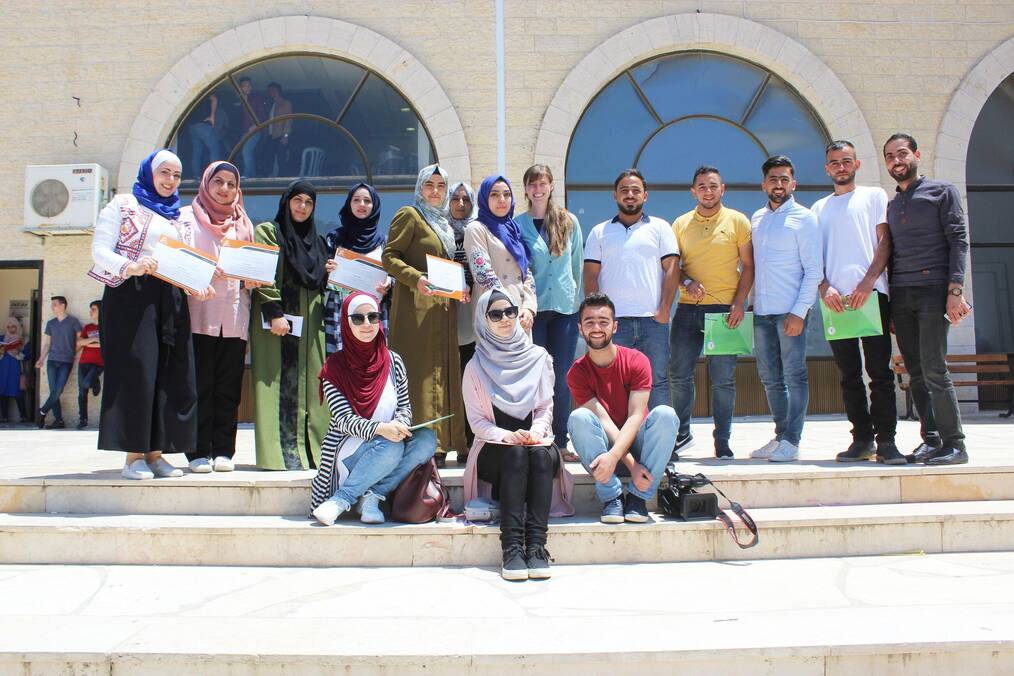
Similar objectives were addressed with Hebron University's English department, whose first-year students were encouraged to practice conversation in everyday situations. While we were there, we were introduced to some other departments, saw the science and medical faculties and were able to talk to the dean of the university, who was inviting some of us to give talks to an international student workshop about a topic of our choice.

All the experiences and impressions were written down in regular journals, as encouraged by the centre. As my friends at home were curious about them, I posted them on a blog in which the centre was included and could regularly monitor the written work. I would have liked a little more feedback on them and perhaps some ideas where and how to effectively publish them in order to reach an audience interested in the issues raised. I also wrote an illustrated travel account of my two-day visit to Jericho, Qumran, the Dead Sea and Bethlehem, which was most appreciated at home.

Arabic:
Before coming to Hebron I tried to master some Arabic sentences via YouTube. Of course, and more or less unbeknownst to me, Fuzha, although universally understood in the Arabic world, is only used in formal settings and not in everyday conversation in the various regions. To my great disappointment, I could not understand anything that was said, apart fron a few words, nor could I use my few stilted sentences effectively. When I tried to learn a bit more in a formal class that was offered in the centre, I found myself to be quite confused, as many words I know had a different alternative in the Levant. So, my preconcepts stood in the way. Possibly it would have been better just to go like an empty vessel to the task, do some cooking with a local woman and learn the words going along with this. But, for others, of course it is of great help to have the one to one formal tuition of local Arabic that is taught in the centre.

Safety:
Although instructed not to go out of the house alone after dark, I was in a position to do that several times and there was no threat or concern of any kind. People were always very helpful and - as we are quite recognisable as foreigners - there is curiosity and friendly attempts to interact with us, especially from children. As we can feel that there is only a sense of excitement or exotic encounter, but never malice, it is completely safe to walk the street or to interact with people who want to practice their English. It is clear that Muslim men will not make eye contact and are in the tradition of not interacting with single women, as they will regard this as indecent.

The only threat I felt in Hebron was when I encountered Israeli soldiers. Their arrogant, insulting, and threatening behavior is in open contrast to the joyful gentleness of Palestinians.

Accommodation:
We were housed in the basement flat of a friend of GoPalestine, a medical doctor, whose family lives in the other part of that spacious house. The flat has three bedrooms, a sitting room, bathroom and kitchen, all in functioning, clean condition, although Westerners with too high expectations might find it rather old-fashioned and basic. The few snags with the plumbing in the bathroom were promptly addressed and our comfort was ensured and was regularly enquired about. The kitchen contains a large fridge-freezer, a washing machine and a gas cooker, all in good condition.
Although we were warned that electricity and water might sometimes be in short supply, there was always enough of it and we made an effort not to waste.

Why would it be valuable for everyone to visit GoPalestine as a volunteer or intern:
I sincerely thank Mr Tamimi and all the staff for the exquisite and unique experience they have given us, enabling us to have a focused impression of the real situation in Palestine. I hope to share this when back in Britain and to be able to counter the still widespread prejudice that exists in the West, most insidiously, that Palestinians have brought the reasons for their control and constant monitoring upon themselves. None of this is true and the awareness in the West is growing that Palestine is the ancient and eternal home of a wonderful people who deserve self-determination, a democratic state with proper elections, to be free from harassment and interference, and to live in peace, like any other nation on earth.

There is a variety of NGOs in Palestine who want to spread social awareness, information about the culture or, more politically motivated, to protect local people from the demolition of their houses and confiscation of their land. These organisations also try to witness the harassment at the checkpoints that is so randomly influencing the daily lives without any apparent reason. Some organisations concentrate on accompanying children who live in other occupied areas to protect them from the daily assaults and insults inflicted on them by settlers, including their children who imitate their parents, on their daily way to school. So, for people who want to be of assistance to the Palestinian people, there is a wide choice.

I am glad that I chose GoPalestine out of the variety on offer. Not only is there a clear mission to make international visitors acquainted with local customs and everyday life, but there is also an internal choice of specialities, tailored to the specific interests of the interns and volunteers. There is a Human Rights internship that will introduce you to the refugee camps and get you in touch with lawyers who can explain the situation. Another internship concentrates on healt; the doctors will take you to the local hospitals if you are a trained nurse or doctor and there are introductions to the local schools and administrative bodies as well. If you have different professional backgrounds, the centre wll do their best to accommodate this with tailored experiences and meetings. If you just want to volunteer and help where needed, an excellent way is to help the very keen children or professionals to improve their English by conversations and language talks. This is such a hands-on experience that gives you a broad insight not only to culture and every day life, but also a direct encounter with people of different wakes of life, differnt characters, opinion and interests. It is an altogether unforgettable experience, safe, colouful and varied, definitely to be preferred over any packaged holiday abroad.

I will try to do my best to spread the word further and we hope and pray for a Free Palestine soon.

What was the most nerve-racking moment and how did you overcome it?
Encountering armed settlers
Pros
  • International, informative experience
  • Knowledge about culture
  • Background and practical living of local people
Cons
  • Not sure enough publishing opportu ities
42 people found this review helpful.
Luca
5/5
Yes, I recommend this program

Inspiring!

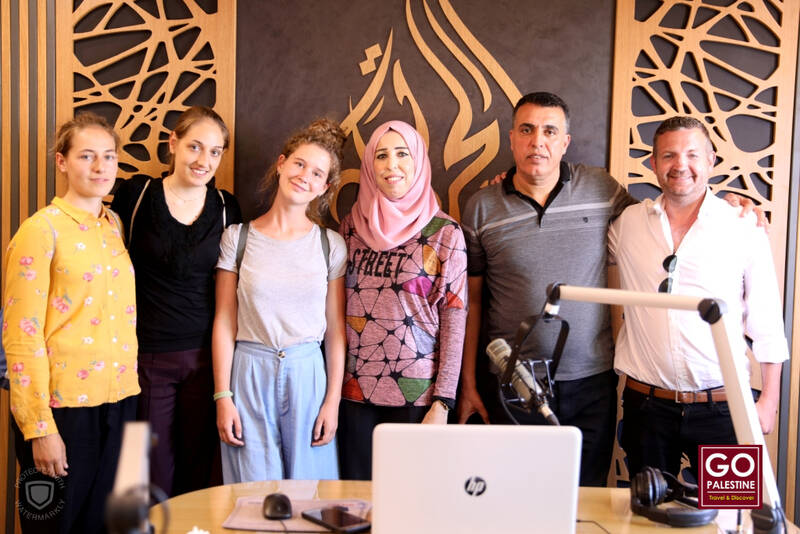
My time in Hebron was inspiring. Each day, I’d head to the center around 9:30 a.m. and spend my time visiting local radio stations and media organizations in Hebron. These field visits were incredible for meeting people in the industry and getting a firsthand look at Palestinian media.

I also took Arabic classes, which were a huge help in building my conversational skills. My teacher was amazing, every lesson was fun, and I learned so much. Even though I’d studied some Arabic before, these classes really boosted my confidence with the language. Before coming here, I’d heard mixed things about safety in Palestine. But from my experience, it’s been nothing but welcoming.

I felt safe walking around alone, even at night, and the locals were incredibly kind. I first visited Palestine on my own in 2019, and I felt just as comfortable now in Hebron. If you’re considering Go Palestine, I can’t recommend it enough. It’s a chance to learn, connect, and experience a beautiful, welcoming culture firsthand.

92 people found this review helpful.
Siobhán
5/5
Yes, I recommend this program

Beyond my expectations!

My name is Siobhán. I've participated in the Media in Palestine Internship Program in Hebron with Go Palestine for one month. My experience exceeded all expectations, thanks to the warm welcome from my host family in Halhul and the rich cultural insights gained from local volunteers and daily activities.

The program offered a diverse daily schedule that included meetings with journalists and media experts, explorations of Hebron, Arabic lessons, and teaching media skills to students. Despite being in an occupied territory, Hebron felt safe and welcoming, thanks to the generous hospitality of the locals. This incredible experience allowed me to make lifelong friends and fully immerse myself in a new culture. I hope to return in the future!

97 people found this review helpful.
Adam
5/5
Yes, I recommend this program

Just Amazing

Hi, I’m Adam, a 26-year-old from Poland. Visiting Palestine has always been a dream of mine, and I found the perfect opportunity at the Go Palestine Centre in Hebron. During my stay, I participated in both a media and industry internship, which I highly recommend to anyone interested in learning about Hebron. I also volunteered for one-on-one English teaching sessions and took Arabic lessons.

My days were full and enriching. Mornings were spent visiting local businesses or media outlets, where I learned firsthand about these industries and interviewed various professionals. Despite my limited Arabic, Ms. Hala from the centre translated everything for me, ensuring smooth and productive days. We also visited refugee camps, which was an eye-opening experience.

Afternoons were dedicated to teaching English or attending Arabic lessons with the talented Mohammad. Evenings offered me leisure time to meet new people and unwind. With two days off each week, I explored the West Bank—visiting Jerusalem, Bethlehem, Mar Saba, and Jericho, with Mar Saba being a standout.

My time in Hebron deepened my understanding of its culture. I explored the Old City, museums, Israeli settlements, and witnessed the impacts of occupation firsthand. Despite concerns, safety was never an issue; the locals were incredibly hospitable, and I encountered minimal issues with Israeli soldiers and checkpoints. Will come again!

Pros
  • Exploring Palestinian Culture
  • Supportive staff
  • Understanding the conflict
125 people found this review helpful.
Sebastian
5/5
Yes, I recommend this program

Really cool experience

I am Sebastian and I came from Spain to spend a short but very sweet week in Palestine. I study architecture and during my summer semester I chose to come to Palestine to teach English and volunteer at refugee camps. After a long search online I stumbled across Go-palestine and quickly came in contact with Mutaz who helped me get an idea of what I would be doing once in Palestine. I was presented with a weekly schedule that included teaching English, learning Arabic, visiting refugee camps and spending time learning about the culture.
Now that this week has passed I can say that it was truly one of the most amazing experiences. The people have been incredibly hospitable and friendly. Through teaching I was able to meet a lot of the locals who quickly took me in and invited me to have coffee or tea. One week was just too short! If you’re thinking about coming I can only reccomend it. Feel free to reach out to me @karreth if you have any questions!

Pros
  • Amazing people
  • Well organized
  • Informative
Cons
  • Hot!
158 people found this review helpful.
Luke
5/5
Yes, I recommend this program

Incredible experience

Incredible experience. I spent 3 weeks with GoPalestine on their "Media and Journalism" internship and I honestly think that this is one of the most unique and special experiences you could choose to do. Being with the people at GoPalestine gives you inside access to chat to just about anyone in Hebron, so my time was filled with interesting stories and conversation. I certainly feel like I understand the political dynamics of the region so much more, having experienced it first hand. Teaching English is fun and rewarding. The other volunteers became good friends, and the Palestinians are the most kind, hospitable and trustworthy people you could wish to meet. I was able to explore other cities in my time off including Bethlehem and Jerusalem, and got an authentic experience of Arabic culture, customs and food. I really couldn't have asked for a better introduction to the Middle East. I would love to come back someday, inshallah.

Pros
  • Authentic cultural experience
  • Get first-hand understanding on political and humanitarian challenges
  • Great company and friendships
Cons
  • Travel around the region is slow due to Israeli checkpoints
152 people found this review helpful.

Questions & Answers