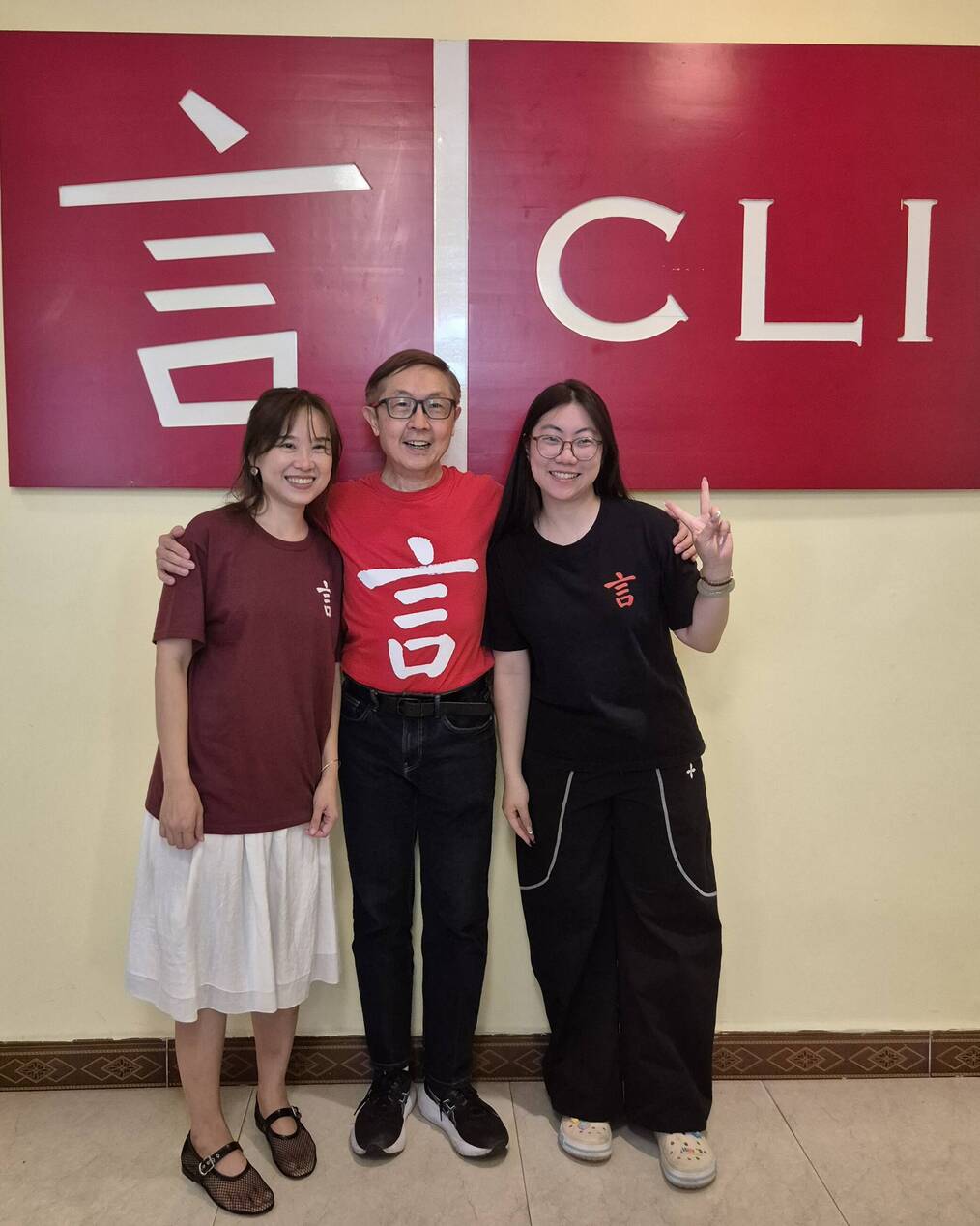
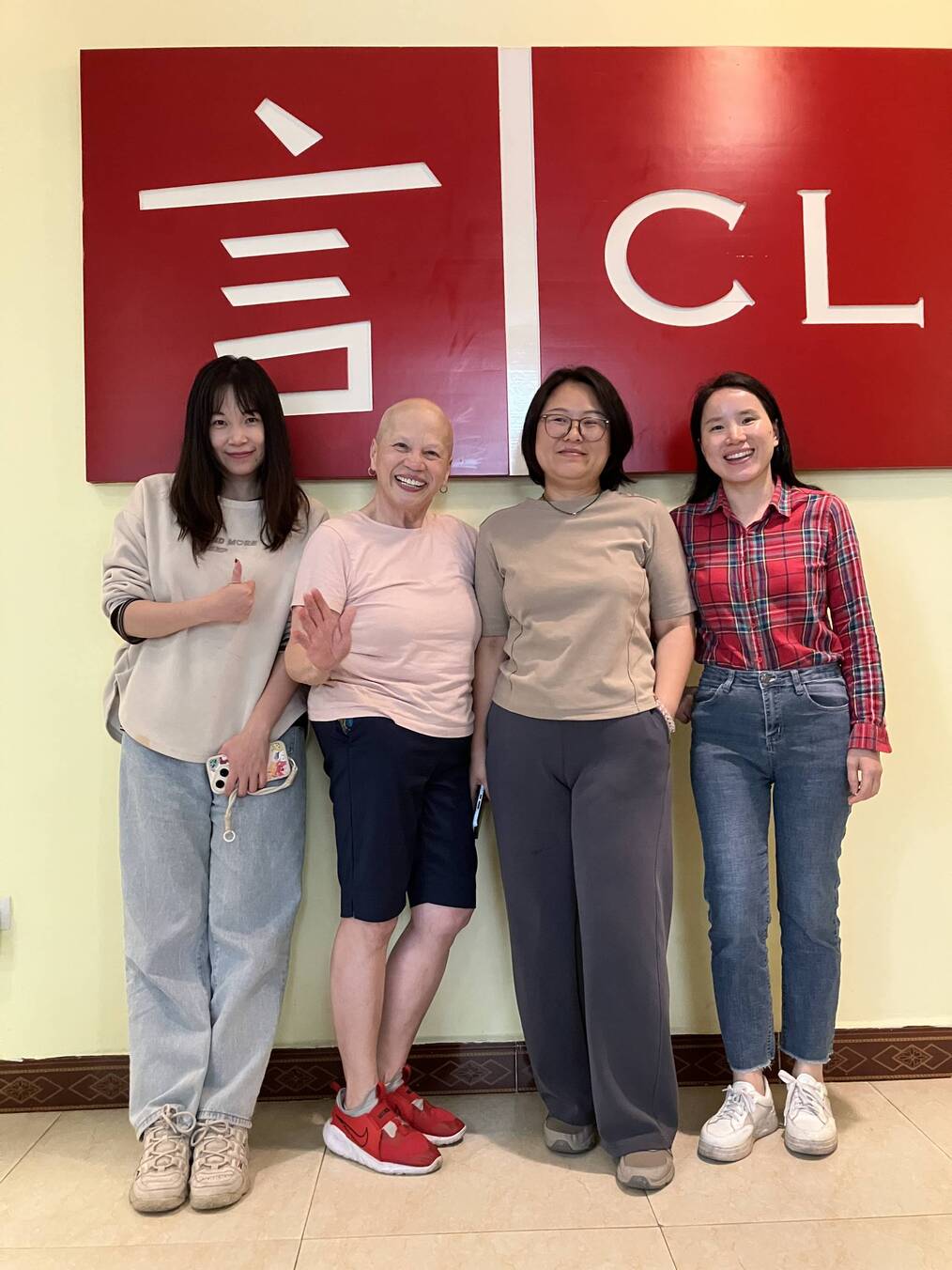
cli logo with a white 言 symbol on a red background

The Chinese Language Institute (CLI)

Why choose The Chinese Language Institute (CLI)?

The Chinese Language Institute (CLI) is an innovative language and cultural center located in Guilin, China. Housed in its own 5-story language learning center and officially affiliated with Guangxi Normal University, CLI offers the fastest track to mandarin language proficiency through one-on-one training, constant interaction and complete immersion. With strong connections at private and public institutions throughout the country, CLI opens China to its students in countless ways. We warmly welcome you to study in China with CLI!

Reviews

Cornelius
5/5
Yes, I recommend this program

CLI Guilin Experience

For me unique was to learn Chinese not only in classroom but to go out on markets, supermarkets & cafes to learn daily vocabulary. Teachers all are very nice and supportive people which was just fun to hang out with. They adapt to your personal requirements and have been very gentle. School is well organized, rooms are very clean and well equipped. School offers a nice lunch option and a lot of additional activities in the afternoon. Overall I am very satisfied with my CLI experience and already think about booking it again.

What was the most unfamiliar thing you ate?
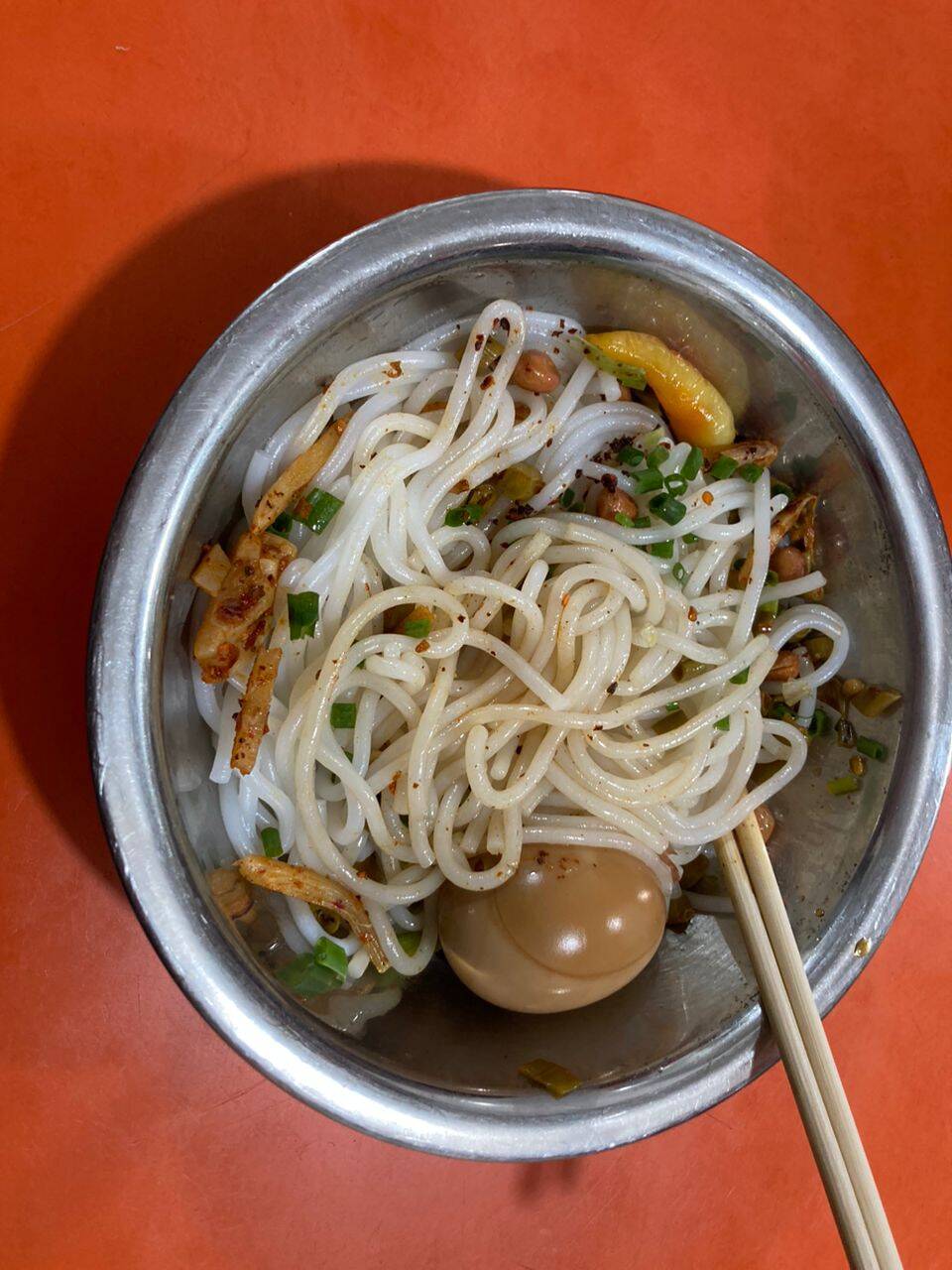
Durian fruit & ice cream
Pros
  • Great school set-up
  • Great teachers
  • very international flair
Cons
  • Location of school quite far away from downtown Guilin
JD
5/5
Yes, I recommend this program

Amazing experience

My six-weeks at CLI surpassed my expectations. The level of instruction is truly top tier; my teachers were incredibly patient, kind, deeply knowledgeable about Chinese language, and most importantly very skilled at teaching it. The one-on-one classes was a jolt of energy to my language study, and propelled me and entire HSK level in a month and a half. The accommodations are spacious, clean, and newly updated. I highly, highly recommend CLI as an amazing learning and life experience for anyone who is trying to learn Mandarin; they have many different teachers and textbook curriculums to choose from so any level can be accommodated, from just starting out to conversational.

Pros
  • Incredible language instruction
  • Walkable and manageable city
  • Clean, spacious, and updated accommodation
Cons
  • If you’re looking for a cosmopolitan city, Guilin may feel small or isolated. That said, travel is easy!
Kurt
5/5
Yes, I recommend this program

A Great Way To Get Going

After fumbling around with various programs and apps, I went with an actual program with live teachers one on one. It's easily worth it. I learned more in 8 weeks than I have in a year of various other online and app-based learning programs. The teachers are superb, the physical plant/classroom facilities are great, and even the lunch every day was remarkably good. The local neighborhood is awesome; full of restaurants, coffee shops, etc.

What would you improve about this program?
I'd update the printed material to reflect modern life more accurately.
Pros
  • All day immersion in learning a new language.
Cons
  • All day immersion in learning a new language...it got to burnout stage after 8 weeks.
Martin
5/5
Yes, I recommend this program

Guilin – a tranquil jewel in Guangxi

I spent three months at CLI in Guilin and had a terrific time. I really liked the teachers, the city, and was perfectly happy with the housing. Guilin now feels like a part of me. I loved the peaceful and tranquil environment and would choose Guilin any day over the bustle and noise of Beijing or Shanghai. My Chinese also tremendously improved. I started out with mid-level HSK 1 and am now at the beginning of HSK 3.

I only have one point of criticism. I felt that the the weekend trips offered by the institute were too catered to Western foreigners who are reluctant to take culinary risks or go off the beaten track. This is less a criticism of CLI, but more a reflection of my personal adventurous inclinations.

What was the most unfamiliar thing you ate?
My motto when going to Guilin was to fully immerse myself in Guilin's culinary culture, letting go of all supercilious Western prejudices of what one can and cannot eat. As such, during my time at CLI I had the pleasure of trying:

- Dog Meat
- Sweet water turtle
- Frog
- Pig brain
- Sea snail
- Oil Tea

I recognise that these "unfamiliar things" may be too outlandish for many. Nonetheless, I still appreciate having had the opportunity of trying all the above. (N.B., among all CLI students I was quite unique in seeking out these things).
Pros
  • Great Lessons
  • Great and affordable City
  • Course highly flexible
Cons
  • Humid Weather
  • Limited "Night Life"
Melissa
5/5
Yes, I recommend this program

CLI Immersion Program

I had the privilege and opportunity to study Chinese at CLI in Guilin, China. I just completed a 10 week stay last week. From day 1 CLI took care of all my needs. They not only met them but anticipated them as well. From the exceptional teachers (Annie, Ruza and Jin), the hardworking talented interns (Heney, Mendy, Nora, Esther, Kayla, Amanda, among others) and the wonderful cooks and support staff.

I began each day with eager anticipation looking forward to the adventure of learning not only the Chinese language but the Chinese culture as well. The one on one structure can not be beat in elevating one’s learning capability. The teachers are highly experienced and willingly adjust their teaching styles to best meet the student’s needs. It blows my mind at how good they are at their vocation.

I could go on and on raving about how much I love CLI and all that it embodies. I am so committed to sharing my journey with CLI because I am confident that they have the leadership and ability to help me achieve my goals. Thank you CLI!

What was your funniest moment?
I had so many! But I guess my funniest moment would be when we were at Yangshuo on a biking activity. I kept falling off my bike! Biking is not one of my strengths. Sad to say.
Pros
  • One on one instruction
  • Experienced and flexible teachers
  • Very strong support staff
Cons
  • None

Programs

Displaying 1 - 2 of 2

Alumni Interviews

These are in-depth Q&A sessions with verified alumni.

Pamela Anita Hall

Pam is 68 years old and has studied Mandarin for several years. She has dreamed of going to China and finally got her wish this year.
Pamela Anita Hall

Interview

Why did you choose this program?

I chose this program because I have been taking online Mandarin lessons with CLI for several years and had always planned to go to China for further study, but Covid put a halt to my plans for a while. My online teacher, Nancy, is great and she also teaches in person at CLI, so it was just a matter of time. I chose this program because of my favorable online experience. In addition, it’s located in beautiful, scenic Guilin which is not as big as places such as Beijing and Shanghai. Students can start the program on any Monday because the classes are one-on-one so there is a lot of flexibility in scheduling. It also has a nice building for classes and living quarters with 24/7 onsite personnel.

What did your program provider (or university) assist you with, and what did you have to organize on your own?

The program provider gave pre-departure information which includes when to apply for a visa after receiving the invitation letter, what to bring for clothing and supplies, what to expect from the community. The admissions director answered all of my questions in a timely manner. I was responsible to plan and book my flights and high-speed train tickets. The school transports students to and from the airport or train stations in Guilin. On-site interns help students manage phone plans, buy Chinese phones, or buy SIM cards. The interns performed many other tasks such as helping students use the bus system, finding supermarkets, restaurants, stationary stores, taking students to the police station to register, using TaoBao to purchase items, installing and using DiDi (a taxi service like Uber), etc. The activity director at CLI planned excursions to scenic spots in Guilin, Yangshuo, Laozhai (a farming village off the beaten path), the Long Sheng Rice Terraces, as well as activities at CLI such as: making dumplings, mooncakes, doing calligraphy, learning to play mahjong, etc. Students got together and planned their own activities, as well.

What is one piece of advice you'd give to someone going on your program?

Pack lightly. I took too much stuff with me, particularly clothing that I never used. It was cumbersome and unnecessary, and made travel a bit harder. I never dressed up, but had dressy clothing and shoes. I wore the same clothes over and over with no problem. I could have easily bought all of my toiletries in China at a much lesser cost, so I would advise just taking small, travel-sized soaps, shampoo, etc., and buying more in country.

What does an average day/week look like as a participant of this program?

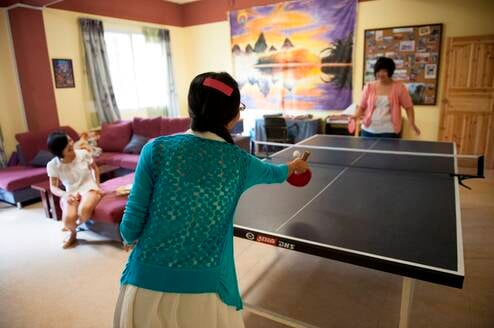
Each student has 20 hours of one-on-one instruction with 3 different teachers, and homework every day. The student gets to select the level of difficulty. Some students were preparing for the HSK exams and had a lot of homework. Others wanted a lighter work load. During the day, the student will go to classes, do homework, eat lunch provided at CLI, relax in one of the activity rooms, play mahjong or other games, read books, go out to breakfast and dinner with friends, or order in. Then, the student can participate in any of the planned activities, as desired. Some were in the evenings, while others were day trips, or entire weekend trips. The student gets to meet people from all over the world who come with the same goal of learning Mandarin. They will speak Mandarin with each other and help one another along the way.

Going into your experience abroad, what was your biggest fear, and how did you overcome it? How did your views on the issue change?

My biggest fear was traveling alone to a country I had never been to, with a somewhat limited command of the language. I was unsure about making my high-speed train connections after flying into Hong Kong first. I actually did miss my train out of Hong Kong because the mass of people was so great and the customs process took so long. I was able to book another train to Guangzhou, from which I was then taking another train to Guilin. Because of the delay in getting to Guangzhou after missing my first train, I had an unexpected overnight stay in Guangzhou because there were no other trains leaving for Guilin by the time I got there.

How did I manage? I called my CLI teacher, Nancy, who arranged a hotel and taxi for me. I then got to Guilin a day later than planned, but no worse for the wear. I will state that the kindness of strangers was a big surprise and a welcome relief. People on the train, upon hearing that I’d missed my previous train, offered me food and drink. A stranger at the Guangzhou train station saw me struggling with my luggage, and offered to help me. She did so along the whole way as she was going to Guilin, also. How did my views change? I now realize that I can do what I had feared, and there are plenty of people who are willing to help. My trip back went much more smoothly because I understood the system better, and knew what to expect.

What was my favorite out-of-school experience?

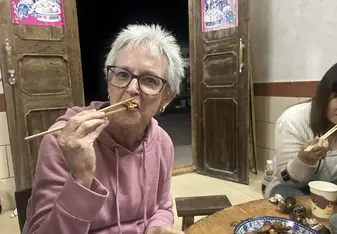
My favorite story is about a weekend trip I took with my teacher, Nancy, to her little hometown close to Yangshuo. It is a little farming village, and was “the real deal” in seeing how Chinese people live. It was her mother’s birthday celebration, so friends and family were there. I was a bit of an object of curiosity as I was the only non-Chinese person in the whole town, I think. As we ate, comments were made about how well I used chopsticks, and the fact that I have all my teeth at my advanced age. I ate chicken feet (a first for me) and an amusement for those watching me. I declared that they were “so-so” in taste. I declined the snails, even after an explanation that they were river snails, not land snails. But, I enjoyed many other delicious foods—lamb, vegetables, beef, rice, fruits of all kinds, and a delicious birthday cake. In the evening, we went to the village square and found a group of women who were dancing together with music and movements shown on a large screen TV. I joined right in, to the surprise and amazement of the dancing women. We had a blast.

Afterwards, they gathered around me and I was able to tell them why I was in China, and that I was learning Mandarin in Guilin. I also told them that I like to dance, sing Chinese songs, and watch Chinese TV shows. They then asked me to sing for them, so I did. They clapped and congratulated me on a good performance. The next day, I washed vegetables at the village well, talked to older people in a park, and enjoyed the scenery of beautiful Yangshuo. I loved this experience and felt it gave me a greater appreciation for those hard-working people in that little village.

Staff Interviews

These are in-depth Q&A sessions with program leaders.

Cory Donovan

Job Title
Director of Engagement
Thumbnail

What position do you hold at CLI? What has been your career path so far?

Cory: I am currently the Director of Engagement at CLI. I graduated from the University of Wisconsin Stevens Point with a degree in Business Administration. After graduation, I worked for Incourage Community Foundation in Wood County, Wisconsin helping residents overcome the “digital divide”.

Having volunteered for many global organizations, such as the Clinton Global Initiative, I realized the important role that language plays in not only basic communication, but also in solving today’s global issues. Wanting to learn a foreign language and having desire to help the world, I decided to journey to China to learn Mandarin Chinese. I enrolled in CLI’s Immersion Program located in the picturesque city of Guilin. After four months of study, I was offered the opportunity to be a part of the CLI team as Director of Engagement.

Did YOU study abroad? If so, where did you go and what inspired you to go?!

Cory: My first experience studying abroad was a study tour of China in 2009 through my university. My teachers of course encouraged me to broaden my horizons and bolster my resume, but the true motivation came from within. I believe most who decide to study abroad are deep down an explorer, motivated to discover the world and themselves. This inner motivation also inspired me to study abroad in Ireland. I wanted to learn more about my family lineage and the history of the country my ancestors once called home. I returned to China in 2012 to start learning Mandarin Chinese, motivated by the desire to become bilingual.

What does the future hold for CLI - any new programs to share?

Cory: CLI is excited to announce the completion of a comprehensive renovation at its new 5-story language learning center located in the southern city of Guilin, China. CLI’s new and improved center is equipped with 36 dorm rooms, 18 classrooms, two public kitchens, numerous lounge rooms, and a library with over 100 Chinese language and cultural books – CLI is truly the epicenter for learning Chinese language and culture.

CLI is also excited to expand its fully customizable faculty-led study tours program. Institutions have the opportunity to design their own China study tour tailored to their specific learning needs and interests. Whether the program's focus is business and economics, art history, environmental sustainability, civil engineering, sociology, or intensive Chinese, faculty will be able to provide their students with an enriching and unforgettable educational experience.

What about the future of the industry? How do you think study abroad and international education will change over the next 10 years?

Cory: As the world becomes more interconnected, the desire and need for students to receive a global education will continue to increase. The destinations students choose will provide the biggest shift in the international education industry. Governments have all ready identified critical or under-served languages, providing significant financial aid to ensure students have the opportunity to study these languages. Thus, Asia and the Middle East will continue to supplant European countries as top study abroad destinations.

Technology is also changing the way we think about study abroad. As technology continues to advance, there will be an increase in the amount of distance learning that takes place. One-on-one language tutoring over Skype, teachers teaching a classroom of students from halfway around the world, and the ability to listen to lectures from top professors at top institutions for free, makes one rethink the way education is delivered. Although nothing can substitute experiencing another culture firsthand, these new options may prove to be enough for some students.

Professional Associations

Gap Year Association Logo