IVHQ
Programs and Reviews
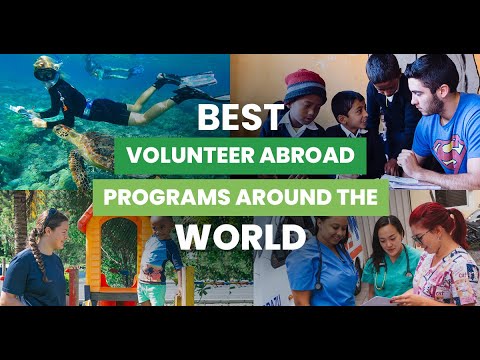
IVHQ (International Volunteer HQ) provides safe, unique, meaningful and extremely affordable volunteer programs in 20 developing countries around the world, with a constantly expanding base. Programs are available in Asia, Africa, and Latin America, where IVHQ works alongside local NGOs to provide meaningful volunteer opportunities. Currently, IVHQ has programs in Mexico, Guatemala, Costa Rica, Colombia, Ecuador, Peru, Brazil, Ghana, Kenya, Uganda, Tanzania, South Africa, Morocco China, Nepal, India, Cambodia, Vietnam, Thailand and Sri Lanka.
Whether you're taking a volunteer vacation, a gap year, or on a career break, IVHQ has a wide variety of programs ranging from 1 week to 6 months to fit anyone's schedule. Browse through the programs below and visit the IVHQ website for more information.
Programs Abroad
Reviews
80%Overall
Rating
80%Overall
Rating
I volunteered for orphanage work in Nepal in 2011, and was a bit apprehensive about booking online. With the sea of scams and uncertainty, it's hard to know who can be trusted. After a few chats with past volunteers and a large amount of positive reviews online, I chose to go through IVHQ and was pleased to find the trip went smoothly.
The staff in NZ was very friendly and accommodating to some special requests I had prior to booking my trip, and I was able to pick the specific volunteer location I wanted to work at. Airport pickup went smoothly, and the hotel I was placed at in Kathmandu was located within walking distance of Thamel. The hotel staff was very accommodating and helpful, the food served was more than average, and the tours and lessons upon arriving were a nice way of getting a feel for the country. With all the new sights and sounds of a new place, it's easy to get overwhelmed. IVHQ's placement services took all the guesswork out of my arrival, and let me really enjoy my first few days there.
I was transported to a small orphanage outside Kathmandu a few days after arriving to Nepal, and received a warm welcome from the children and house staff. Accommodation was right at the orphanage where I had my own room, and it was simple but comfortable. Living right at the orphanage greatly enriched my understanding of what life is like for the boys, and it was great to be there day and night. Meals were basic, but since they were identical to what was traditionally served and consumed in Nepal, I was fine with them. We had running water, a heated shower, and power for a good portion of the day.
Most days were spent getting the children ready for school, walking them to class, and helping with homework afterwards. On the weekends we'd play games or walk into town, and sometimes I'd help out at the school with lessons. It's a slower way of life than I was used to, and if one doesn't have their heart set on really helping the children, it might turn into a boring experience. I loved it, and threw myself into helping, mentoring, and spending time with the children.
Nepal was a great experience, and I was able to see parts of the country on the weekends. Since there was really no set structure at the home, I was able to come and go as I wished. I took a mountain flight to see Mt. Everest, and did some canyoning up near the Tibet border. Prices were very inexpensive, allowing me to stay weeks longer than I could have afforded in other places around the world.
Like all new places and cultures, you certainly need an open mind when traveling to Nepal. It's vastly different than things are back home, but it's a wonderfully beautiful country filled with very warm and caring people. Just make sure you get out of Kathmandu and see what the country has to offer.
Critical Feedback:
I would have liked to know more about where my program costs actually went. I got conflicting stories from the in country hosts and placement workers, as well as from other volunteers. Also, the first few days at the orphanage were hard, simply for the fact I had no idea what to do. I was literally dropped off, introduced to the children, and that was it. I didn't receive any instruction on what I would be required to do or how many hours I was expected to be there, etc. After a few days, I developed a routine and things sort of fell into place, but it did make for two or so very uncomfortable and rather awkward days. Other than that, it was fine. For the cost, I don't think you can beat it.
90%Overall
Rating
Overall, my experience with UBECI has been wonderful! The staff and other volunteers are very supportive and the children we work with are so beautiful. I chose to spend two weeks working in the markets with the young children, one week with the 1-3 year olds and the second week with the 7-15 year olds. Every morning the staff would meet us volunteers at the office to head to the market together which I really appreciated. Since we spent about one day a week at each market, it was nice to see more of Quito and the different dynamics of the markets. At the same time, rotating the markets (each market location is only open a couple days a week so no choice) made it difficult to make progress with the children. Coming with parents to sell on a daily basis, some of these children are not in school and receive all their academic training from us. It was hard to repeatedly work with the young children unable to recognize basic shapes and colors we had covered the week before. At the end of the day, I had to look and appreciate the small successes in each child's life and I am so glad UBECI is there for these children. Not only do they stress learning though books, puzzles, and lessons, they also emphasis hygiene, physical movements, and emotional wellbeing. The staff and volunteers do so much to be loving and present to these children. I highly recommend volunteering with UBECI and enjoyed my experiences in Quito with them!
Critical Feedback:
With a background in case management, I wish there was more consistent and stronger interaction with the parents. I completely understand the staff members must walk a fine line to not be too intrusive since the parents allow us to work with their children voluntarily so it is hard. This is not critical of the program so much as they challenges the program faces. I have so much respect for the staff members and long term volunteers who continue to have excitement and love for these children day after day and truly celebrate every little success.
30%Overall
Rating
I don't know who wrote the other two reviews, but they are a little bit generous in my opinion. I would say that I have had a really nice time in Rio on my weekends and evenings, but the program that I signed up to do didn't exist, so I ended up having to regroup and go with the flow, and teach English instead. The comment about the houses is really weird to me because, being that I am pretty low maintenance about living conditions I would say that a house coated in three layers of mold is not nice. The meal that they promise is really just some bread and maybe jam or something. Expect to buy all your own meals.
The money that is supposed to go back to the projects doesn't get seen by those who need it, which means if you want any supplies for your activities you can expect to pay for them out of your own pocket and those who run the Rio project get really aggressive if you ask them about this issue. They are incredibly unprofessional.
Please keep in mind that IVHQ has many projects around the world and the net work with many different organizations. I am only speaking on be half of the Rio trip.
IVHQ's Response to Volunteer:
We are sorry to hear you are disappointed in your experience volunteering in Brazil. At IVHQ, we pride ourselves on the high quality experience we offer volunteers in each of the countries where we operate programs. We actively encourage our volunteers to share feedback and any concerns they may have with our local staff and IVHQ Program Coordinators, so any issues can be resolved as they arise, while volunteers are in country. All of our programs are visited on an annual basis by an IVHQ staff member to ensure we are consistently delivering a high quality experience for all volunteers. Our Brazil program was visited by our Executive Director in January this year and while he did not receive any complaints from volunteers about the accommodation or staff, we have ensured your concerns are addressed by our local team in Brazil. In regards to meals, volunteers are informed that in Brazil, breakfast is provided and volunteers must arrange their own lunch and dinner. While all three meals are included in the program fees for other IVHQ programs, it is made clear to volunteers prior to applying and after registering to volunteer in Brazil that only breakfast is provided on this program. We are glad to hear that despite your concerns, you still had a nice time in Rio and we trust you enjoyed your time spent with the other volunteers.
90%Overall
Rating
My experience with Emerging Voices in Bogota, Colombia was life altering. This was my first service trip and I was quite nervous. I arrived at night and an Emerging Voices staff member was waiting for me as I made it through customs. As we headed toward the apartment, Susi the Emerging Voices staff member, let me know some general do's and don'ts of Colombia. The apartment was very spacious and comfortable. The next day I went to my first project at Hogar, a orphanage. While at Hogar, I was so happy to see the kids and they were happy to see me. As they ran up to me and the other volunteers with open arms. My time at Hogar was mostly spent outside playing with the kids! Running around with the kids I quickly felt the effects of the thin air as I was quickly out of breathe.
Unfortunately, I was only in Bogota for 8 days so I did not get to see a lot of tourist attractions. Although the backdrop of the Andes Mountains was the only sight I needed. It was so surreal to me. As the week progressed I had the opportunity to accompany Monica, EV's Director, to Soacha. On this particular day, I was able to sit in on parent orientation for the upcoming school year. It was at Soacha where I felt I could be the best help. The students are so smart and anxious to learn. I left Soacha with the desire to do more and I plan to return very soon.
Alumni Interviews
Staff Interview

Founded by Daniel Radcliffe in 2007, IVHQ prides itself on providing affordable, high quality volunteer programs worldwide. Says Daniel, "After leaving university, I was very interested in doing volunteer work abroad, but after extensive searching found that all the main opportunities out there either lasted too long (minimum time frame of 8 months), were incredibly expensive (the cheapest I could find were programs from US$2000 for 3 months) or very hard to get into (Peace Corps and VSA are two examples of these)."
After some searching, he settled on a volunteer program in Kenya which, while the lowest cost option at the time, still was quite expensive. Believing there had to be a more affordable option, Daniel began contacting local individuals interested in starting new programs throughout Asia and Africa--within two months, he'd performed site visits, had a website built, and IVHQ was on its way to becoming a successful volunteer travel company.
- How long? One week to six months--volunteers generally average three to four weeks' travel.
- Where? 18 countries throughout North and South America, Africa, and Asia.
- What do volunteers do? The main programs focus on education, childcare, and medical work, though other options are available in surf outreach, turtle conservation, construction, NGO work, and panda conservation.
- How much does it cost? Fees vary depending on the location, but at the lower end, volunteers can expect to pay $180 for one week, to $7,200 for six months at the higher end. Most programs range from about $250 for one week to about $2,220 for six months, though.
- What do fees cover? According to Daniel, "This varies from country to country but for the most part they cover accommodation, meals, airport pick-ups, staff support, orientation and project placement."
IVHQ Placement Basics:
About Volunteering with IVHQ:
To prepare volunteers for their trips, IVHQ provides an information packet (averaging about 60 pages per stint) and assigns a program coordinator to address any questions or concerns the volunteer might have before arrival.
Local staff get in touch with future volunteers, and pick them up and provide a one-day orientation session once they arrive in-country. Four days into the trip, IVHQ emails its volunteers to ensure they're happy, that the project is running smoothly, and to respond to any concerns the participants might have, whether they relate to accommodation, projects, or otherwise. "We encourage open communication from our volunteers and try to fix all problems immediately before they become a big issue and to ensure the volunteer does not waste any of their time in country. We have feedback forms for volunteers to complete when they finish which we also use to ensure we are improving our services," Daniel says.
After volunteers return home from their projects, IVHQ makes sure to keep its 15,000 alumni base connected and up-to-date about new developments and other news through its newsletter (with more than 30,000 subscribers), as well as its YouTube channel, Facebook group (at more than 15,000 members) and page (at more than 3,500 fans), and Twitter account. A breaking news page also is available on IVHQ's website for any visitor interested in learning more about current and ongoing projects.
A Few Questions for Daniel Radcliffe
How do you ensure your programs are sustainable and mutually beneficial for you, the community, and the volunteers?
Daniel: We work with local teams. All of our staff are locals. They are a part of the community and know the host families, and projects. They work with the local projects and families to ensure everybody is happy and projects and programs can benefit all parties. Hosting international volunteers is a difficult job. There are a lot of stakeholders to keep happy, but by having local staff on the ground who are experienced and that have good communication with the local communities and volunteers, they make the job look very easy.
How do your volunteers adapt to being immersed in a new culture?
Daniel: Very differently. For the most part they love it, but we do have cases where volunteers can find it very tough. We tell all our volunteers, to try and immerse yourself in the local culture. Learn about it and become part of it. Do not try to force your local culture on the community you are now living in.
What's your favorite part of working with IVHQ?
Daniel: Returning to a country I haven't been to for 12 months and seeing the difference our volunteers are making. Seeing the impact it is having on a community and seeing the satisfaction it brings to our volunteers and local teams when they make a difference.
- Mexico: Volunteers can apply for teaching, childcare, environmental, and computer tutoring programs in Cuernavaca and its surrounding suburbs. Costs range from $270 for one week to $2,700 for six months; volunteers must be 18 or older and speak English. Learn more about volunteering in Mexico.
- Peru: IVHQ's Peru placement lets volunteers teach English, help with childcare, medicine, construction and renovation, and jungle conservation. Projects take place in Cusco and surrounding areas, and volunteers must be 18 or older--some programs require Spanish language ability. Fees range from $250 for one week to $2,725 for six months. Learn more about volunteering in Peru.
- Kenya: With placements all over the country, IVHQ's Kenya projects offer teaching, orphanage, sports education, HIV/AIDS work, medical assistance, music programs, and women's education programs. Volunteers must be 18 or older and speak English, and program fees range from $250 for one week to $2,220 for six months. Learn more about volunteering in Kenya.
- China: Volunteers in China can teach English, work in orphanages, assist with panda conservation, and help with special needs projects. Programs take place in Xi'an and surrounding areas, and volunteers must be 18 years or older. Fees range from $240 for one week to $3,365 for six months. Learn more about volunteering in China.
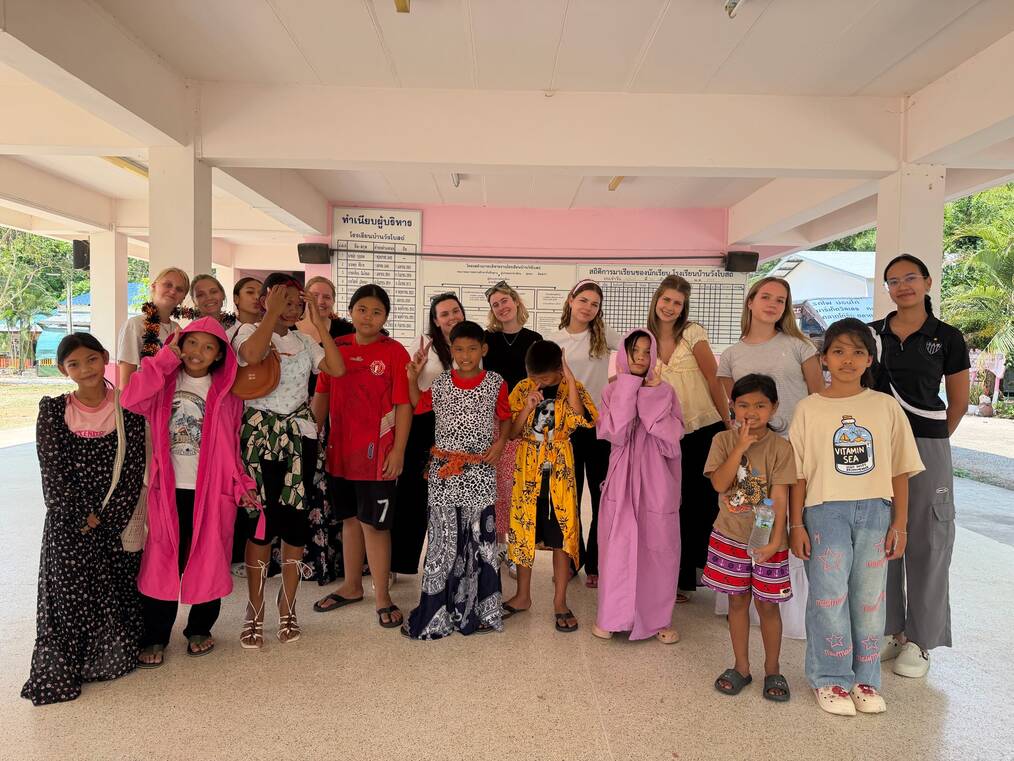
- Thailand: IVHQ's Thailand volunteers teach English, help with outdoor work, and engage in community development activities throughout Chiang Rai and surrounding areas. Participants must speak English and be 18 or older; programs range from $320 for one week to $1,275 for three months. Learn more about volunteering in Thailand.


BEEP, BEEP, BEEP rang my alarm each morning at 8 AM. Shower, breakfast, bus. Project.
My mornings began playing soccer (i.e., 'futebol' in Portuguese) for two hours with the children in the comunidade I worked in. This was to avoid melting in the pleasant, but blistering Brazilian sun during the Summer. Fast forward: the last 2.5 hours of each day were spent teaching English to eager young minds in a community with a lack of educational structure.
What was the best part of each day? It was the seeing the smiles on the faces of the children and young adults as they proved to themselves that they COULD learn to speak English. One word at a time; one sentence at a time...they learned.
Rio de Janeiro is without a doubt different from anywhere else I have ever traveled. It is gorgeous, the people are beautiful and the fun never ends, but is important to stay street smart and listen to the advice from more experienced peers in order to adequately navigate the streets of the sometimes dangerous and unpredictable streets of this city.
Just as in any city, it is important to stay focused, know where you are going and to speak the native language. It is not imperative to be fluent in Portuguese prior to arriving in Rio, but it sure helps to know basic words and phrases.
Thinking about volunteering or studying abroad in Rio? DO IT! The experience will forever change you and the memories will last a lifetime.
-Michael
Critical Feedback:
The in-country volunteer organization lacks proper management - the individuals involved can be a bit rude and disrespectful, but overall, they are pleasant enough. I would imagine they are simply overworked and underpaid.