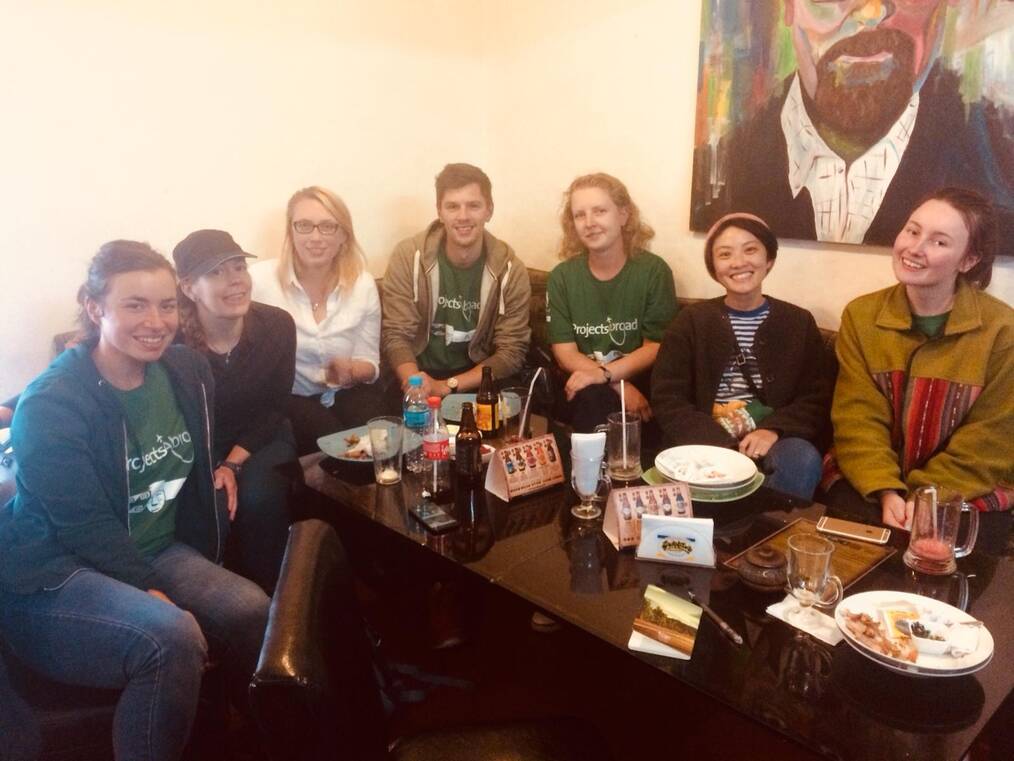
A friend and I, both German High School Graduates in 2018, did the Law and Human Rights Internship at Projects abroad in Cordoba, Argentina for 2 months.
As one should know, Internships/Projects that cost that much money and are given out at almost no requirements are obviously offered by companies that are not non-profit or somewhat socially oriented at heart. Therefore we did not expect to be given a lot of responsibility. Nevertheless we opted for this organisation because we wanted a safe and well-organised trip, because of our young age and the far distance.
For that matter, the Project did meet our expectation.
Our main activities were voluntary work such as helping homeless people in cooperation with a local NGO and a church community. Depending on your effort, you could really build up relationships with some of the homeless people, get to know them and brighten up their days. You can also show initiative and bring in your own ideas, we for example rehearsed small sketches with some of them.
However, your individual impact to change their "human rights" situation was basically not existent, especially for unprofessionals and people who stay in the project for no more than a few weeks. So it was mostly practical and standard volunteering.
If you had an academic background (currently studying or finished degree), only then you could do research on cases in cooperation with a local human rights NGO. But even there, the other volunteers told us that most of their work on the cases was rather unneccessary, the organisation was intransparent and their impact was limited as well.
This leads to our final conclusion and suggestion that the human rights internship (law in the name is misleading) is suitable for high school graduates like us who seek to dive into a new culture, learn a new language (living in a host family was great in our case and in general) and make friends with volunteers from all over the world. If that in addition to safety in a new far-away country is what you want, then this is definitely more given by the project than by simply traveling.
BUT if you are a qualified students or professional and want to have responsibility concerning the law and human rights situation, want to apply your academic skills in an influental organisation, then you should not "buy" this internship and probably none offered at projects abroad.
In fact, you pay more than 4,000 USD for 8 weeks, of which solely an unreasonably small amount goes to both the host family and the maintainance of the more or less charitable projects. Keep in mind that what they are doing is business for money.
One example: Another project they ran in Cordoba was "teaching English". As English education in public Argentinian high school is pretty poor, you might expect volunteers (in our case: one experienced 60-year old Australian English teacher and two native Americans) to help those students. However, ProjectsAbroad pays a private and very expensive English institute, to take these volunteers as nearly unneccessary asstistants. This is outraging.
Another desaster happened to a friend of us, who after Argentina went to Bolivia to another project with ProjectsAbroad. She had a background of cutting her arms, but has stopped entirely years ago. Therefore she had to do a mental health test in Bolivia, because she was going to work with a vulnerable group of young criminal girls.
She passed the test. For some reason Projects Abroad said that her scars, which she had to cover and always did except of one small accident, would be a bad "role model" for the girls. Without a warning, they simply kicked her out of the project. No discussion.
We think that is unacceptable, especially because they did not show any simpathy with her, although it was obvious that she was hurt by being kicked out.
These two examples show once again that the purpose of projects abroad, despite cooperating with some more or less legit local NGOs ad non-profit organisations, is simply business-oriented. This problem does not especially apply merely to ProjectsAbroad but in general to most voluntourism projects.
We don't want to say we did not enjoy our time in Argentina as part of our gap year, we don't regret it as we learned a lot and had a good and fun time. Still we would not do a voluntourism project again.


Response from
Dear Franziska,
Thank you very much for your message. We are very glad you enjoyed your time with us and was able to learn through your experience in Argentina. I am very sorry to hear that you did not feel the experience met your expectations. As you know at the end of their stay we ask each volunteer to complete a survey about the experiences with us and their project. We usually receive positive reviews about your project. Volunteers working on the same project as you over the past year have given scores of over 80 on average. However, I regret that you did not find your project as rewarding as we both would have liked.
It may not always be possible to see the impact of the work on the beneficiaries we work with on a shorter stay. However, in the long term, we strongly believe the work we do with our local partners makes a significant impact on the lives of the beneficiaries.
The work our volunteers do in partnership the services for the homeless you mentioned makes a real difference to the lives of the homeless. In 2018 we helped to provide over 1800 people with meals. Providing homeless communities with food and providing information to support services has a huge impact on their lives. We are also extremely proud of our work with the church group you mentioned, where homeless people are come and take part in various types of art activities. We believe these connections make a positive difference in the lives of those who attend and also provide an opportunity to educate the homeless about their rights and the services available to them. We also work with a detention center for young women in Argentina, which I understand you took part in. Our aim is to promote human rights and empower young women thereby building relationships and a yearly programme of workshops and activities.
Thank you for the feedback regarding the teaching project. We work with a variety of schools throughout the year in Argentina, including public schools and always try to allocate our volunteers to the most appropriate placement given their skills, experiences, and interests.
Thank you again for this feedback.
We are not able to go into details regarding your friend who traveled with us in Bolivia, as this involves personal and confidential information about one of our volunteers and we must respect their privacy. However, we would like to say that we do feel what happened is misrepresented in this review. Projects Abroad is built on inclusivity, and will always strive to provide a safe and welcoming space for all our volunteers, as well as for the local families and communities we serve. I hope you understand why we can not discuss this further.
I wanted to address some of the concerns you raised about where your money goes. A proportion of your fee is used to fund direct costs of the ground. This includes your accommodation, food, transport, insurance and the cost of having a local team there to support you. The fees also cover the costs of the support services we offer to volunteers before their departure and to cover the costs of running a global business.
We do not offer significant financial support to every organisation, as we do not want placements to become reliant on us. Instead, we do use the revenue from all volunteers to run our own projects and to make larger donations to projects. We can be confident we will continue to make these payments regardless of how volunteer numbers for different projects fluctuate. I have included some examples below.
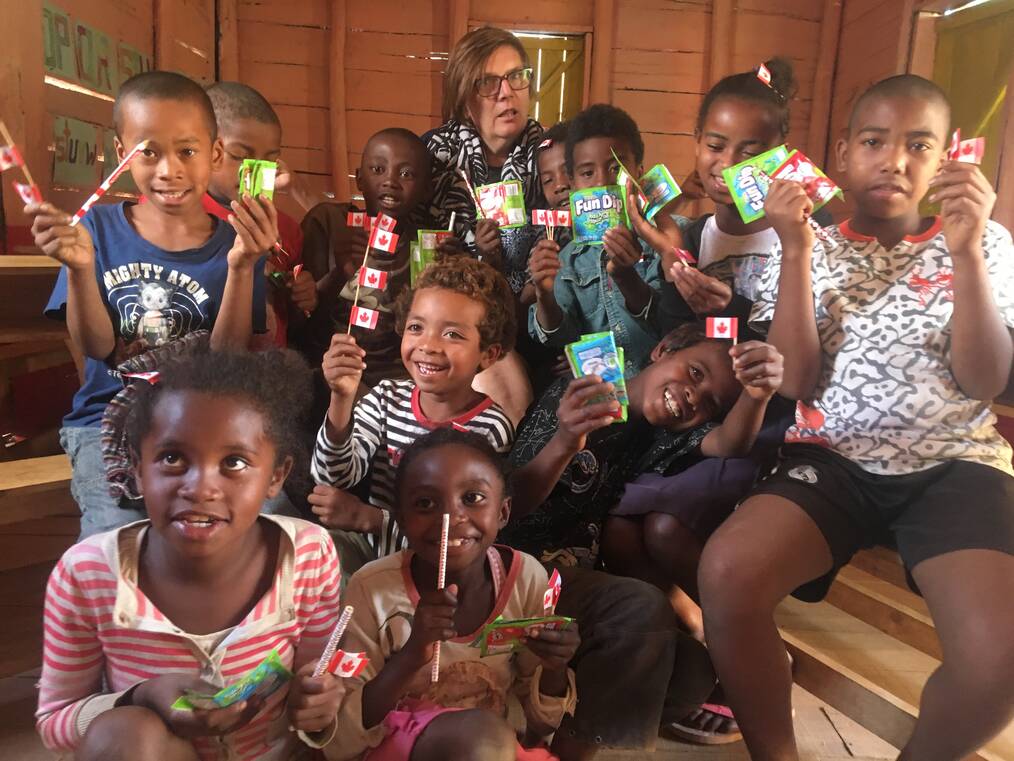
Volunteers fees have been built a school in a remote village in Ghana and continue to pay for the salary for all staff. We entirely fund an Early Learning Development centre in Madagascar. We run a pre-school in Tanzania. We entirely fund nutrition projects in Fiji, Samoa and South Africa. We run free legal clinics for people living in townships in South Africa who may be unable to access legal aid otherwise. In Cambodia, we also fund our own Microfinance and Public Health programmes. These are just some examples of the great work we do. You learn more about our impact around the globe please take a look at our Global Impact Report from 2017 - https://docs.projects-abroad.ie/uk/global-impact-report/global-impact-report-2017.pdf
Thank you again very much for your feedback
Best wishes,
Somi
Projects Abroad - Operations Director